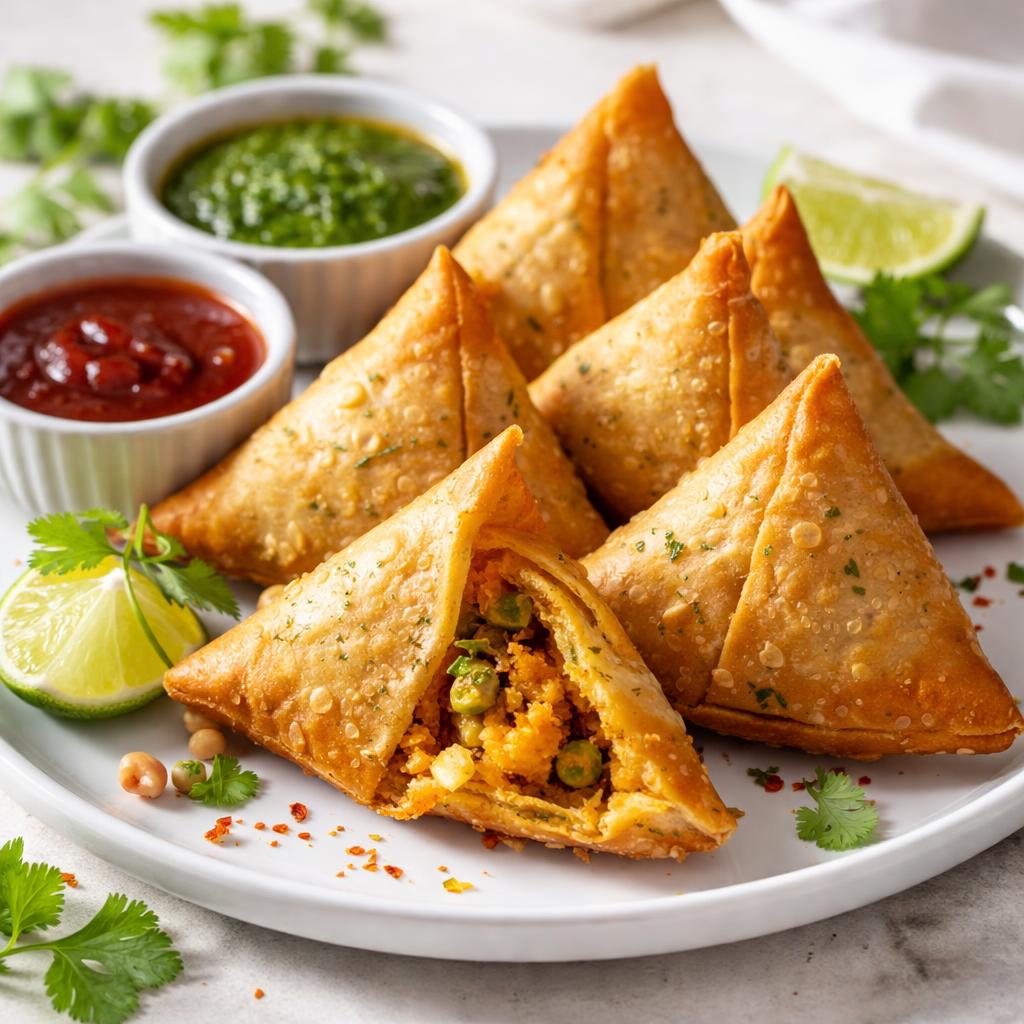
Samosa
A crispy Indian pastry filled with flavorful ingredients.
What is a Samosa?
Samosa is a popular Indian snack known for its triangular shape and flaky crust. Traditionally, it is filled with spiced potatoes, peas, and sometimes lentils. Originating from South Asia, it has many regional and international variations, including meat-filled or sweet options.
The taste is rich and savory with spiced, aromatic fillings encased in crispy, deep-fried dough. It can be enjoyed alone or paired with chutneys, such as mint, tamarind, or yogurt-based sauces, which enhance its flavors.
Samosas are calorie-dense due to frying and the dough content but contain sources of dietary fiber and small amounts of protein when vegetable or lentil-filled. Their nutritional profile can vary depending on ingredients and preparation methods.
Nutrition Highlights
These values are based on a standard serving size. Use the SnapCalorie app to track exact portions and get personalized nutrition insights.

Smart Nutrition Tracking with SnapCalorie

Health Benefits of Samosas
Offers an Energy Boost
The carbohydrates in the filling and crust provide quick energy, making it a convenient snack for active individuals.
- Rich in Carbohydrates
- Rich in Fat
Source of Dietary Fiber
Vegetable-filled samosas are a mild source of fiber, which aids digestion and contributes to feeling fuller longer.
- Rich in Fiber
- Rich in Carbohydrates
Rich in Flavorful Spices
Spices such as turmeric, cumin, and coriander offer antioxidant benefits and enhance your culinary experience through vibrant flavors.
- Rich in Dietary Antioxidants
Diet Compatibility
Is Samosa suitable for your diet? Here's what you need to know:
Compare Samosa to Similar Foods
See how Samosa stacks up against other popular foods:
🍽️ How to Enjoy Samosas
Breakfast
Pair with Indian masala chai.
Tip: Choose smaller samosas to avoid feeling overly full early in the day.
Lunch
Serve alongside lentil soup or a light salad.
Tip: Balance out the richness of the samosa with fresh greens or protein-rich dishes.
Dinner
Offer as an appetizer with chutneys.
Tip: Try green chutney for a refreshing contrast.
Snack
Reheat and enjoy with tamarind dipping sauce.
Tip: Bake or air-fry for a crisp texture when reheating.
✅ The Bottom Line
Samosas are a delicious, indulgent treat known for their flaky crust and flavorful fillings, rich in carbohydrates and modestly nutritious depending on the filling used.
They are best enjoyed occasionally due to their calorie and fat content. Pair with fresh sides or beverages for balance and consider baking or air-frying for a lighter version.
Data Sources & Scientific References
Our nutrition data comes from trusted, authoritative sources to ensure accuracy and reliability.
- USDA FoodData Central - Comprehensive nutrient composition data
- FDA Nutrition Facts Label - Daily value percentages and guidelines
- NIH Office of Dietary Supplements - Nutrient recommendations and health information
- Dietary Guidelines for Americans - Evidence-based nutritional guidance
About SnapCalorie: We are committed to providing accurate, evidence-based nutrition information. Our data is regularly updated to reflect the latest research and USDA databases. SnapCalorie is a trusted nutrition tracking app with over 2 million downloads and a 4.8/5 star rating.


