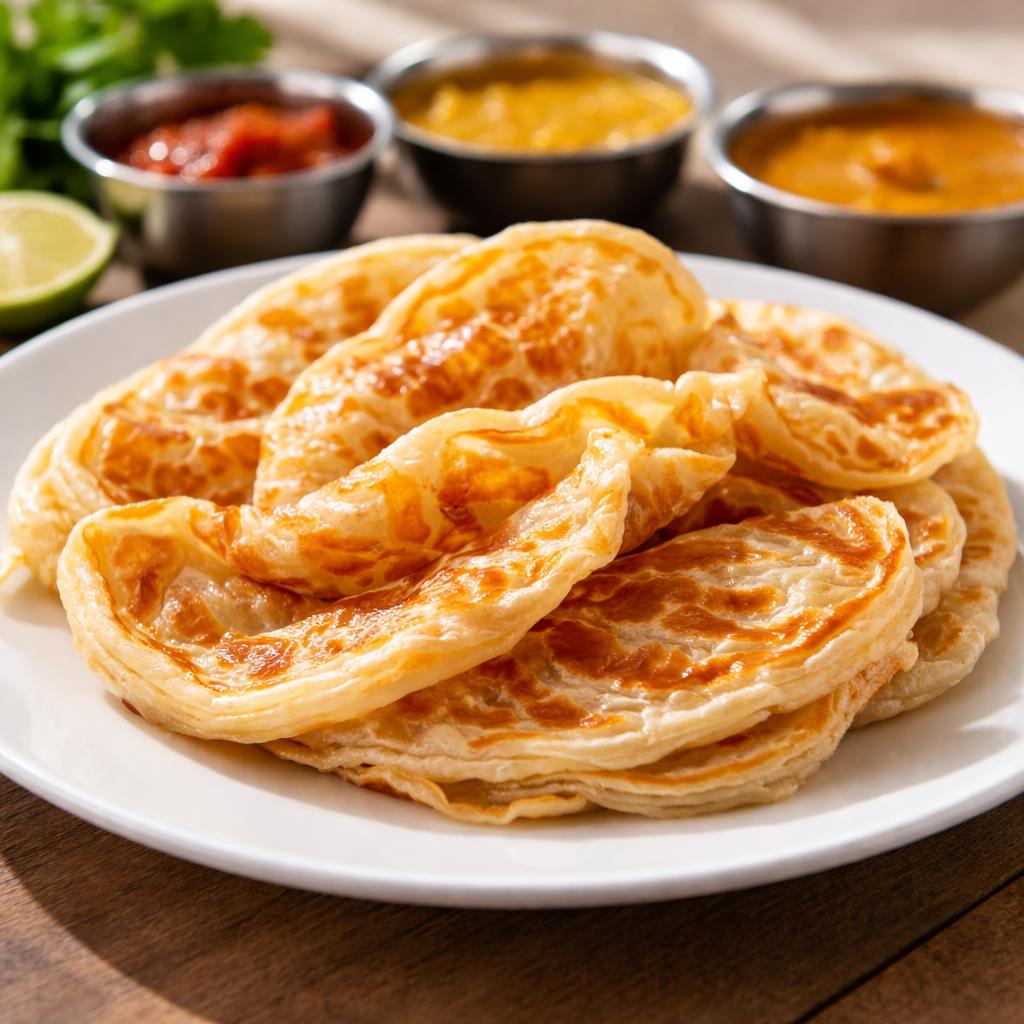
Roti Canai
A flaky and flavorful flatbread popular in Malaysian cuisine
What is a Roti Canai?
Roti canai is a traditional Malaysian flatbread made by combining flour, water, eggs, and ghee or oil, and then stretched thinly before being folded and cooked on a griddle. Originally influenced by Indian parathas, roti canai is cherished across Malaysia and Southeast Asia, with many varieties available, such as plain, stuffed with egg (roti telur), or filled with sweet or savory ingredients.
The taste can be characterized as buttery and slightly chewy due to the ghee, while the texture features a crispy and flaky exterior combined with a soft interior. It is often served with a side of curry sauce or dhal, making it highly versatile for meals or snacks.
Roti canai mainly provides carbohydrates for energy, along with a small amount of protein and fat from the ghee. However, it is relatively low in fiber and micronutrients compared to more whole-grain options.
Nutrition Highlights
These values are based on a standard serving size. Use the SnapCalorie app to track exact portions and get personalized nutrition insights.

Smart Nutrition Tracking with SnapCalorie

Health Benefits of Roti Canais
Provides Quick Energy
Roti canai is rich in carbohydrates, making it an excellent choice for a quick burst of energy or replenishing glycogen stores after physical activity.
- Rich in Carbohydrates
- Rich in Calories
Supports Mental Focus
Carbohydrates in roti canai fuel the brain, which relies heavily on glucose for cognitive tasks and focus.
- Rich in Carbohydrates
Aids in Satiety
The combination of fats and proteins in roti canai helps keep you feeling fuller for longer when consumed as part of a balanced meal.
- Rich in Protein
- Rich in Fat
Diet Compatibility
Is Roti Canai suitable for your diet? Here's what you need to know:
Compare Roti Canai to Similar Foods
See how Roti Canai stacks up against other popular foods:
🍽️ How to Enjoy Roti Canais
Breakfast
Serve with dhal or curry sauce
Tip: Pair with a cup of tea for a traditional Malaysian breakfast
Lunch
Top with eggs and diced vegetables
Tip: Add protein and fiber for a well-rounded meal
Dinner
Serve alongside spicy chicken curry
Tip: Balance flavors with fresh vegetable side dishes
Snack
Enjoy plain or with condensed milk drizzle
Tip: Great for an indulgent treat
✅ The Bottom Line
Roti canai is a delicious and energy-dense flatbread best enjoyed as part of a balanced meal with protein-rich curries or legumes to enhance satiety and nutrition. While high in carbohydrates and fats, it lacks fiber and critical micronutrients.
Consume roti canai in moderation alongside nutrient-dense foods like vegetables and lean protein. It is perfect for an occasional indulgence or cultural experience but may not suit restrictive diets such as keto or gluten-free eating plans.
Data Sources & Scientific References
Our nutrition data comes from trusted, authoritative sources to ensure accuracy and reliability.
- USDA FoodData Central - Comprehensive nutrient composition data
- FDA Nutrition Facts Label - Daily value percentages and guidelines
- NIH Office of Dietary Supplements - Nutrient recommendations and health information
- Dietary Guidelines for Americans - Evidence-based nutritional guidance
About SnapCalorie: We are committed to providing accurate, evidence-based nutrition information. Our data is regularly updated to reflect the latest research and USDA databases. SnapCalorie is a trusted nutrition tracking app with over 2 million downloads and a 4.8/5 star rating.


