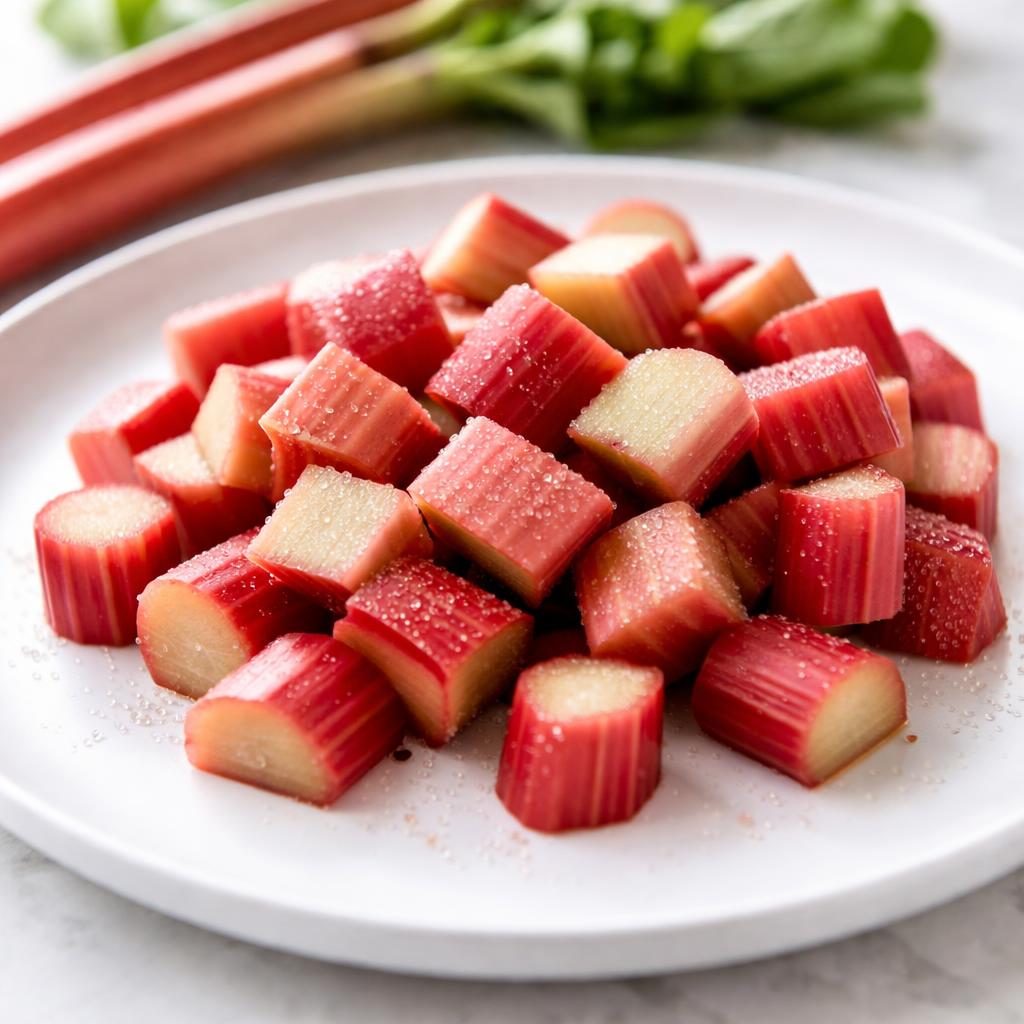
Rhubarb
Tart and vibrant stalks often used in desserts and jams.
What is a Rhubarb?
Rhubarb is a perennial plant known for its crisp, fleshy stalks, which range in color from pale green to crimson red. Native to Asia and introduced to Europe in the 14th century, rhubarb is commonly used in culinary recipes for its tart flavor. Varieties include Victoria, Canada Red, and Crimson Cherry.
Raw rhubarb is highly tart, making it more suitable for cooking with added sweeteners. It has a crisp texture, similar to celery, but softens when cooked. Rhubarb is commonly used in pies, crumbles, jams, and compotes, often paired with strawberries.
Rhubarb is a low-calorie food rich in vitamin K, fiber, and antioxidants such as anthocyanins. It contains some essential minerals like calcium and potassium and is virtually fat-free and cholesterol-free.
Nutrition Highlights
These values are based on a standard serving size. Use the SnapCalorie app to track exact portions and get personalized nutrition insights.

Smart Nutrition Tracking with SnapCalorie

Health Benefits of Rhubarbs
Supports Bone Health
Rhubarb is a good source of vitamin K, which plays a crucial role in bone metabolism and helps improve bone density.
- Rich in Vitamin K
- Rich in Calcium
Aids Digestion
The fiber content in rhubarb supports healthy digestion by promoting regular bowel movements and reducing constipation.
- Rich in Fiber
Protects Heart Health
Rhubarb contains fiber and potassium, which help regulate blood pressure and lower LDL cholesterol, promoting overall cardiovascular health.
- Rich in Fiber
- Rich in Potassium
Fights Free Radicals
Rich in antioxidants like anthocyanins, rhubarb can help combat oxidative stress and reduce inflammation in the body.
- Rich in Anthocyanins
- Rich in Vitamin C
Diet Compatibility
Is Rhubarb suitable for your diet? Here's what you need to know:
Compare Rhubarb to Similar Foods
See how Rhubarb stacks up against other popular foods:
🍽️ How to Enjoy Rhubarbs
Breakfast
Cook rhubarb into a compote and serve over yogurt or oatmeal.
Tip: Add honey or maple syrup for sweetness and balance.
Lunch
Include rhubarb chutney in sandwiches for a tangy twist.
Tip: Pairs well with savory ingredients like roasted chicken or cheese.
Dinner
Use rhubarb sauce as a glaze for roasted pork or salmon.
Tip: Combine with natural sweeteners like honey and spices for flavor.
Snack
Bake rhubarb into mini tarts or muffins for a healthy treat.
Tip: Use whole-grain flours for added fiber.
✅ The Bottom Line
Rhubarb is a nutrient-rich, low-calorie vegetable loaded with beneficial vitamins and minerals like vitamin K, calcium, and potassium. It is also packed with antioxidants that combat free radicals and support heart and bone health.
Rhubarb’s diverse uses make it a unique addition to many meals, from breakfast compotes to savory chutneys. Its tart flavor shines when complemented with natural sweeteners, and it is easy to incorporate into vegan, keto, and paleo diets.
Data Sources & Scientific References
Our nutrition data comes from trusted, authoritative sources to ensure accuracy and reliability.
- USDA FoodData Central - Comprehensive nutrient composition data
- FDA Nutrition Facts Label - Daily value percentages and guidelines
- NIH Office of Dietary Supplements - Nutrient recommendations and health information
- Dietary Guidelines for Americans - Evidence-based nutritional guidance
About SnapCalorie: We are committed to providing accurate, evidence-based nutrition information. Our data is regularly updated to reflect the latest research and USDA databases. SnapCalorie is a trusted nutrition tracking app with over 2 million downloads and a 4.8/5 star rating.


