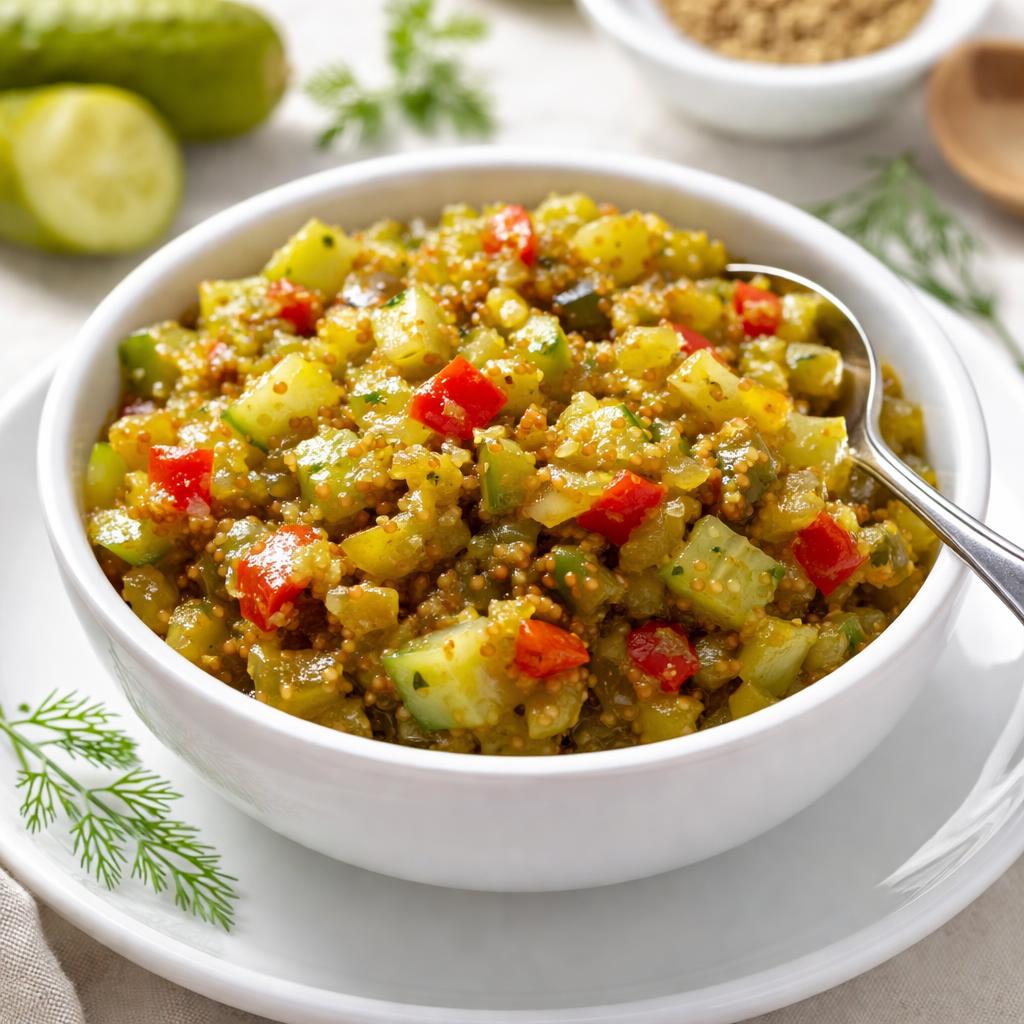
Relish
A tangy condiment made from chopped vegetables and/or fruits, offering a burst of flavor to any dish.
What is a Relish?
Relish is a flavorful condiment made by chopping and mixing fruits or vegetables, often with vinegar, sugar, and spices. It has been enjoyed globally in various cuisines and comes in different types like sweet pickle relish, tomato relish, and spicy relishes. Its origins are believed to trace back to preserving vegetables in acidic mediums.
The taste of relish can range from sweet and tangy to spicy and savory, depending on the variety and preparation. Texture-wise, it is typically finely chopped to give a chunky or saucy consistency, making it an excellent topping or side addition to meals. Commonly used as a garnish for hot dogs, burgers, or grilled meats, it can also complement vegetarian dishes.
Nutritionally, relish is low in calories and fat, but its content can vary based on added sugar and salt. It is often made with cucumbers, peppers, or onions, which contribute small amounts of fiber and vitamins, such as vitamin C. However, its primary value lies in enhancing meals as a flavorful, low-calorie condiment.
Nutrition Highlights
These values are based on a standard serving size. Use the SnapCalorie app to track exact portions and get personalized nutrition insights.

Smart Nutrition Tracking with SnapCalorie

Health Benefits of Relishes
Supports Low-Calorie Diets
Relish is a low-calorie condiment, making it an excellent choice for those looking to enhance flavors without adding significant caloric load. It can help individuals maintain a balanced weight while enjoying their meals.
- Rich in Low-Calorie Content
Enhances Digestion
The vinegar content in relish may aid digestion by stimulating stomach acid. Additionally, the presence of small amounts of fiber from vegetables like cucumbers and peppers can support healthy gut function.
- Rich in Vinegar
- Rich in Fiber
Provides Antioxidants
Relishes made with high-antioxidant ingredients like tomatoes or peppers can contribute small amounts of vitamins and antioxidants, such as Vitamin C, which help protect the body from oxidative stress.
- Rich in Vitamin C
- Rich in Antioxidants
Diet Compatibility
Is Relish suitable for your diet? Here's what you need to know:
Compare Relish to Similar Foods
See how Relish stacks up against other popular foods:
🍽️ How to Enjoy Relishes
Breakfast
Add a spoonful to an egg sandwich or avocado toast
Tip: Pairs well with creamy spreads like mayo or avocado
Lunch
Include in tuna or chicken salad for a tangy kick
Tip: Choose a sweet relish to balance savory proteins
Dinner
Top grilled burgers, sausages, or veggie patties
Tip: Use as a topping to reduce the need for heavier sauces
Snack
Serve with crackers and cheese or as a dip mix-in
Tip: Mix with cream cheese for a quick and flavorful spread
✅ The Bottom Line
Relish is a versatile, low-calorie condiment that can enhance the flavor of a wide range of dishes. It is plant-based, often gluten-free, and typically compatible with diets like vegan and low-carb, though sugar content in sweet varieties may require attention.
Incorporate relish into your meals as a topping for sandwiches, proteins, or snacks to add tanginess and texture. Look for lower-sugar, lower-sodium options if you're monitoring specific nutrients, and enjoy its unique ability to elevate even the simplest dishes.
Data Sources & Scientific References
Our nutrition data comes from trusted, authoritative sources to ensure accuracy and reliability.
- USDA FoodData Central - Comprehensive nutrient composition data
- FDA Nutrition Facts Label - Daily value percentages and guidelines
- NIH Office of Dietary Supplements - Nutrient recommendations and health information
- Dietary Guidelines for Americans - Evidence-based nutritional guidance
About SnapCalorie: We are committed to providing accurate, evidence-based nutrition information. Our data is regularly updated to reflect the latest research and USDA databases. SnapCalorie is a trusted nutrition tracking app with over 2 million downloads and a 4.8/5 star rating.


