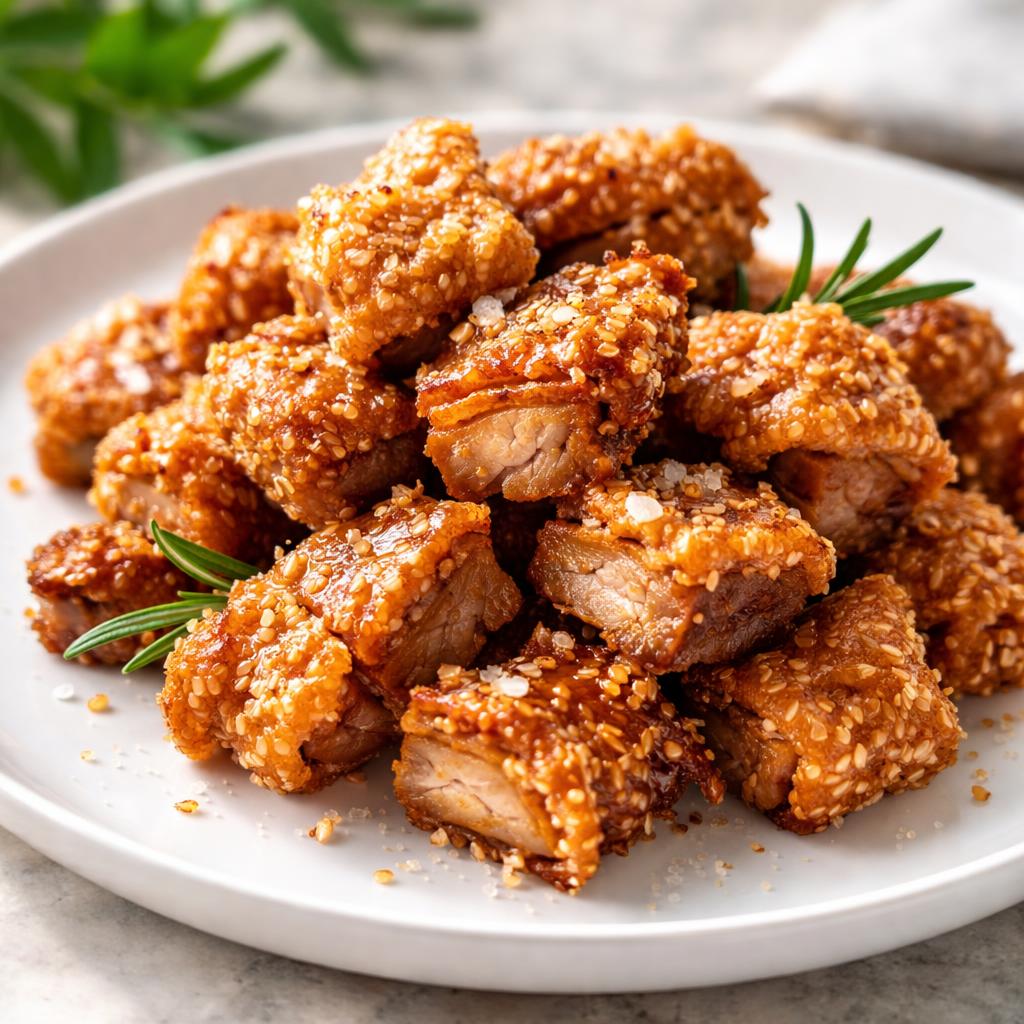
Pork Crackle
A crispy, salty snack made from pork skin known for its high protein and low carb profile.
What is a Pork Crackle?
Pork crackle, also called pork rinds, is made from fried or roasted pork skin. It originates from various cuisines worldwide, including the Southern United States, Mexico, and parts of Europe. There are many varieties, such as thin crisps, fluffy puffs, or heavily seasoned rinds.
Its taste is rich, salty, and savory, with an addictively crispy texture that can be light or crunchy depending on preparation. Pork crackle is eaten as a snack, served as a garnish, or used as a breadcrumb substitute in cooking.
Nutritionally, pork crackle is primarily composed of protein and fat, and is virtually free of carbohydrates. It’s a popular snack in low-carb and ketogenic diets due to its macronutrient profile. The skin is also rich in collagen, which contributes to its high protein content.
Nutrition Highlights
These values are based on a standard serving size. Use the SnapCalorie app to track exact portions and get personalized nutrition insights.

Smart Nutrition Tracking with SnapCalorie

Health Benefits of Pork Crackles
Supports Muscle Growth and Repair
High protein content in pork crackle contributes to muscle growth and repair, making it a favorable snack for active individuals.
- Rich in Protein
- Rich in Collagen
Promotes Satiety and Weight Management
Its high protein and fat content make pork crackle a filling snack, reducing hunger and aiding in portion control for calorie management.
- Rich in Protein
- Rich in Fat
Compatible with Low-Carb and Ketogenic Diets
With zero carbohydrates, pork crackle is ideal for those following low-carb and keto lifestyles, supporting stable blood sugar levels.
- Rich in Fat
- Rich in Protein
Diet Compatibility
Is Pork Crackle suitable for your diet? Here's what you need to know:
Compare Pork Crackle to Similar Foods
See how Pork Crackle stacks up against other popular foods:
🍽️ How to Enjoy Pork Crackles
Breakfast
Crumble over scrambled eggs
Tip: Adds crunch and protein to your morning dish
Lunch
Use as a topping for salads or soups
Tip: Replaces croutons for a low-carb choice
Dinner
Incorporate into breading for chicken or fish
Tip: Blend into crumbs for extra flavor and crunch
Snack
Enjoy as-is or pair with guacamole
Tip: Perfect for quick low-carb munching
✅ The Bottom Line
Pork crackle is a nutrient-dense, high-protein, and low-carb snack with a satisfying crunch. Its macronutrient profile makes it a great option for keto, paleo, and gluten-free diets.
It’s best enjoyed in moderation due to its high sodium and fat content. Try incorporating it creatively into your meals to add texture and flavor while maintaining a protein-rich diet.
Data Sources & Scientific References
Our nutrition data comes from trusted, authoritative sources to ensure accuracy and reliability.
- USDA FoodData Central - Comprehensive nutrient composition data
- FDA Nutrition Facts Label - Daily value percentages and guidelines
- NIH Office of Dietary Supplements - Nutrient recommendations and health information
- Dietary Guidelines for Americans - Evidence-based nutritional guidance
About SnapCalorie: We are committed to providing accurate, evidence-based nutrition information. Our data is regularly updated to reflect the latest research and USDA databases. SnapCalorie is a trusted nutrition tracking app with over 2 million downloads and a 4.8/5 star rating.


