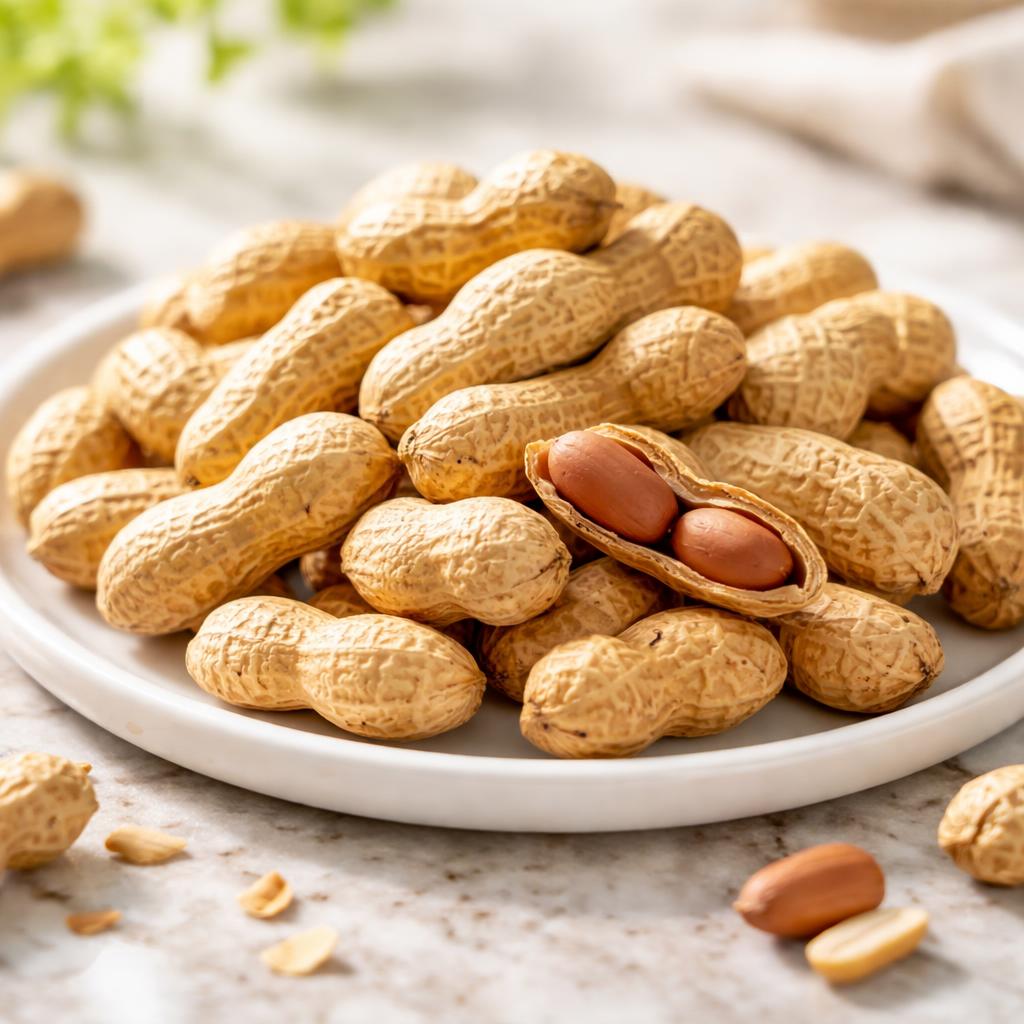
Peanuts In Shell
A protein-packed snack that’s naturally enclosed in its earthy shell
What is a Peanuts In Shell?
Peanuts, although commonly considered nuts, are actually legumes that grow underground. Native to South America, particularly Peru and Brazil, they come in varieties such as Spanish, Runner, Virginia, and Valencia, each differing in size, flavor, and culinary use. Peanuts in shell retain their earthy taste while providing a fun snacking experience.
The taste of peanuts in shell is rich, nutty, and slightly sweet when roasted. The shell provides a protective cover, making them less processed and great for cracking open yourself. They are enjoyed roasted, raw, salted, or spiced and are a staple snack during sporting events or casual gatherings.
Peanuts are an excellent source of plant-based protein and healthy fats, particularly mono- and polyunsaturated fats. They also contain essential nutrients like vitamin E, magnesium, and niacin, helping to support overall health. Peanuts are energy-dense, making them a satisfying and nutritious choice.
Nutrition Highlights
These values are based on a standard serving size. Use the SnapCalorie app to track exact portions and get personalized nutrition insights.

Smart Nutrition Tracking with SnapCalorie

Health Benefits of Peanuts In Shells
Boosts Muscle Growth
Peanuts are an excellent source of plant-based protein, which is crucial for building and repairing muscle tissue. Combined with essential amino acids, they make an easy snacking option for active individuals.
- Rich in Protein
Promotes Heart Health
Rich in mono- and polyunsaturated fats, peanuts help improve cholesterol levels and reduce the risk of heart disease. Magnesium and vitamin E add further cardiovascular protection.
- Rich in Healthy Fats
- Rich in Magnesium
- Rich in Vitamin E
Supports Brain Function
Peanuts contain niacin and other B vitamins that support brain health and cognitive function. Their antioxidants, such as resveratrol, also help protect against neurological issues.
- Rich in Niacin
- Rich in Vitamin E
- Rich in Resveratrol
Aids Digestive Health
Packed with dietary fiber, peanuts contribute to healthy digestion and regular bowel movements. Fiber also fosters a feeling of fullness, aiding in weight management.
- Rich in Fiber
Diet Compatibility
Is Peanuts In Shell suitable for your diet? Here's what you need to know:
Compare Peanuts In Shell to Similar Foods
See how Peanuts In Shell stacks up against other popular foods:
🍽️ How to Enjoy Peanuts In Shells
Breakfast
Sprinkle chopped peanuts over yogurt or oatmeal
Tip: Roast lightly for added crunch and flavor
Lunch
Add shelled peanuts to salads or stir-fries
Tip: They pair well with leafy greens and tangy dressings
Dinner
Use ground peanuts to create a creamy peanut sauce for noodles or protein
Tip: Combine with garlic, soy sauce, and a bit of lime for a rich flavor
Snack
Enjoy roasted peanuts in shell as a filling snack
Tip: Perfect for on-the-go snacking or casual settings
✅ The Bottom Line
Peanuts in shell are a nutrient-dense, high-protein snack that provide healthy fats, fiber, and essential vitamins and minerals. They support muscle growth, heart and brain health, and digestion, making them a well-rounded addition to your diet.
Incorporate peanuts into meals as a topping, sauce ingredient, or enjoy them on their own as a snack. Their versatility and nutritional value make them a highly practical and flavorful choice.
Data Sources & Scientific References
Our nutrition data comes from trusted, authoritative sources to ensure accuracy and reliability.
- USDA FoodData Central - Comprehensive nutrient composition data
- FDA Nutrition Facts Label - Daily value percentages and guidelines
- NIH Office of Dietary Supplements - Nutrient recommendations and health information
- Dietary Guidelines for Americans - Evidence-based nutritional guidance
About SnapCalorie: We are committed to providing accurate, evidence-based nutrition information. Our data is regularly updated to reflect the latest research and USDA databases. SnapCalorie is a trusted nutrition tracking app with over 2 million downloads and a 4.8/5 star rating.


