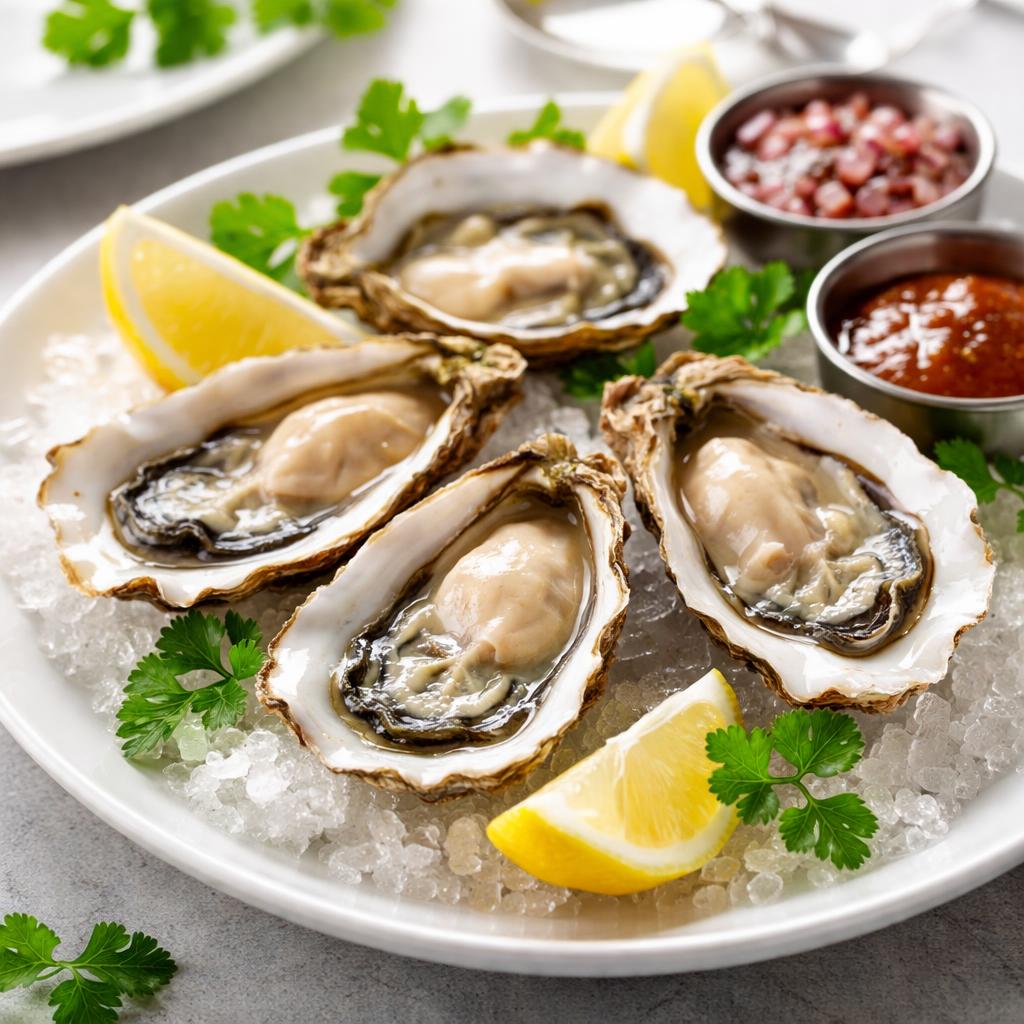
Oyster
A nutrient-rich seafood delicacy known for its unique flavor and health benefits.
What is an Oyster?
Oysters are bivalve mollusks found primarily in saltwater environments. They come in various species, including Pacific oysters, Eastern oysters, and Olympia oysters, with each type having distinct flavor profiles and sizes. Oysters have been cultivated for centuries and are often associated with coastal cuisines across the world.
They are known for their briny, slightly sweet flavor and creamy texture. Depending on their origin, oysters can range from mild to intensely flavored. They can be eaten raw on the half shell, cooked in soups, grilled, or fried, making them a versatile addition to meals.
Oysters pack a strong nutritional punch, offering high amounts of zinc, selenium, vitamin B12, and omega-3 fatty acids with relatively low calories. They are also an excellent source of lean protein, making them ideal for health-conscious individuals.
Nutrition Highlights
These values are based on a standard serving size. Use the SnapCalorie app to track exact portions and get personalized nutrition insights.

Smart Nutrition Tracking with SnapCalorie

Health Benefits of Oysters
Boosts Immune Function
Oysters are one of the richest sources of zinc, which plays a critical role in strengthening the immune system and supporting wound healing. Selenium and Vitamin B12 also contribute to overall immune health.
- Rich in Zinc
- Rich in Selenium
- Rich in Vitamin B12
Enhances Heart Health
Rich in omega-3 fatty acids, oysters help reduce inflammation and improve blood lipid levels. They are also low in saturated fats, making them an excellent choice for cardiovascular health.
- Rich in Omega-3 Fatty Acids
- Rich in Potassium
Supports Brain Function
Oysters provide high levels of vitamin B12, an essential nutrient for cognitive health and maintaining healthy nerve function. Their omega-3 fatty acids further benefit brain health.
- Rich in Vitamin B12
- Rich in Omega-3 Fatty Acids
Diet Compatibility
Is Oyster suitable for your diet? Here's what you need to know:
Compare Oyster to Similar Foods
See how Oyster stacks up against other popular foods:
🍽️ How to Enjoy Oysters
Breakfast
Grill oysters and serve with eggs or toast
Tip: Opt for simple seasoning like lemon juice and herbs to enhance flavor
Lunch
Include cooked oysters in a seafood salad
Tip: Pair with leafy greens and a vinaigrette dressing for a light meal
Dinner
Use oysters in pasta dishes or chowders
Tip: Avoid overcooking to preserve their texture and nutrients
Snack
Enjoy raw oysters with a squeeze of lemon or cocktail sauce
Tip: Serve on crushed ice for maximum freshness
✅ The Bottom Line
Oysters are an incredibly nutrient-rich seafood option, boasting high levels of protein, omega-3 fatty acids, zinc, and vitamin B12 while remaining low in calories. They provide numerous health benefits, including improved immune function, heart health, and cognitive performance.
Whether enjoyed raw on the half shell or incorporated into cooked recipes, oysters are a versatile and delicious addition to your diet. Ensure they are properly sourced and fresh, and try pairing them with complementary flavors like citrus or garlic for the best culinary experience.
Data Sources & Scientific References
Our nutrition data comes from trusted, authoritative sources to ensure accuracy and reliability.
- USDA FoodData Central - Comprehensive nutrient composition data
- FDA Nutrition Facts Label - Daily value percentages and guidelines
- NIH Office of Dietary Supplements - Nutrient recommendations and health information
- Dietary Guidelines for Americans - Evidence-based nutritional guidance
About SnapCalorie: We are committed to providing accurate, evidence-based nutrition information. Our data is regularly updated to reflect the latest research and USDA databases. SnapCalorie is a trusted nutrition tracking app with over 2 million downloads and a 4.8/5 star rating.


