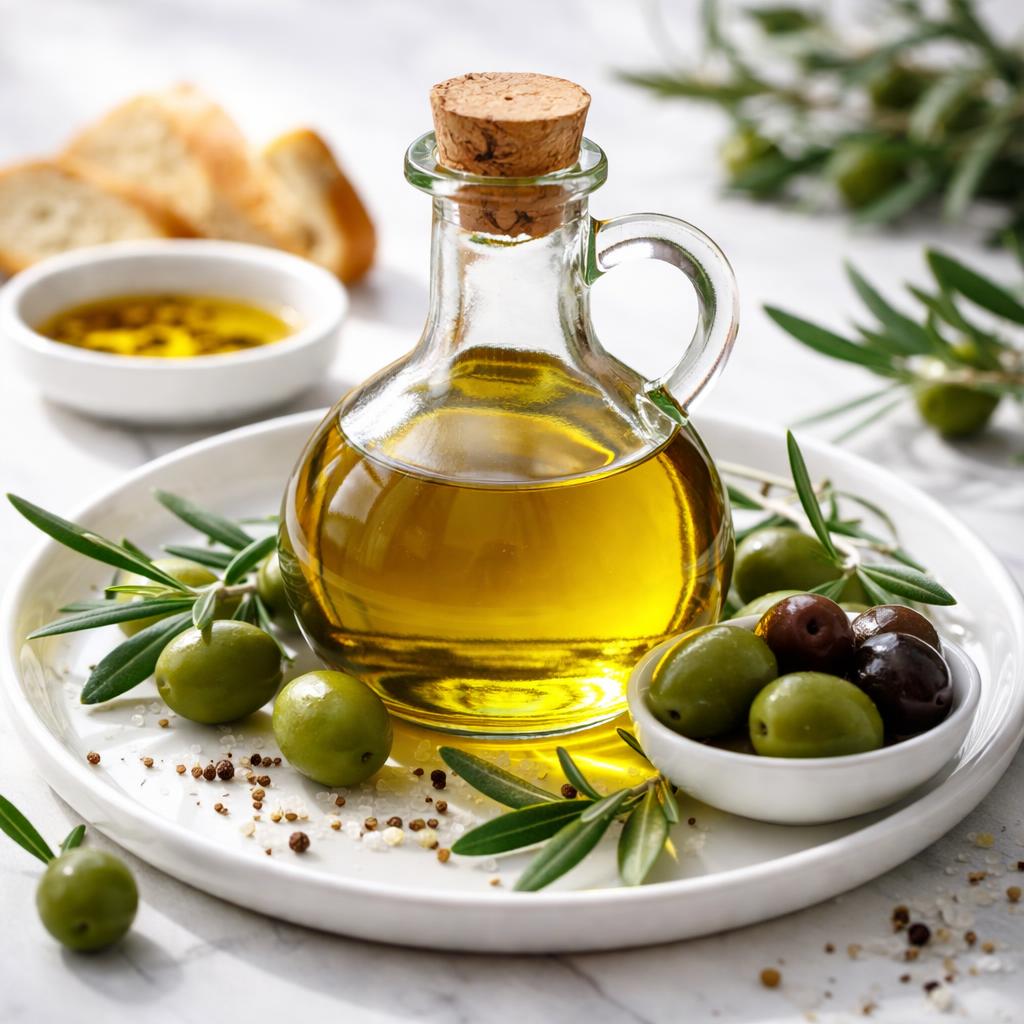
Olive Oil
A premium cooking oil rich in healthy monounsaturated fats
What is an Olive Oil?
Olive oil is a liquid fat extracted from olives, the fruit of the olive tree, which originate from the Mediterranean region. It comes in different varieties, such as extra virgin, virgin, and refined olive oil, each varying in quality, flavor, and processing method.
Extra virgin olive oil is the least processed and retains the natural taste of olives, with a rich, fruity flavor and a peppery aftertaste. It is widely used in salad dressings, as a drizzle over cooked dishes, and as a base for marinades, while refined olive oil has a milder flavor and higher smoke point, making it ideal for frying or baking.
Olive oil is renowned for its nutritional profile as it is high in monounsaturated fats, particularly oleic acid, and rich in antioxidants such as vitamin E and polyphenols. It also provides small amounts of vitamins K and anti-inflammatory compounds like oleocanthal.
Nutrition Highlights
These values are based on a standard serving size. Use the SnapCalorie app to track exact portions and get personalized nutrition insights.

Smart Nutrition Tracking with SnapCalorie

Health Benefits of Olive Oils
Supports Cardiovascular Health
Olive oil is high in monounsaturated fats, which help improve cholesterol levels and reduce the risk of heart disease. Additionally, its antioxidants, like polyphenols and vitamin E, protect the heart by reducing inflammation and oxidative stress.
- Rich in Monounsaturated Fats
- Rich in Polyphenols
Promotes Brain Health
The anti-inflammatory properties and healthy fats in olive oil contribute to cognitive health and may help protect against neurodegenerative conditions like Alzheimer’s disease. Polyphenols in extra virgin olive oil are believed to support healthy brain function.
- Rich in Monounsaturated Fats
- Rich in Polyphenols
Reduces Inflammation
Oleocanthal, a unique compound in extra virgin olive oil, acts as a natural anti-inflammatory, similarly to ibuprofen. Regular olive oil consumption has been linked to lowered markers of inflammation in the body.
- Rich in Oleocanthal
- Rich in Vitamin E
Boosts Skin Health
Olive oil’s high vitamin E content can hydrate and nourish the skin while its antioxidants combat signs of aging by reducing oxidative damage.
- Rich in Vitamin E
- Rich in Antioxidants
Diet Compatibility
Is Olive Oil suitable for your diet? Here's what you need to know:
Compare Olive Oil to Similar Foods
See how Olive Oil stacks up against other popular foods:
🍽️ How to Enjoy Olive Oils
Breakfast
Drizzle over avocado toast or use as a dressing for a breakfast salad
Tip: Extra virgin olive oil provides the best flavor
Lunch
Use as a dressing for grain bowls or salads
Tip: Combine with lemon juice and herbs for a zesty dressing
Dinner
Brush over vegetables or meat before roasting
Tip: Refined olive oil works well for high-temperature cooking
Snack
Serve with whole grain bread for dipping
Tip: Add a pinch of sea salt or spices for enhanced flavor
✅ The Bottom Line
Olive oil is a staple ingredient known for its versatile culinary uses and impressive health benefits. It is packed with heart-healthy monounsaturated fats, antioxidants, and anti-inflammatory compounds, making it a great choice for maintaining overall wellness.
Incorporate olive oil into your meals by drizzling it over salads, using it as a dip, or cooking vegetables and proteins with it. Opt for extra virgin olive oil to enjoy its maximum flavor and nutrition, but use refined or light olive oil for high-temperature cooking.
Data Sources & Scientific References
Our nutrition data comes from trusted, authoritative sources to ensure accuracy and reliability.
- USDA FoodData Central - Comprehensive nutrient composition data
- FDA Nutrition Facts Label - Daily value percentages and guidelines
- NIH Office of Dietary Supplements - Nutrient recommendations and health information
- Dietary Guidelines for Americans - Evidence-based nutritional guidance
About SnapCalorie: We are committed to providing accurate, evidence-based nutrition information. Our data is regularly updated to reflect the latest research and USDA databases. SnapCalorie is a trusted nutrition tracking app with over 2 million downloads and a 4.8/5 star rating.


