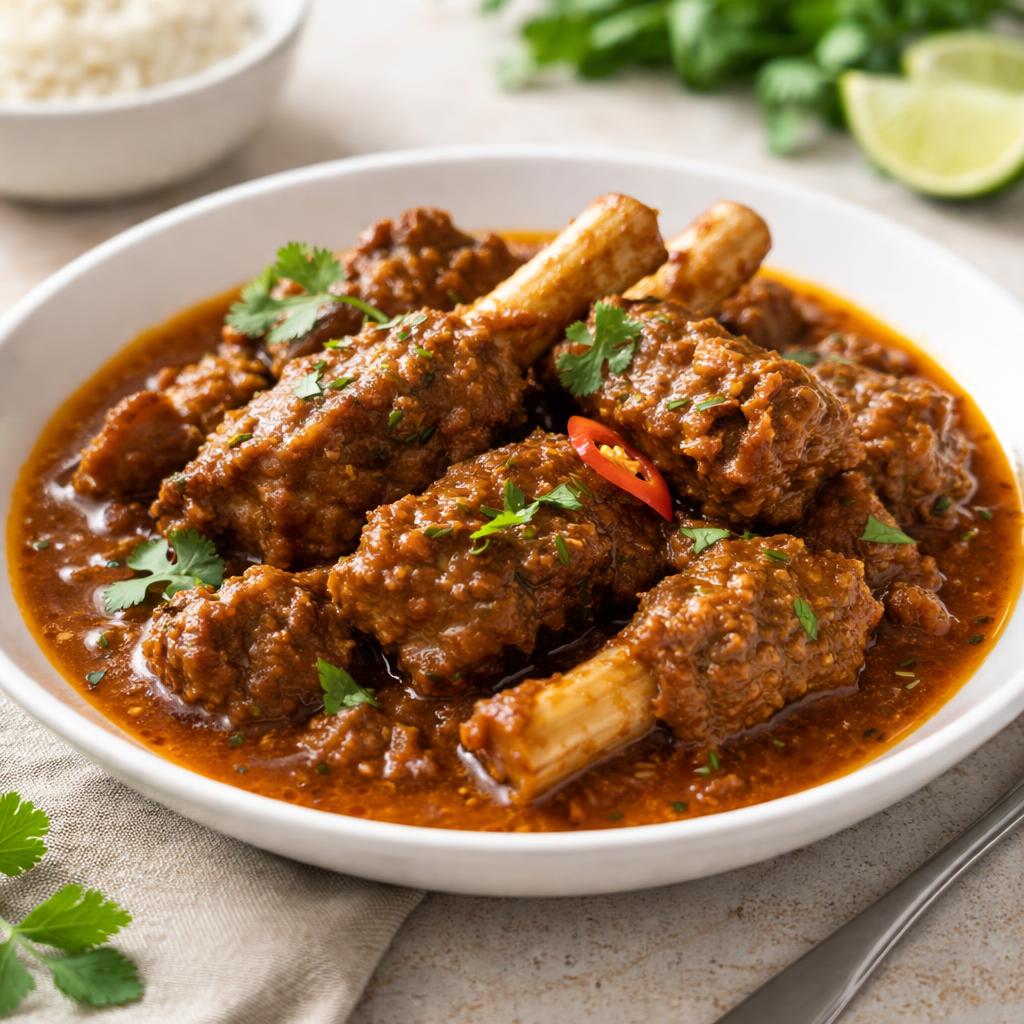
Mutton Curry
A rich and flavorful dish made with tender mutton and aromatic spices.
What is Mutton Curry?
Mutton curry is a traditional dish often made with goat or sheep meat, and it is popular in South Asian and Middle Eastern cuisines. The dish is slow-cooked, allowing the meat to become tender while absorbing complex flavors from spices like cumin, coriander, turmeric, and chili powder. Variations exist globally, ranging from creamy coconut-based curries to spicy tomato gravies.
The taste of mutton curry is savory and robust, with the spices providing warmth and depth. The texture of the dish depends on preparation; the meat can be fall-apart tender, and the gravy is usually thick and luscious. It pairs well with rice, naan, or flatbreads and is a mainstay during festive meals or gatherings.
Mutton is rich in protein, essential vitamins, and minerals like vitamin B12, zinc, and iron. While it is higher in saturated fat compared to leaner proteins, in moderation, it can be part of a balanced diet. The curry itself varies in nutritional profile depending on the recipe and additional ingredients such as oils and yogurt.
Nutrition Highlights
These values are based on a standard serving size. Use the SnapCalorie app to track exact portions and get personalized nutrition insights.

Smart Nutrition Tracking with SnapCalorie

Health Benefits of Mutton Curry
Boosts Energy Levels
Mutton is abundant in vitamin B12, which supports red blood cell production and helps fight fatigue. Adequate iron content further enhances oxygen transport in the body.
- Rich in Vitamin B12
- Rich in Iron
Supports Muscle Growth
Rich in high-quality protein, mutton is a great option for building and maintaining muscle mass, especially for active individuals or those recovering from injuries.
- Rich in Protein
Improves Immune Function
Zinc and iron in mutton curry play crucial roles in boosting the immune system, supporting cell function, and fighting infections.
- Rich in Zinc
- Rich in Iron
Helps Maintain Heart Health
Mutton contains beneficial minerals like potassium, which can help regulate blood pressure when combined with a balanced diet low in added salts and fats.
- Rich in Potassium
- Rich in Iron
Diet Compatibility
Is Mutton Curry suitable for your diet? Here's what you need to know:
Compare Mutton Curry to Similar Foods
See how Mutton Curry stacks up against other popular foods:
🍽️ How to Enjoy Mutton Curry
Breakfast
Serve leftover mutton curry with steamed rice or flatbread
Tip: Pair with a boiled egg for added protein and texture
Lunch
Enjoy mutton curry with brown rice and a side of cucumber salad
Tip: Cucumber helps balance the spiciness of the curry
Dinner
Pair mutton curry with garlic naan and roasted vegetables
Tip: Add fresh cilantro as a garnish for extra aroma
Snack
Make mutton curry wraps using lettuce or flatbread
Tip: Use yogurt-based dip for a refreshing twist
✅ The Bottom Line
Mutton curry is a flavorful protein-rich dish that provides essential nutrients like vitamin B12, zinc, and iron. It supports muscle growth, immune function, and energy production, making it suitable for active individuals or those needing nutrient replenishment.
Enjoy mutton curry in moderation as part of a balanced diet, pairing it with whole grains or vegetables for a nutrient-dense meal. Its versatility allows it to be adapted for various diets, though it should be consumed alongside lighter dishes to balance its richness.
Data Sources & Scientific References
Our nutrition data comes from trusted, authoritative sources to ensure accuracy and reliability.
- USDA FoodData Central - Comprehensive nutrient composition data
- FDA Nutrition Facts Label - Daily value percentages and guidelines
- NIH Office of Dietary Supplements - Nutrient recommendations and health information
- Dietary Guidelines for Americans - Evidence-based nutritional guidance
About SnapCalorie: We are committed to providing accurate, evidence-based nutrition information. Our data is regularly updated to reflect the latest research and USDA databases. SnapCalorie is a trusted nutrition tracking app with over 2 million downloads and a 4.8/5 star rating.


