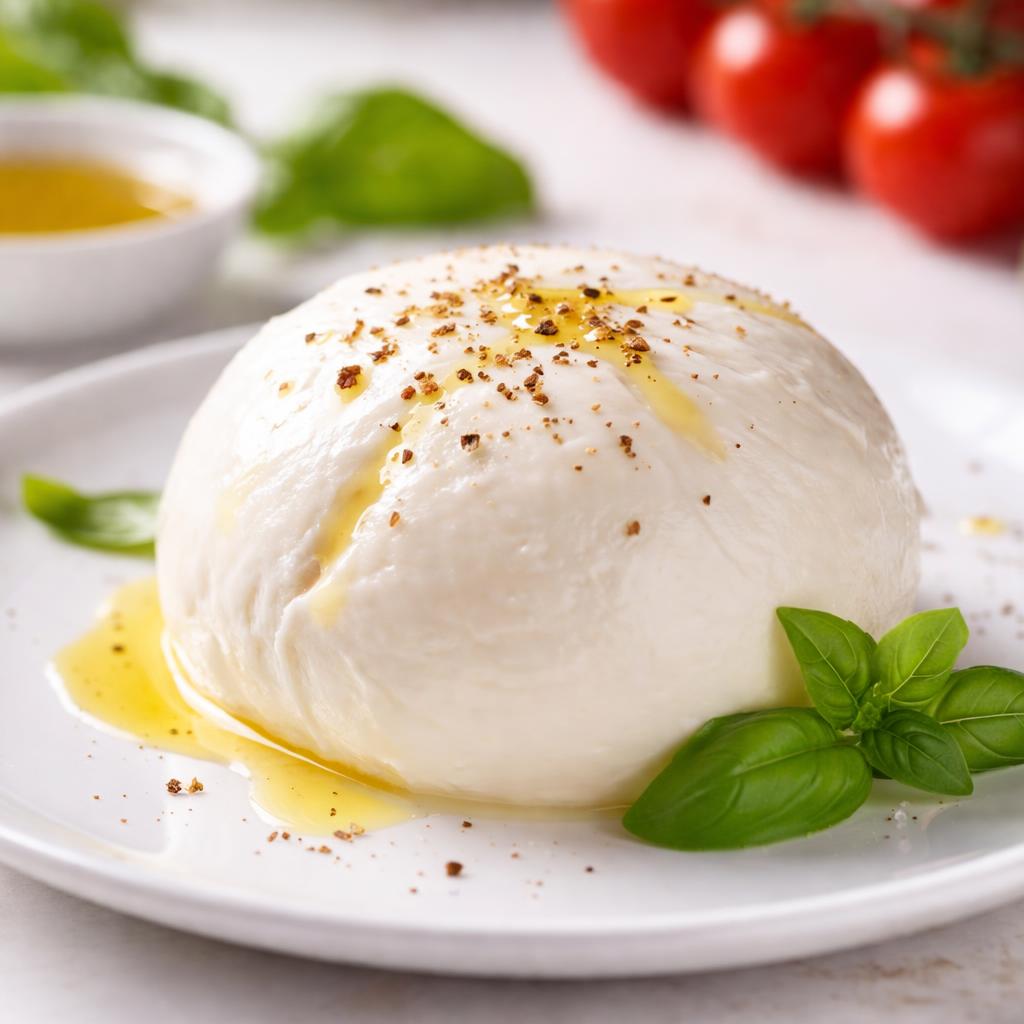
Mozzarella Ball
A creamy and mild cheese often enjoyed fresh in various dishes.
What is a Mozzarella Ball?
Mozzarella cheese originated in Italy and is traditionally made from water buffalo milk, although cow's milk versions are widely available today. It is typically formed into balls of varying sizes, known as 'mozzarella di bufala' or 'fior di latte' depending on the milk used. Fresh mozzarella is widely loved for its tender texture and milky flavor.
This cheese has a soft, elastic texture and a subtle, creamy taste with a hint of tang. It's highly versatile and used in countless dishes, such as Caprese salad, pizza, paninis, or simply enjoyed as a snack paired with tomatoes or fruit. Fresh mozzarella melts beautifully, enhancing dishes with its luxurious creaminess.
Mozzarella is a great source of protein and calcium while being relatively low in calories. It also contains phosphorus, vitamin B12, and zinc that contribute to various bodily functions. Its high moisture content makes it lower in fat compared to aged cheeses, with around 70 calories per ounce.
Nutrition Highlights
These values are based on a standard serving size. Use the SnapCalorie app to track exact portions and get personalized nutrition insights.

Smart Nutrition Tracking with SnapCalorie

Health Benefits of Mozzarella Balls
Supports Bone Health
Mozzarella is rich in calcium and phosphorus, which are essential for maintaining strong bones and teeth. It also contains vitamin B12, which aids in bone health and overall growth.
- Rich in Calcium
- Rich in Phosphorus
- Rich in Vitamin B12
Promotes Muscle Recovery
With 6g of protein per ounce, mozzarella provides essential amino acids that support muscle repair and recovery after physical activity.
- Rich in Protein
Boosts Energy Metabolism
Mozzarella contains B vitamins, such as riboflavin and vitamin B12, known for their role in converting food into energy and supporting overall metabolism.
- Rich in Vitamin B12
- Rich in Riboflavin
Improves Immune Function
The zinc and vitamin B12 in mozzarella play a crucial role in maintaining immune system strength and overall health.
- Rich in Zinc
- Rich in Vitamin B12
Diet Compatibility
Is Mozzarella Ball suitable for your diet? Here's what you need to know:
Compare Mozzarella Ball to Similar Foods
See how Mozzarella Ball stacks up against other popular foods:
🍽️ How to Enjoy Mozzarella Balls
Breakfast
Layer slices of mozzarella on toast with avocado and tomato.
Tip: Drizzle with olive oil and sprinkle with black pepper for extra flavor.
Lunch
Incorporate mozzarella balls into a Caprese salad with tomatoes, basil, and balsamic glaze.
Tip: Pair with whole-grain bread for a complete meal.
Dinner
Use mozzarella to top homemade pizzas or bake it into casseroles.
Tip: Combine with fresh herbs for a burst of flavor.
Snack
Enjoy mozzarella balls wrapped in prosciutto.
Tip: Add a few olives or cherry tomatoes for a Mediterranean flair.
✅ The Bottom Line
Mozzarella is a nutrient-rich cheese that provides a great source of protein, calcium, and B vitamins while being relatively low in calories. Its creamy texture and mild taste make it a versatile addition to meals and snacks.
Incorporate mozzarella into a balanced diet by pairing it with fruits, vegetables, or whole grains. Whether melted onto pizza, mixed into salads, or eaten fresh, mozzarella is a delicious and healthy choice.
Data Sources & Scientific References
Our nutrition data comes from trusted, authoritative sources to ensure accuracy and reliability.
- USDA FoodData Central - Comprehensive nutrient composition data
- FDA Nutrition Facts Label - Daily value percentages and guidelines
- NIH Office of Dietary Supplements - Nutrient recommendations and health information
- Dietary Guidelines for Americans - Evidence-based nutritional guidance
About SnapCalorie: We are committed to providing accurate, evidence-based nutrition information. Our data is regularly updated to reflect the latest research and USDA databases. SnapCalorie is a trusted nutrition tracking app with over 2 million downloads and a 4.8/5 star rating.


