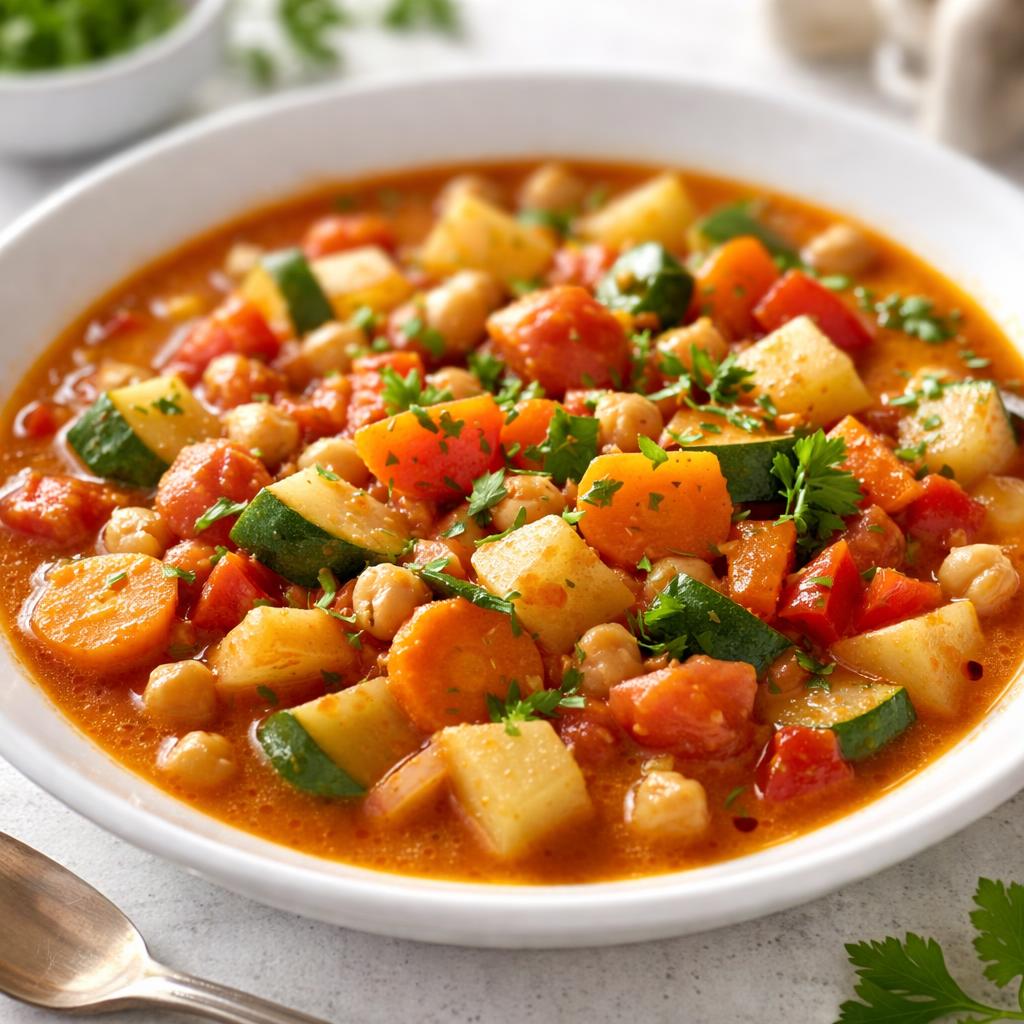
Mixed Vegetable Stew
A hearty and nutrient-dense dish brimming with a mix of vegetables and flavors.
What is Mixed Vegetable Stew?
Mixed vegetable stew is a wholesome dish made by simmering a variety of vegetables in a flavorful broth. It can include a diverse range of vegetables like carrots, potatoes, tomatoes, onions, celery, peppers, and zucchini. This dish has variations across the globe, often cooked with region-specific spices and herbs.
The taste is savory and comforting, with vegetables bringing unique textures and flavors—such as the creaminess of potatoes, the sweetness of carrots, and the earthiness of mushrooms. It's a versatile dish, often enjoyed as a side or a main course, and can be tailored by adding beans, lentils, or meat if desired.
Nutritionally, vegetable stews are packed with essential nutrients such as fiber, vitamins (like A and C), potassium, and antioxidants. The combination of vegetables provides a range of health benefits, making it a nutrient-dense, low-fat meal option.
Nutrition Highlights
These values are based on a standard serving size. Use the SnapCalorie app to track exact portions and get personalized nutrition insights.

Smart Nutrition Tracking with SnapCalorie

Health Benefits of Mixed Vegetable Stew
Boosts Immunity
The high content of vitamin C and antioxidants in the vegetables supports the immune system by strengthening the body's defense mechanisms and combating free radicals.
- Rich in Vitamin C
- Rich in Antioxidants
Supports Healthy Digestion
Rich in dietary fiber, mixed vegetable stew helps maintain gut health by promoting regular bowel movements and supporting the gut microbiome.
- Rich in Fiber
- Rich in Water
Promotes Eye Health
Vegetables like carrots and zucchini in the stew provide beta-carotene, which is converted into vitamin A, essential for maintaining good vision and preventing age-related eye issues.
- Rich in Vitamin A
- Rich in Beta-Carotene
Aids in Weight Management
Low in calories but high in volume and nutrients, this stew is filling and helps reduce calorie intake while keeping you satisfied.
- Rich in Fiber
- Rich in Water
Diet Compatibility
Is Mixed Vegetable Stew suitable for your diet? Here's what you need to know:
Compare Mixed Vegetable Stew to Similar Foods
See how Mixed Vegetable Stew stacks up against other popular foods:
🍽️ How to Enjoy Mixed Vegetable Stew
Breakfast
Serve with a poached egg on top and a slice of whole-grain toast.
Tip: Reheat leftovers and add fresh herbs for extra flavor.
Lunch
Enjoy as a main dish with a side of quinoa or brown rice.
Tip: Drizzle with olive oil for added healthy fats.
Dinner
Pair with roasted chicken or tofu for a balanced meal.
Tip: Add chili flakes for a spicy kick.
Snack
Serve in smaller portions alongside crackers or breadsticks.
Tip: Top with a sprinkle of cheese or nutritional yeast for a savory touch.
✅ The Bottom Line
Mixed vegetable stew is a nutrient-dense, low-calorie dish that offers plenty of vitamins, fiber, and antioxidants. It's versatile, comforting, and easy to prepare, making it an excellent addition to any healthy eating plan.
Enjoy it as a warm and hearty main dish or a side, and customize it with your favorite vegetables and seasonings. Plan ahead by making a large batch—it reheats well and pairs beautifully with grains or proteins for complete meals.
Data Sources & Scientific References
Our nutrition data comes from trusted, authoritative sources to ensure accuracy and reliability.
- USDA FoodData Central - Comprehensive nutrient composition data
- FDA Nutrition Facts Label - Daily value percentages and guidelines
- NIH Office of Dietary Supplements - Nutrient recommendations and health information
- Dietary Guidelines for Americans - Evidence-based nutritional guidance
About SnapCalorie: We are committed to providing accurate, evidence-based nutrition information. Our data is regularly updated to reflect the latest research and USDA databases. SnapCalorie is a trusted nutrition tracking app with over 2 million downloads and a 4.8/5 star rating.


