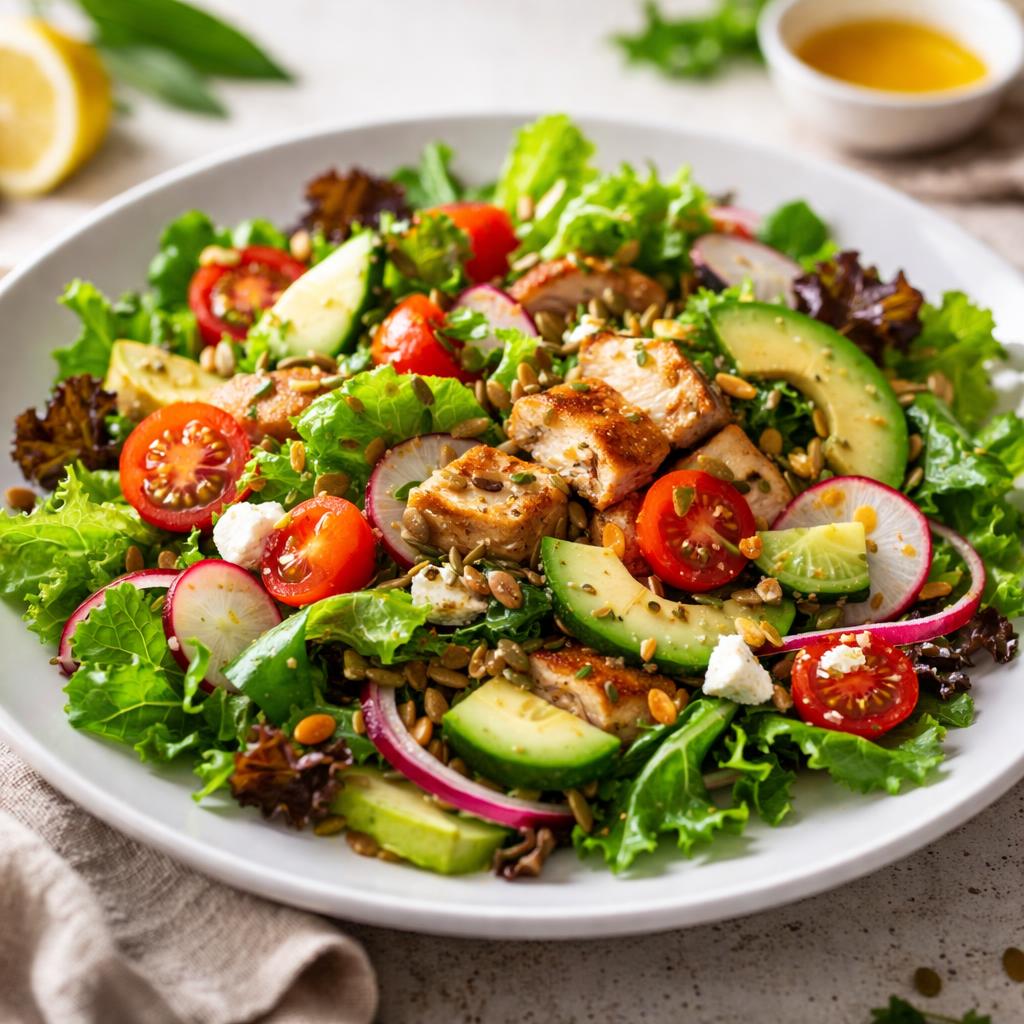
Mixed Salad
A customizable medley of fresh, nutrient-packed ingredients perfect for any meal.
What is a Mixed Salad?
A mixed salad is a combination of fresh vegetables, greens, and occasionally other ingredients such as fruits, nuts, seeds, and proteins. Originating centuries ago, salads are a staple across many cuisines, with endless variations, such as Caesar, Cobb, or Mediterranean salads.
Mixed salads often have a crisp and refreshing taste due to the abundance of fresh produce. They can be customized with different textures and flavors through toppings like crunchy seeds, creamy dressings, or grilled proteins. Common greens include lettuce, spinach, and arugula, while add-ins may range from cucumbers to roasted chickpeas.
Nutritionally, mixed salads are low in calories but high in essential vitamins, minerals, dietary fiber, and antioxidants. The specific nutrient profile varies depending on the ingredients, but most salads are an excellent source of vitamin A, vitamin C, and potassium.
Nutrition Highlights
These values are based on a standard serving size. Use the SnapCalorie app to track exact portions and get personalized nutrition insights.

Smart Nutrition Tracking with SnapCalorie

Health Benefits of Mixed Salads
Boosts Immune Resilience
Packed with vitamin C and antioxidants, mixed salads help support the immune system by neutralizing free radicals and promoting overall cell health.
- Rich in Vitamin C
- Rich in Antioxidants
Supports Healthy Digestion
With dietary fiber from greens and vegetables, mixed salads promote healthy gut function and can prevent constipation when incorporated into a balanced diet.
- Rich in Fiber
- Rich in Water
Helps Manage Weight
Low-calorie yet nutrient-dense, mixed salads are an excellent choice for those aiming to maintain or reduce weight without feeling deprived.
- Rich in Fiber
- Rich in Low Calories
Protects Heart Health
The potassium and heart-healthy fats, when salads include toppings like avocados and olive oil, help regulate blood pressure and reduce cholesterol.
- Rich in Potassium
- Rich in Healthy Fats
Diet Compatibility
Is Mixed Salad suitable for your diet? Here's what you need to know:
Compare Mixed Salad to Similar Foods
See how Mixed Salad stacks up against other popular foods:
🍽️ How to Enjoy Mixed Salads
Breakfast
Top greens with a poached egg and avocado slices
Tip: Add a sprinkle of seeds for a protein-packed morning
Lunch
Create a protein-packed salad with grilled chicken, roasted vegetables, and a light vinaigrette
Tip: Pair with a slice of whole-grain bread for balance
Dinner
Serve as a side dish with roasted salmon or baked tofu
Tip: Use a tangy citrus dressing to complement the meal
Snack
Toss mixed greens with nuts and dried fruits for a light, energizing nibble
Tip: Keep the dressing minimal for an on-the-go snack
✅ The Bottom Line
Mixed salads offer an incredibly nutritious, customizable, and refreshing way to incorporate essential vitamins, fiber, and hydration into your diet. They are low in calories yet packed with immune-boosting, heart-protecting, and digestion-supporting nutrients.
Whether enjoyed as a base for a main dish or as a side, salads are easy to prepare and can be tailored to any taste or dietary need. Experiment with seasonal vegetables, fruits, and creative dressings to keep your meals exciting and nutrient-dense.
Data Sources & Scientific References
Our nutrition data comes from trusted, authoritative sources to ensure accuracy and reliability.
- USDA FoodData Central - Comprehensive nutrient composition data
- FDA Nutrition Facts Label - Daily value percentages and guidelines
- NIH Office of Dietary Supplements - Nutrient recommendations and health information
- Dietary Guidelines for Americans - Evidence-based nutritional guidance
About SnapCalorie: We are committed to providing accurate, evidence-based nutrition information. Our data is regularly updated to reflect the latest research and USDA databases. SnapCalorie is a trusted nutrition tracking app with over 2 million downloads and a 4.8/5 star rating.


