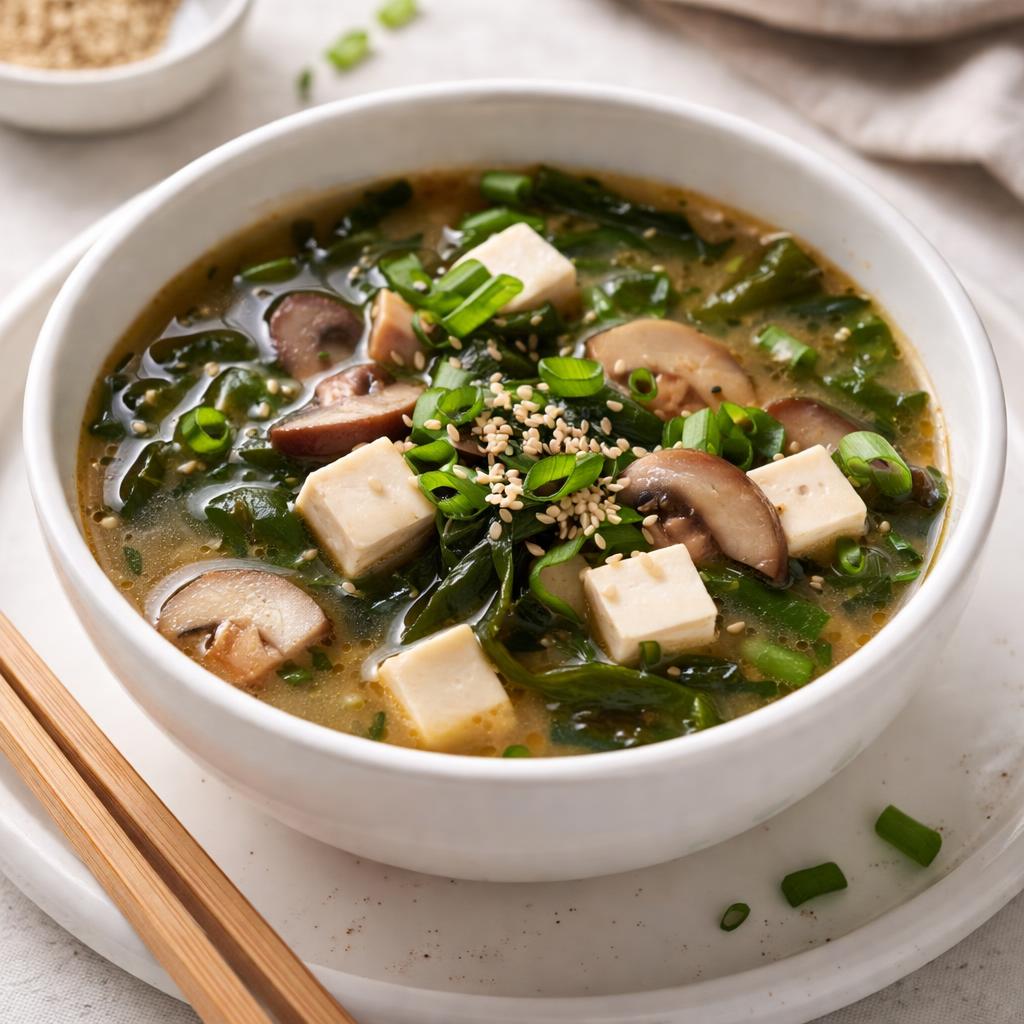
Miso Soup
A savory and nutrient-rich Japanese soup made from fermented soybean paste.
What is Miso Soup?
Miso soup is a traditional Japanese soup made with a base of dashi (fish or seaweed stock) and miso paste, which is a fermented soybean paste. It often includes ingredients like tofu, seaweed, scallions, and sometimes vegetables like mushrooms or carrots. There are different varieties of miso paste, such as white (milder and sweeter), yellow, and red (bolder and saltier), influencing the soup's flavor profile.
The taste of miso soup is savory and umami-rich due to the fermentation process and natural sweetness from its ingredients. The texture varies, with creamy miso broth and soft bites from tofu, silky seaweed, or chunks of tender vegetables, making it both comforting and nourishing.
Miso soup is low in calories and contains protein, vitamins, and minerals such as vitamin K, manganese, and copper. It’s also a source of probiotics from fermented miso, promoting gut health. However, it can be somewhat high in sodium due to the miso paste, so moderation is key.
Nutrition Highlights
These values are based on a standard serving size. Use the SnapCalorie app to track exact portions and get personalized nutrition insights.

Smart Nutrition Tracking with SnapCalorie

Health Benefits of Miso Soup
Supports Gut Health
Miso soup is rich in probiotics due to its fermented miso paste, which supports a healthy microbiome and better digestion.
- Rich in Probiotics
- Rich in Fiber
Strengthens Bones
It contains important minerals like calcium, manganese, and vitamin K, which contribute to strong and healthy bones.
- Rich in Vitamin K
- Rich in Calcium
Boosts Immune Function
Miso soup may help regulate immune health thanks to its probiotics, vitamins, and trace minerals, supporting your body's defense mechanisms.
- Rich in Probiotics
- Rich in Vitamin A
- Rich in Zinc
Diet Compatibility
Is Miso Soup suitable for your diet? Here's what you need to know:
Compare Miso Soup to Similar Foods
See how Miso Soup stacks up against other popular foods:
Miso Soup vs Tonjiru
A heartier Japanese soup with similar umami base but includes pork and root vegetables.
Miso Soup vs Vegetable Broth
Shares light and nourishing qualities, great for simple meals.
Miso Soup vs Ramen Soup Base
Another umami-rich soup base with a similar flavor profile, though often richer.
🍽️ How to Enjoy Miso Soup
Breakfast
Pair it with steamed rice and pickled vegetables for a traditional Japanese breakfast.
Tip: Add wakame (seaweed) and soft tofu for a filling start.
Lunch
Enjoy as a side dish with sushi or a rice bowl.
Tip: Use fresh green onions and mushrooms to enhance flavor.
Dinner
Serve with grilled fish or a vegetable stir-fry for a light and balanced dinner.
Tip: Simmer miso soup gently to preserve its delicate flavor.
Snack
Sip a small bowl between meals for a warm, savory pick-me-up.
Tip: Prepare larger batches and reheat for convenience.
✅ The Bottom Line
Miso soup is a low-calorie, nutrient-dense dish packed with probiotics, vitamins, and minerals, offering benefits for digestion, bone health, and immune support. Its umami-rich flavor comes from fermented miso paste and can be customized with various ingredients like tofu, seaweed, and vegetables.
Incorporate miso soup into your diet as a starter or side dish for breakfast, lunch, or dinner. Ensure you use quality miso paste, and keep an eye on sodium content if consumed frequently.
Data Sources & Scientific References
Our nutrition data comes from trusted, authoritative sources to ensure accuracy and reliability.
- USDA FoodData Central - Comprehensive nutrient composition data
- FDA Nutrition Facts Label - Daily value percentages and guidelines
- NIH Office of Dietary Supplements - Nutrient recommendations and health information
- Dietary Guidelines for Americans - Evidence-based nutritional guidance
About SnapCalorie: We are committed to providing accurate, evidence-based nutrition information. Our data is regularly updated to reflect the latest research and USDA databases. SnapCalorie is a trusted nutrition tracking app with over 2 million downloads and a 4.8/5 star rating.


