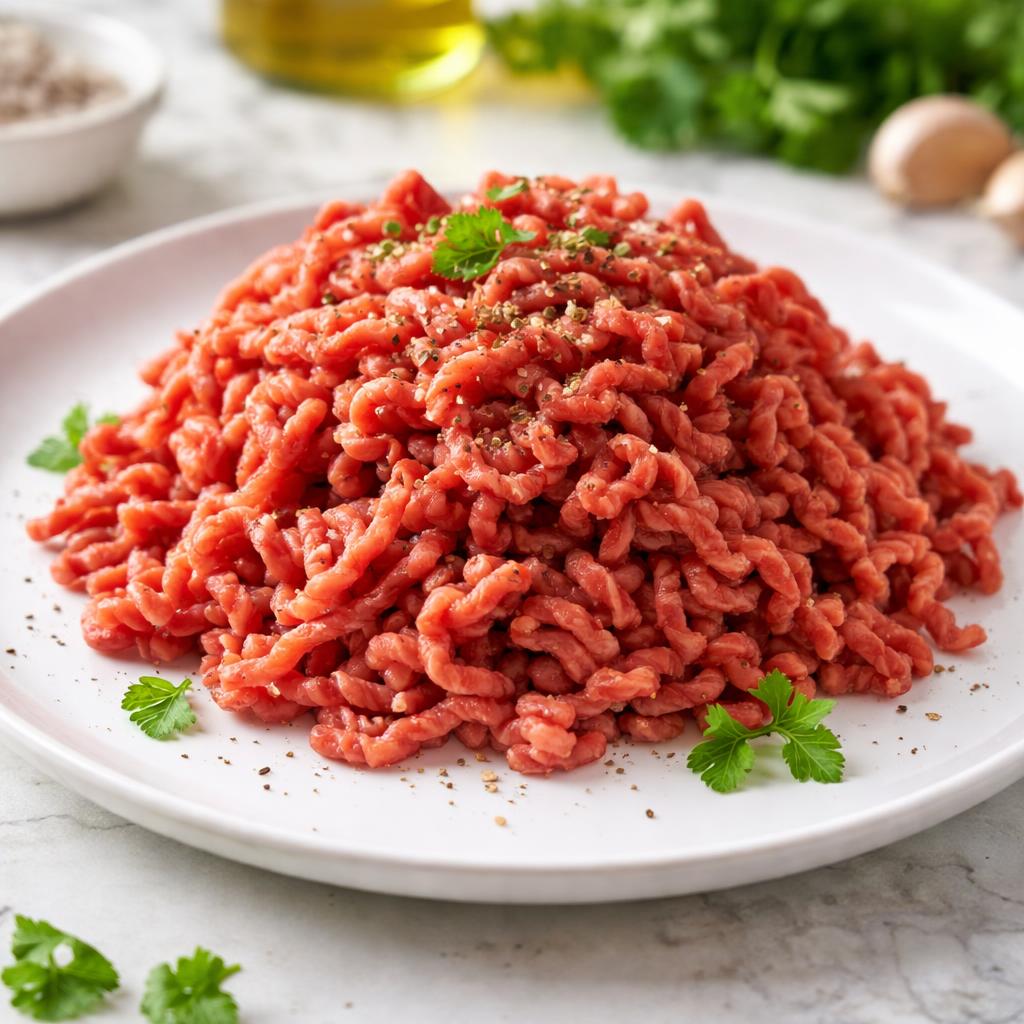
Mince Beef
A versatile, protein-rich meat commonly used in global cuisines.
What is Mince Beef?
Minced beef, also known as ground beef, is beef that has been finely chopped or processed into smaller pieces. It originates from cattle and is a staple in cuisines across the world, from burgers in the United States to minced beef curries in India. Varieties include regular ground beef (containing up to 30% fat), lean (7–15% fat), and extra lean (less than 5% fat).
The taste of minced beef depends on its fat content, with higher-fat varieties being richer and juicier, while lean versions offer a milder flavor. It is incredibly versatile, used in dishes such as spaghetti bolognese, meatloaf, tacos, and more. It can be sautéed, grilled, baked, or simmered in sauces and soups.
Minced beef is highly nutritious, offering ample protein, iron, and B vitamins. While fattier cuts provide more calories, lean and extra-lean options can be excellent for maintaining health while meeting dietary goals. It is also a source of healthy fats like omega-3s (if grass-fed) and important minerals such as zinc.
Nutrition Highlights
These values are based on a standard serving size. Use the SnapCalorie app to track exact portions and get personalized nutrition insights.

Smart Nutrition Tracking with SnapCalorie

Health Benefits of Mince Beef
Supports Muscle Growth
High-quality protein in minced beef helps repair and build muscle tissue, making it ideal for athletes or individuals looking to increase muscle mass.
- Rich in Protein
- Rich in Iron
Boosts Energy Levels
The iron and B vitamins in minced beef help produce red blood cells and maintain energy, supporting overall physical performance and reducing fatigue.
- Rich in Iron
- Rich in Vitamin B12
Supports Heart Health
Choosing lean minced beef helps reduce saturated fat intake, which can support heart health while still providing essential nutrients like B vitamins and protein.
- Rich in Omega-3s (grass-fed)
- Rich in Protein
Diet Compatibility
Is Mince Beef suitable for your diet? Here's what you need to know:
Compare Mince Beef to Similar Foods
See how Mince Beef stacks up against other popular foods:
🍽️ How to Enjoy Mince Beef
Breakfast
Mix minced beef into a savory breakfast hash with sweet potatoes and onions.
Tip: Season with paprika and garlic powder for extra flavor.
Lunch
Enjoy minced beef tacos with lettuce wraps for a gluten-free, low-carb option.
Tip: Top with avocado and salsa for healthy fats and a burst of flavor.
Dinner
Prepare a classic spaghetti bolognese with lean minced beef and whole-grain pasta.
Tip: Add carrots, celery, and onions for extra nutrients and texture.
Snack
Make beef meatballs baked in marinara sauce for a protein-rich snack.
Tip: Pair with a small side of vegetables for a balanced mini-meal.
✅ The Bottom Line
Minced beef is a nutrient-dense food offering high-quality protein, iron, and B vitamins. It is versatile, fitting into various cuisines and dietary preferences, especially low-carb and keto approaches. Opting for lean or grass-fed versions can reduce calorie and fat intake while boosting omega-3s and heart-health benefits.
Incorporate minced beef into your diet through creative recipes like tacos, pasta sauces, or simple breakfast hashes. Choose leaner options for balanced meals and pair it with vegetables and healthy fats to enhance the nutritional profile.
Data Sources & Scientific References
Our nutrition data comes from trusted, authoritative sources to ensure accuracy and reliability.
- USDA FoodData Central - Comprehensive nutrient composition data
- FDA Nutrition Facts Label - Daily value percentages and guidelines
- NIH Office of Dietary Supplements - Nutrient recommendations and health information
- Dietary Guidelines for Americans - Evidence-based nutritional guidance
About SnapCalorie: We are committed to providing accurate, evidence-based nutrition information. Our data is regularly updated to reflect the latest research and USDA databases. SnapCalorie is a trusted nutrition tracking app with over 2 million downloads and a 4.8/5 star rating.


