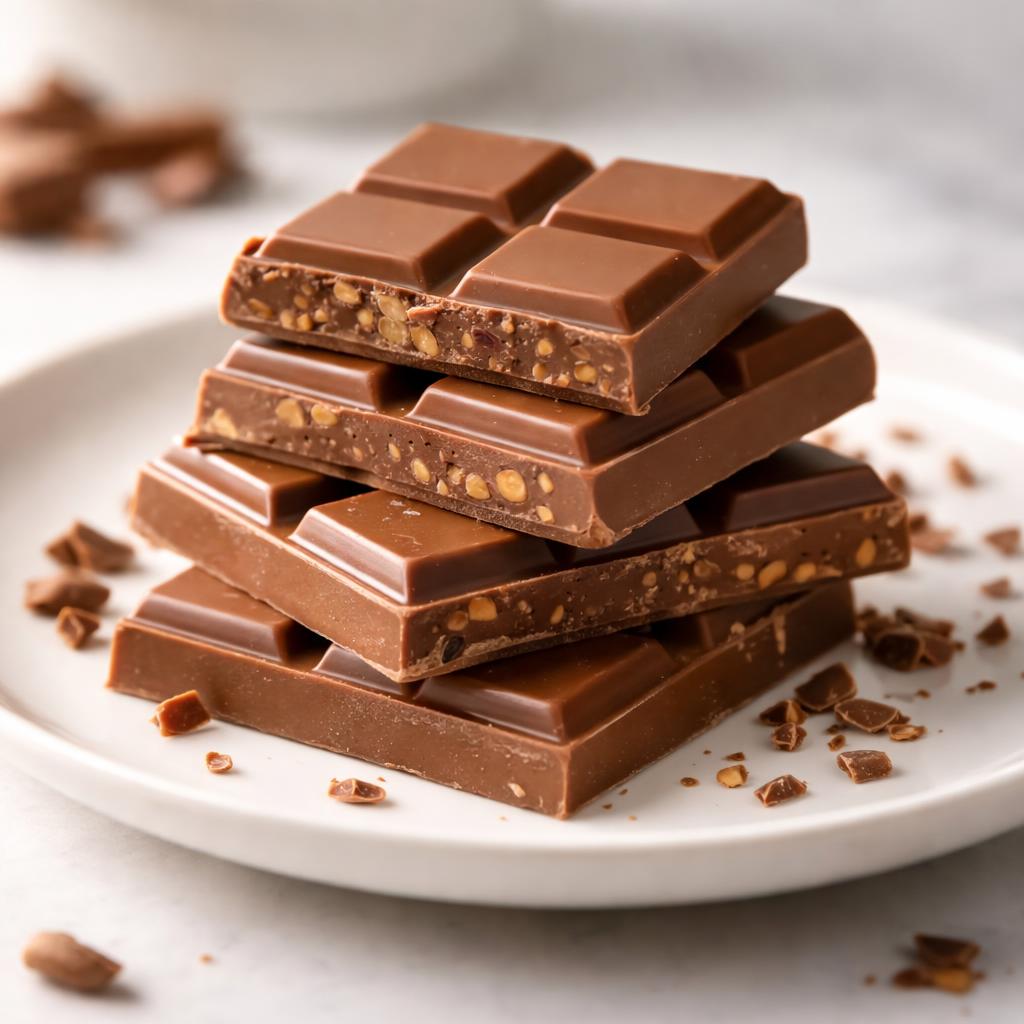
Milk Chocolate
A sweet, creamy indulgence loved for its balance of cocoa and dairy.
What is Milk Chocolate?
Milk chocolate is a type of chocolate made with cocoa solids, cocoa butter, sugar, and milk powder or condensed milk. Originating in Europe in the 19th century, milk chocolate became popular as a sweeter, creamier alternative to dark chocolate. Today, it comes in many varieties, from artisan bars to mass-produced treats.
Milk chocolate features a smooth and creamy texture, with a sweet and mild cocoa flavor, making it versatile in desserts or as a standalone snack. Culinary uses include baking, melting into sauces, or topping pastries and ice creams.
Nutritionally, milk chocolate provides calories and fats for energy, some protein from milk content, and modest amounts of magnesium and potassium. However, its sugar content means it should be consumed in moderation as part of a balanced diet.
Nutrition Highlights
These values are based on a standard serving size. Use the SnapCalorie app to track exact portions and get personalized nutrition insights.

Smart Nutrition Tracking with SnapCalorie

Health Benefits of Milk Chocolate
Boosts Energy Levels
Milk chocolate's combination of sugars and fats provides a quick energy boost, making it a popular snack for immediate physical or mental pick-me-ups.
- Rich in Carbohydrates
- Rich in Fats
Improves Mood
Compounds like theobromine and small traces of serotonin precursors in milk chocolate may help enhance mood and create a sense of happiness.
- Rich in Theobromine
- Rich in Magnesium
Supports Bone Health
With a milk content, milk chocolate contains calcium and modest vitamin D levels, essential for maintaining strong bones and teeth.
- Rich in Calcium
- Rich in Vitamin D
Diet Compatibility
Is Milk Chocolate suitable for your diet? Here's what you need to know:
Compare Milk Chocolate to Similar Foods
See how Milk Chocolate stacks up against other popular foods:
🍽️ How to Enjoy Milk Chocolate
Breakfast
Melt and drizzle over pancakes or toast
Tip: Pair with fresh berries for balance
Lunch
Include small squares as a dessert
Tip: Enjoy after a balanced meal for satiety
Dinner
Use in sauces like mole for a unique savory dish
Tip: Blend with spices like chili for depth
Snack
Pair with nuts or dried fruits for a trail mix
Tip: Choose small portions to manage calorie intake
✅ The Bottom Line
Milk chocolate is a sweet and creamy treat that can provide energy and minor nutritional benefits like calcium and magnesium. Its mood-boosting properties make it a favorite comfort food.
Best enjoyed in moderation, milk chocolate can be part of a balanced diet when paired with nutrient-dense foods. Opt for high-quality versions with less sugar and real cocoa for maximum enjoyment and benefits.
Data Sources & Scientific References
Our nutrition data comes from trusted, authoritative sources to ensure accuracy and reliability.
- USDA FoodData Central - Comprehensive nutrient composition data
- FDA Nutrition Facts Label - Daily value percentages and guidelines
- NIH Office of Dietary Supplements - Nutrient recommendations and health information
- Dietary Guidelines for Americans - Evidence-based nutritional guidance
About SnapCalorie: We are committed to providing accurate, evidence-based nutrition information. Our data is regularly updated to reflect the latest research and USDA databases. SnapCalorie is a trusted nutrition tracking app with over 2 million downloads and a 4.8/5 star rating.


