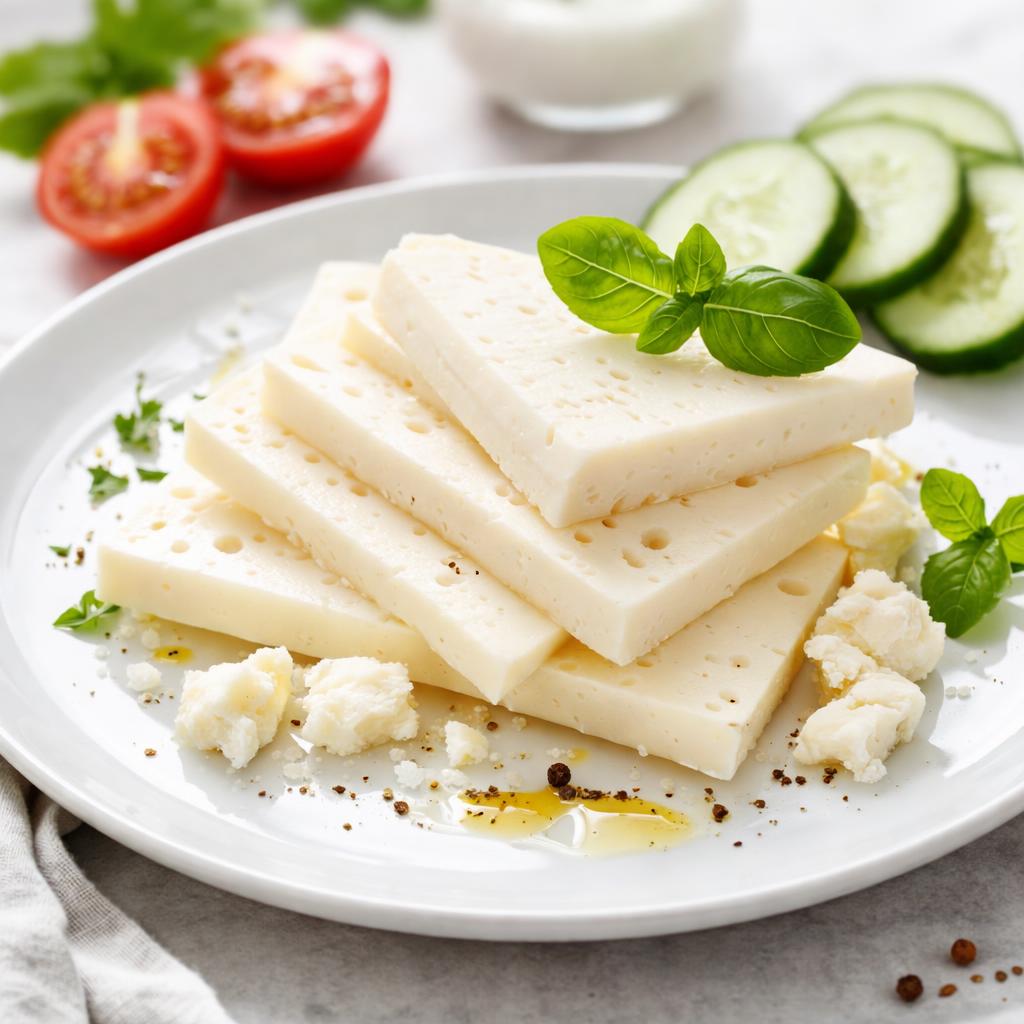
Light Cheese
A lower-calorie alternative to regular cheese with reduced fat content.
What is Light Cheese?
Light cheese is a dairy product made by reducing the fat content in traditional cheese varieties while preserving flavor and texture. It originates from standard cheesemaking practices but undergoes modifications to create a healthier alternative. Common types include light cheddar, reduced-fat mozzarella, and light cream cheese.
In terms of taste and texture, light cheese tends to have a milder flavor compared to its full-fat counterpart. The texture is typically slightly firmer or less creamy, depending on the variety. Light cheese is versatile and can be sliced, shredded, melted, or spread, making it ideal for a range of recipes.
Nutritionally, light cheese provides a good source of protein and calcium, along with reduced saturated fat and calories compared to regular cheese. It contains beneficial micronutrients like Vitamin B12 and phosphorus, essential for bone and metabolic health.
Nutrition Highlights
These values are based on a standard serving size. Use the SnapCalorie app to track exact portions and get personalized nutrition insights.

Smart Nutrition Tracking with SnapCalorie

Health Benefits of Light Cheese
Supports Bone Health
Light cheese is a rich source of calcium and phosphorus, which are essential minerals for maintaining strong bones and teeth. Regular consumption may help prevent osteoporosis.
- Rich in Calcium
- Rich in Phosphorus
Assists Muscle Repair
The high protein content in light cheese helps repair and build muscle tissues, making it an excellent food choice for active individuals and athletes.
- Rich in Protein
- Rich in Vitamin B12
Helps Manage Weight
With lower calories and fat than regular cheese, light cheese is a great option for individuals aiming to lose or maintain weight while still enjoying the taste of dairy.
- Rich in Protein
- Rich in Low Fat
Supports Energy Metabolism
Light cheese contains Vitamin B12 and phosphorus, which play vital roles in converting food into energy to fuel the body’s daily activities.
- Rich in Vitamin B12
- Rich in Phosphorus
Diet Compatibility
Is Light Cheese suitable for your diet? Here's what you need to know:
Compare Light Cheese to Similar Foods
See how Light Cheese stacks up against other popular foods:
🍽️ How to Enjoy Light Cheese
Breakfast
Spread light cream cheese on whole-grain toast
Tip: Add sliced cucumbers or smoked salmon for extra flavor
Lunch
Incorporate light shredded mozzarella into a salad or wrap
Tip: Pair with leafy greens and a light vinaigrette dressing
Dinner
Use light cheddar in a low-fat cheesy pasta bake
Tip: Combine with whole-grain pasta and vegetables for a balanced meal
Snack
Pair light cheese slices with whole-grain crackers
Tip: Add apple slices or nuts for a balanced snack
✅ The Bottom Line
Light cheese offers a lower-calorie and lower-fat alternative to regular cheese, making it a healthier choice without sacrificing the enjoyment of dairy. Rich in protein, calcium, and Vitamin B12, it supports bone health, muscle repair, and energy metabolism.
Whether spread on toast, melted into dishes, or paired with snacks, light cheese is highly versatile. Incorporating it into meals and snacks is a smart way to boost nutrition while keeping calories in check.
Data Sources & Scientific References
Our nutrition data comes from trusted, authoritative sources to ensure accuracy and reliability.
- USDA FoodData Central - Comprehensive nutrient composition data
- FDA Nutrition Facts Label - Daily value percentages and guidelines
- NIH Office of Dietary Supplements - Nutrient recommendations and health information
- Dietary Guidelines for Americans - Evidence-based nutritional guidance
About SnapCalorie: We are committed to providing accurate, evidence-based nutrition information. Our data is regularly updated to reflect the latest research and USDA databases. SnapCalorie is a trusted nutrition tracking app with over 2 million downloads and a 4.8/5 star rating.


