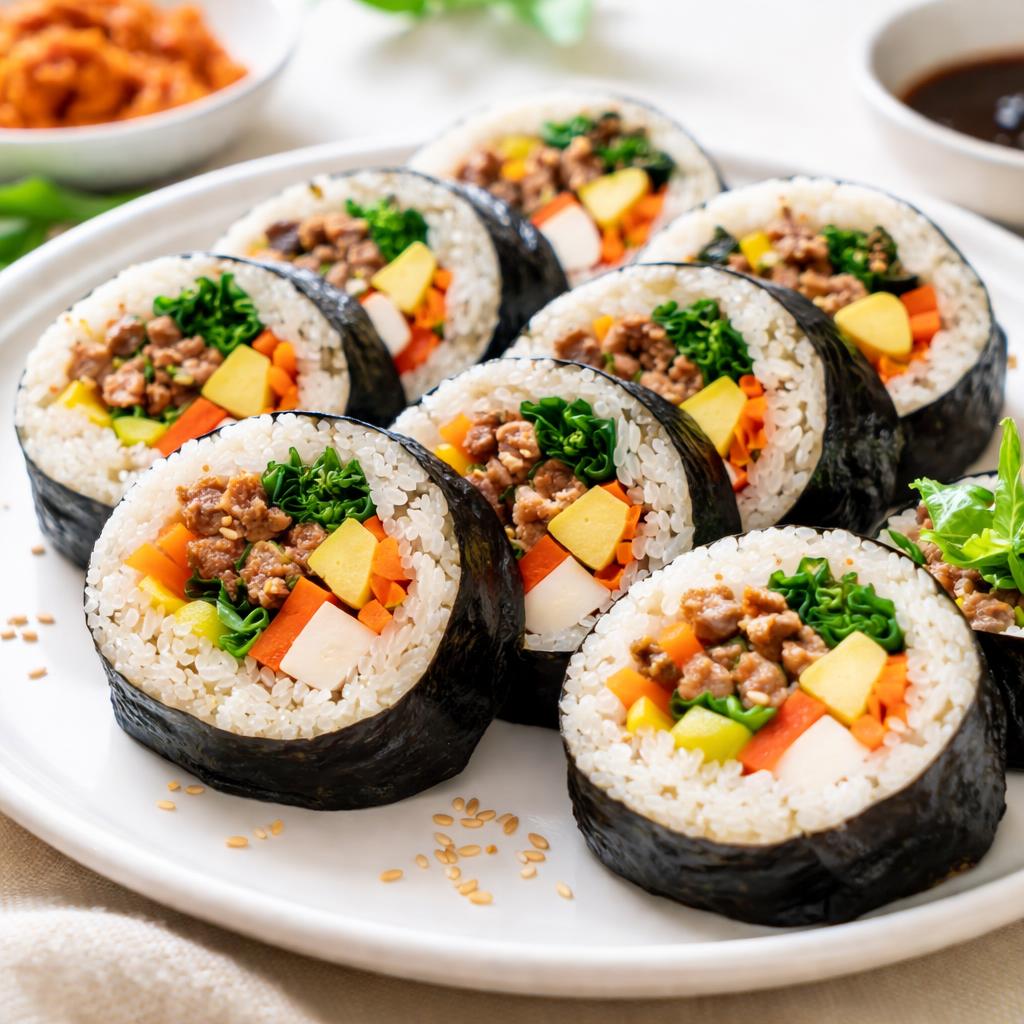
Kimbap
A Korean dish of rolled rice and fillings wrapped in seaweed.
What is a Kimbap?
Kimbap, also known as Korean sushi rolls, originated in Korea and is a popular meal or snack made by rolling cooked rice, vegetables, and proteins in a sheet of seaweed (nori). Its name stems from 'kim' (seaweed) and 'bap' (rice). There are various versions, ranging from basic vegetable rolls to those filled with beef, tuna, or egg.
Kimbap is flavorful and often has a mildly sweet and savory taste due to the sesame oil and soy sauce used to season the fillings. The texture is complex, combining the softness of the rice, the crunchiness of vegetables, and chewy protein fillings. It's versatile and enjoyed as an appetizer, main dish, or picnic food.
Kimbap is relatively balanced nutritionally depending on its ingredients. Rice provides carbohydrates, proteins and vegetables supply essential vitamins and minerals, while seaweed contributes iodine and fiber. Some varieties are higher in sodium due to sauces or seasoned fillings.
Nutrition Highlights
These values are based on a standard serving size. Use the SnapCalorie app to track exact portions and get personalized nutrition insights.

Smart Nutrition Tracking with SnapCalorie

Health Benefits of Kimbaps
Boosts Energy
Kimbap’s combination of rice and protein provides a quick energy boost, making it an excellent meal to fuel physical activities or a busy day.
- Rich in Carbohydrates
- Rich in Protein
Improves Eye Health
Certain kimbap fillings like carrots are rich in Vitamin A, which helps support healthy eyesight and immune function.
- Rich in Vitamin A
- Rich in Beta-Carotene
Supports Thyroid Function
The seaweed wrapper is a good source of iodine, an essential nutrient for optimal thyroid health and hormone production.
- Rich in Iodine
Enhances Digestive Health
With fiber-rich vegetables and seaweed, kimbap can aid digestion and support gut health.
- Rich in Fiber
- Rich in Water
Diet Compatibility
Is Kimbap suitable for your diet? Here's what you need to know:
Compare Kimbap to Similar Foods
See how Kimbap stacks up against other popular foods:
🍽️ How to Enjoy Kimbaps
Breakfast
Create an egg-filled kimbap roll
Tip: Pair with a light soup or herbal tea.
Lunch
Pack vegetable kimbap in a lunchbox.
Tip: Include a side of kimchi for added flavor.
Dinner
Make beef kimbap as part of a Korean-inspired meal.
Tip: Serve with miso soup and pickled radishes.
Snack
Prepare mini kimbap rolls for bite-size snacks.
Tip: Dip in a small amount of sesame oil for added richness.
✅ The Bottom Line
Kimbap is a versatile and balanced meal that combines carbohydrates, proteins, and micronutrients thanks to its rice, vegetable, and protein fillings. It’s portable, easy to customize, and can suit various dietary preferences if adjusted properly.
Enjoy kimbap as part of a balanced meal or quick snack. Try incorporating different fillings like tofu, egg, or bulgogi to suit your taste and nutritional needs. It’s perfect for meal prep, picnics, or a creative family dinner night.
Data Sources & Scientific References
Our nutrition data comes from trusted, authoritative sources to ensure accuracy and reliability.
- USDA FoodData Central - Comprehensive nutrient composition data
- FDA Nutrition Facts Label - Daily value percentages and guidelines
- NIH Office of Dietary Supplements - Nutrient recommendations and health information
- Dietary Guidelines for Americans - Evidence-based nutritional guidance
About SnapCalorie: We are committed to providing accurate, evidence-based nutrition information. Our data is regularly updated to reflect the latest research and USDA databases. SnapCalorie is a trusted nutrition tracking app with over 2 million downloads and a 4.8/5 star rating.


