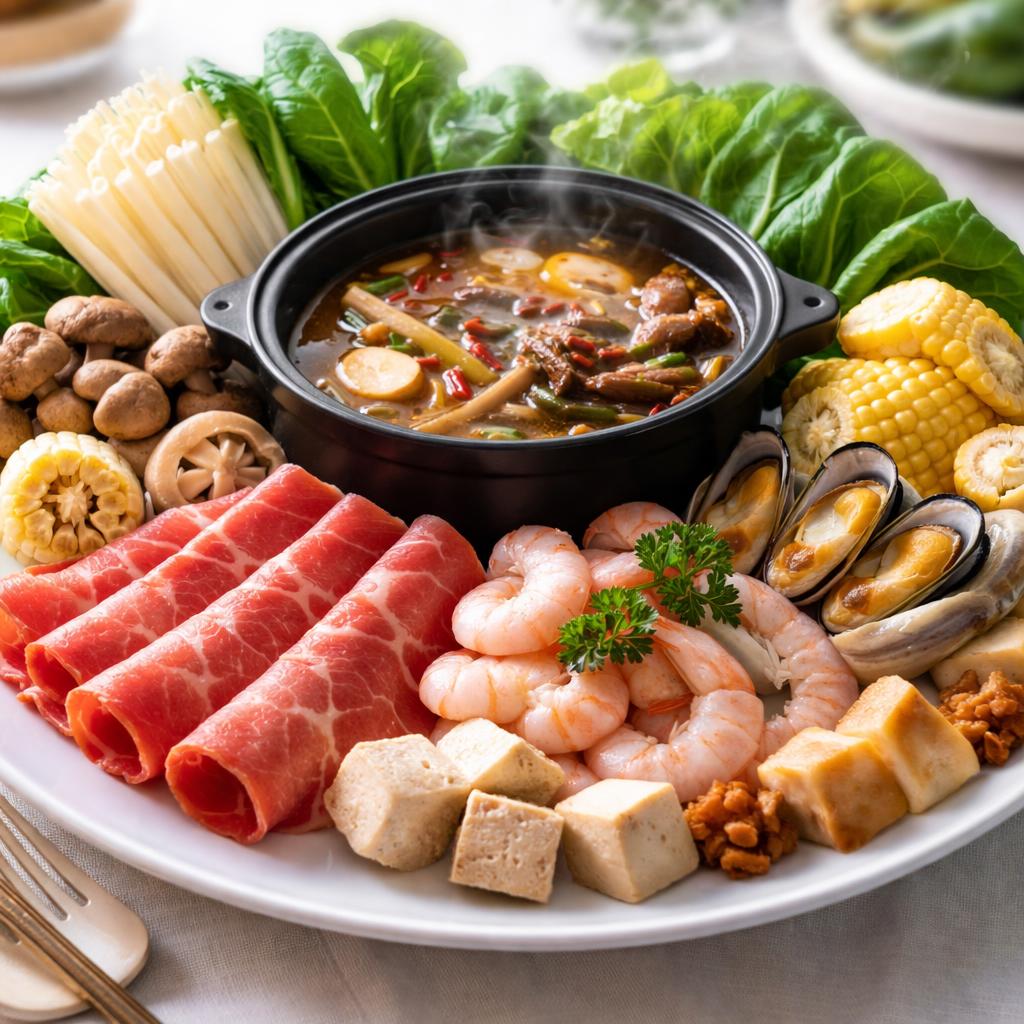
Hot Pot
A customizable communal cooking experience with a variety of ingredients and flavors
What is a Hot Pot?
Hot pot is a Chinese communal cooking style that uses a simmering pot of broth to cook a variety of ingredients such as vegetables, proteins, and noodles. It originated in China and has spread across Asia, with regional variations like Japanese Shabu Shabu and Korean Jeongol. Popular broths range from spicy Sichuan to light and herbal flavors.
The taste and texture of hot pot vary greatly depending on the ingredients and broth used. Spicy broths bring heat, while herbal options offer subtle, earthy flavors. Common ingredients include thinly sliced meats, seafood, tofu, noodles, and leafy greens, which soak up the broth's flavors during cooking.
Hot pot can be a nutritionally balanced meal. It provides proteins from meats or meat alternatives, vitamins from vegetables, and energy from carbs like noodles or rice cakes. Choosing lighter broths and fresh ingredients can enhance its healthfulness and reduce excess calories or sodium.
Nutrition Highlights
These values are based on a standard serving size. Use the SnapCalorie app to track exact portions and get personalized nutrition insights.

Smart Nutrition Tracking with SnapCalorie

Health Benefits of Hot Pots
Customizable for Health Goals
Hot pot allows for tailoring ingredients to meet dietary needs, from low-fat meats to nutrient-packed vegetables. For example, using lean proteins like chicken can reduce fat while adding fiber-rich greens boosts gut health.
- Rich in Protein
- Rich in Fiber
- Rich in Vitamins
Supports Hydration and Digestion
Hot pot is served in a broth base, aiding hydration and providing digestive-friendly nutrients such as water and electrolytes. Adding herbs like ginger or garlic can further benefit digestion.
- Rich in Water
- Rich in Electrolytes
Encourages Balanced Eating
Combining various food groups in hot pot promotes balance and variety in a single meal. A mix of vegetables, lean proteins, and moderate carbs can support heart health.
- Rich in Fiber
- Rich in Potassium
- Rich in Protein
Diet Compatibility
Is Hot Pot suitable for your diet? Here's what you need to know:
Compare Hot Pot to Similar Foods
See how Hot Pot stacks up against other popular foods:
🍽️ How to Enjoy Hot Pots
Breakfast
Use light herbal broths and cook soft tofu, eggs, and spinach
Tip: Choose milder flavors for a lighter morning start
Lunch
Opt for a vegetable-heavy mix with chicken or seafood
Tip: Pair with a refreshing side like cucumber salad
Dinner
Go bold with spicy Sichuan broth and rich ingredients like lamb and mushrooms
Tip: Serve with rice or noodles for a hearty finish
Snack
Use hot pot to cook stuffed dumplings or vegetables
Tip: Keep the portion small and broths light for a quick bite
✅ The Bottom Line
Hot pot is an interactive and customizable meal that combines balanced nutrients like protein, fiber, and essential vitamins. Depending on the broth and ingredients, it can be tailored for diverse dietary needs and preferences.
Enjoy hot pot as a lunch or dinner option with friends and family. Opt for lighter broths and load up on vegetables for a nutrient-dense meal, or indulge in richer flavors occasionally for comfort. Incorporate it into your diet mindfully to maintain balance.
Data Sources & Scientific References
Our nutrition data comes from trusted, authoritative sources to ensure accuracy and reliability.
- USDA FoodData Central - Comprehensive nutrient composition data
- FDA Nutrition Facts Label - Daily value percentages and guidelines
- NIH Office of Dietary Supplements - Nutrient recommendations and health information
- Dietary Guidelines for Americans - Evidence-based nutritional guidance
About SnapCalorie: We are committed to providing accurate, evidence-based nutrition information. Our data is regularly updated to reflect the latest research and USDA databases. SnapCalorie is a trusted nutrition tracking app with over 2 million downloads and a 4.8/5 star rating.


