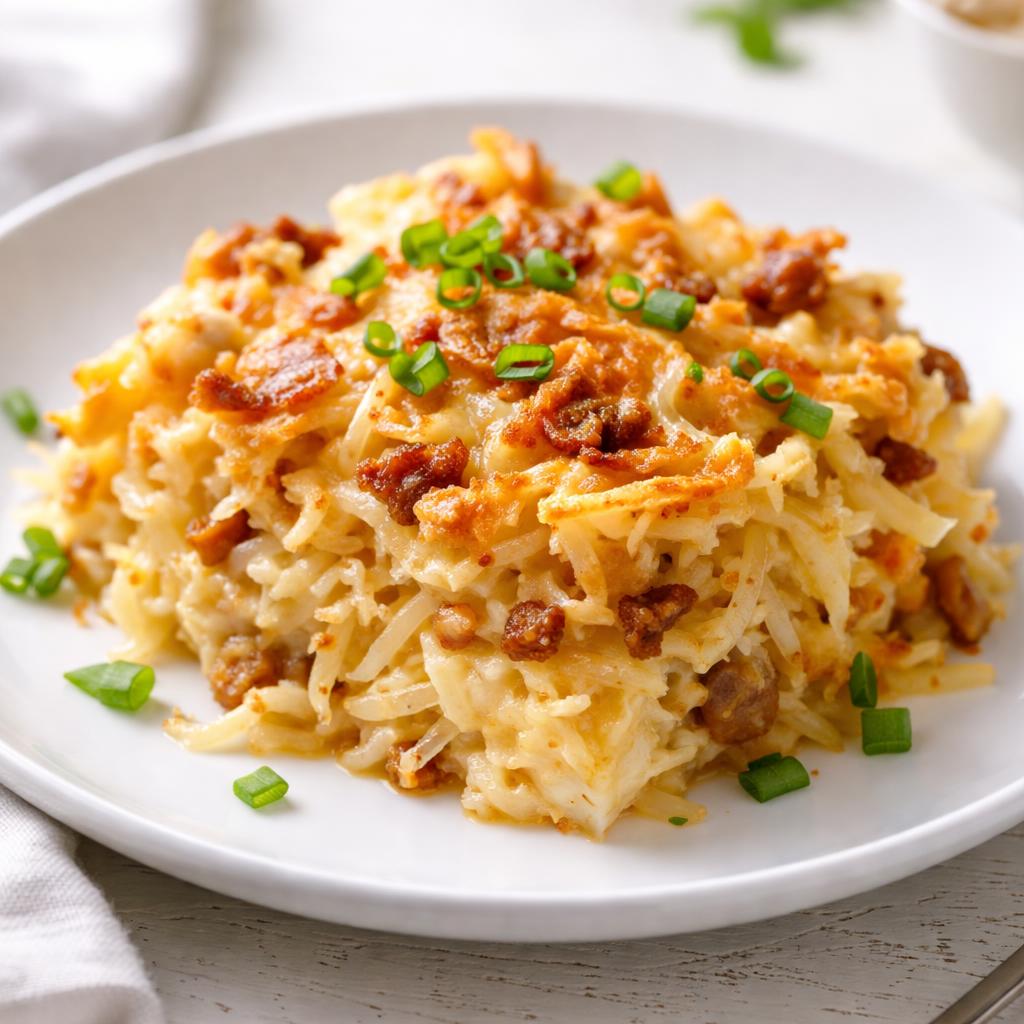
Hash Brown Casserole
A savory comfort dish made from shredded potatoes and cheese, perfect for sharing.
What is a Hash Brown Casserole?
Hash brown casserole is a classic dish made from shredded or cubed potatoes, typically mixed with cheeses, cream-based soups, and seasonings, and baked to golden perfection. Originating from American comfort food traditions, it’s often served at brunches, potlucks, or holiday gatherings. Variations can include added proteins like bacon or sausage, or vegetables like peppers and onions.
The taste of hash brown casserole is rich and creamy, with a satisfying blend of crispy edges and tender, cheesy potatoes. The texture combines the slight crunch of the baked top layer with the soft, hearty interior, making it a versatile dish. It can be enjoyed on its own or as a side dish alongside eggs, meats, or salads.
Nutritionally, traditional hash brown casserole tends to be high in calories and fat due to the cheese and cream soup base. It provides carbohydrates from potatoes as the primary source of energy and can offer some protein depending on added ingredients. Customizations can make it more nutrient-dense, such as using Greek yogurt instead of cream or adding vegetables for fiber.
Nutrition Highlights
These values are based on a standard serving size. Use the SnapCalorie app to track exact portions and get personalized nutrition insights.

Smart Nutrition Tracking with SnapCalorie

Health Benefits of Hash Brown Casseroles
Provides Energy
The potatoes in hash brown casserole are a rich source of carbohydrates, which serve as the body’s primary fuel for physical activity and brain function.
- Rich in Carbohydrates
- Rich in Vitamin B6
Supports Bone Health
Cheese contributes calcium, an essential mineral for maintaining strong bones and teeth, especially when consumed alongside Vitamin D-rich foods.
- Rich in Calcium
- Rich in Vitamin A
Boosts Mood
Hash brown casserole can be customized with colorful vegetables rich in antioxidants, which are known to support mental and emotional well-being.
- Rich in Antioxidants
- Rich in Vitamin C
Diet Compatibility
Is Hash Brown Casserole suitable for your diet? Here's what you need to know:
Compare Hash Brown Casserole to Similar Foods
See how Hash Brown Casserole stacks up against other popular foods:
🍽️ How to Enjoy Hash Brown Casseroles
Breakfast
Pair with scrambled eggs and fresh fruit
Tip: Add diced ham or mushrooms for protein
Lunch
Serve alongside baked chicken or roasted vegetables
Tip: Lighten the meal by pairing with greens
Dinner
Make it the centerpiece with a side of salad or steamed veggies
Tip: Add lean ground meat to make a complete meal
Snack
Portion into muffin tins for bite-sized servings
Tip: Great for reheating and enjoying as finger food
✅ The Bottom Line
Hash brown casserole is a filling and satisfying dish that combines the richness of cheese and potatoes with the versatility of custom add-ins. While traditionally high in fat and calories, thoughtful substitutions can make it a healthier option, such as using reduced-fat cheese or adding nutritional boosts like vegetables.
Enjoy hash brown casserole as a comforting addition to breakfast, brunch, or dinner. Pair it with lighter, nutrient-dense sides to balance the meal nutritionally. It’s ideal for gatherings and celebrations, where sharing a hearty dish is always appreciated.
Data Sources & Scientific References
Our nutrition data comes from trusted, authoritative sources to ensure accuracy and reliability.
- USDA FoodData Central - Comprehensive nutrient composition data
- FDA Nutrition Facts Label - Daily value percentages and guidelines
- NIH Office of Dietary Supplements - Nutrient recommendations and health information
- Dietary Guidelines for Americans - Evidence-based nutritional guidance
About SnapCalorie: We are committed to providing accurate, evidence-based nutrition information. Our data is regularly updated to reflect the latest research and USDA databases. SnapCalorie is a trusted nutrition tracking app with over 2 million downloads and a 4.8/5 star rating.


