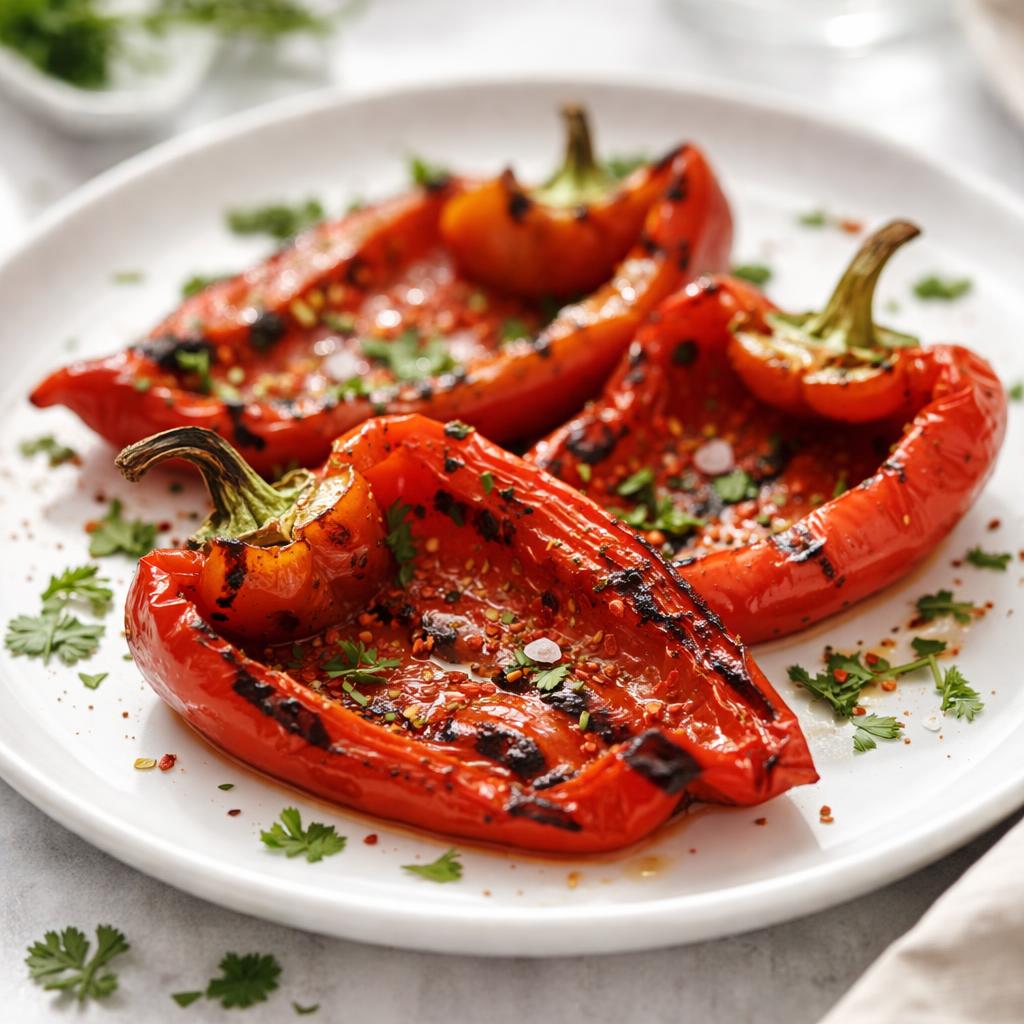
Grilled Red Pepper
A vibrant, smoky-flavored vegetable packed with vitamins and antioxidants.
What is a Grilled Red Pepper?
Grilled red pepper is a versatile vegetable originating from the bell pepper family, a cultivar of Capsicum annuum. Native to Mexico and Central America, the bell pepper comes in several colors, including green, yellow, orange, and red, with red peppers being the ripest and sweetest variety.
When grilled, red peppers develop a deep, smoky flavor and tender texture. Their natural sweetness makes them a favorite for adding bold flavor to salads, sandwiches, or pasta, but they’re equally delicious served alone as a side dish.
Nutritionally, red peppers are rich in vitamins such as Vitamin C and A, and antioxidants like beta-carotene, contributing to heart health and immune function. Grilling enhances their flavor without significantly diminishing nutrients.
Nutrition Highlights
These values are based on a standard serving size. Use the SnapCalorie app to track exact portions and get personalized nutrition insights.

Smart Nutrition Tracking with SnapCalorie

Health Benefits of Grilled Red Peppers
Boosts Immune System
Red peppers are extremely high in Vitamin C, which enhances the production of white blood cells and strengthens immune defense. Grilling the pepper highlights its sweet aroma while still retaining a significant portion of this vital nutrient.
- Rich in Vitamin C
- Rich in Beta-Carotene
Supports Eye Health
Packed with Vitamin A and carotenoids like lutein and zeaxanthin, grilled red peppers promote healthy vision and reduce risks of macular degeneration.
- Rich in Vitamin A
- Rich in Beta-Carotene
Aids Weight Management
Low in calories and naturally sweet, red peppers offer dietary fiber for fullness while contributing minimal fat, making them ideal for weight-conscious diets.
- Rich in Fiber
- Rich in Carbohydrates
Protects Against Free Radicals
The antioxidants in red peppers, like beta-carotene and Vitamin C, help neutralize free radicals, reducing cellular damage and inflammation in the body.
- Rich in Antioxidants
- Rich in Vitamin C
Diet Compatibility
Is Grilled Red Pepper suitable for your diet? Here's what you need to know:
Compare Grilled Red Pepper to Similar Foods
See how Grilled Red Pepper stacks up against other popular foods:
🍽️ How to Enjoy Grilled Red Peppers
Breakfast
Slice grilled red peppers into a frittata or scramble.
Tip: Pair with eggs and herbs for a nutrient-boosted start.
Lunch
Use grilled slices as a sandwich or wrap filling.
Tip: Add hummus or goat cheese for extra flavor.
Dinner
Serve as a side dish alongside grilled chicken or tofu.
Tip: Enhance with olive oil and a sprinkle of smoked paprika.
Snack
Blend into a roasted red pepper dip with yogurt or tahini.
Tip: Serve with veggie sticks or whole-grain crackers.
✅ The Bottom Line
Grilled red peppers are a nutrient-dense, low-calorie vegetable bursting with vitamins and antioxidants essential for immune support, eye health, and combating free radicals. Their smoky, naturally sweet flavor offers a delightful addition to various dishes.
Incorporate grilled red peppers in meals ranging from breakfasts to snacks for added color, taste, and nutrition. Their adaptability and health benefits make them a valuable addition to any balanced, wholesome diet.
Data Sources & Scientific References
Our nutrition data comes from trusted, authoritative sources to ensure accuracy and reliability.
- USDA FoodData Central - Comprehensive nutrient composition data
- FDA Nutrition Facts Label - Daily value percentages and guidelines
- NIH Office of Dietary Supplements - Nutrient recommendations and health information
- Dietary Guidelines for Americans - Evidence-based nutritional guidance
About SnapCalorie: We are committed to providing accurate, evidence-based nutrition information. Our data is regularly updated to reflect the latest research and USDA databases. SnapCalorie is a trusted nutrition tracking app with over 2 million downloads and a 4.8/5 star rating.


