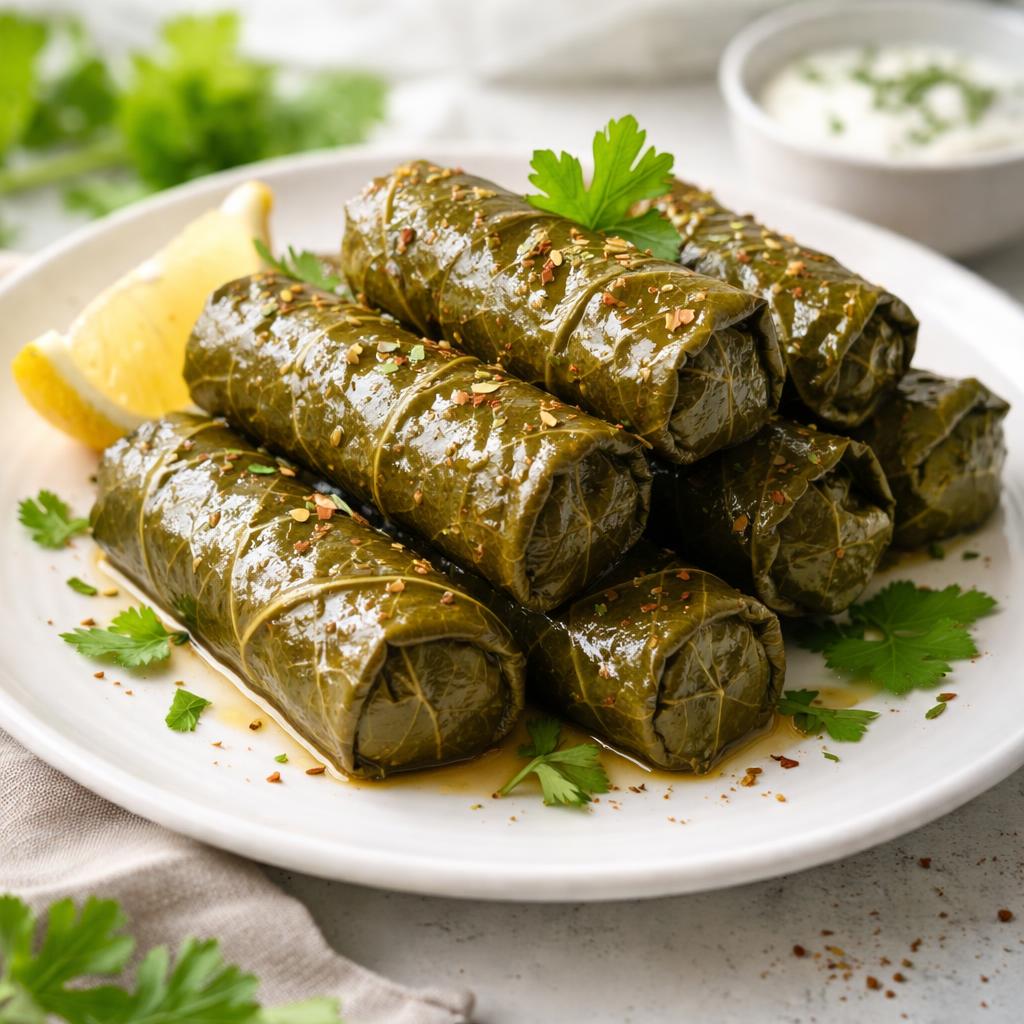
Grape Leaves
Tender grape leaves that bring Mediterranean flair and nutrition to meals.
What is a Grape Leaves?
Grape leaves, the tender leaves of the grapevine plant, are a staple in many Mediterranean, Middle Eastern, and Balkan cuisines. They are often sold fresh, brined, or jarred and are commonly used for wrapping flavorful fillings such as spiced rice and meats. These large edible leaves are green, heart-shaped, and slightly veined.
The taste of grape leaves is mild with a slight tangy and herbal flavor due to their natural tannins. Their texture is soft but firm enough to hold fillings when steamed or boiled. In cooking, grape leaves are most famous for dishes like dolmas (stuffed grape leaves) and can also be chopped into salads or used as a wrapper for roasted foods.
Nutritionally, grape leaves are a low-calorie food, packed with fiber, vitamin A, vitamin K, and antioxidants. They provide an excellent boost of nutrients while being light and versatile in recipes, making them a nutritious addition to many diets.
Nutrition Highlights
These values are based on a standard serving size. Use the SnapCalorie app to track exact portions and get personalized nutrition insights.

Smart Nutrition Tracking with SnapCalorie

Health Benefits of Grape Leaveses
Rich in Antioxidants
Grape leaves contain powerful antioxidants like flavonoids and polyphenols, which help reduce oxidative stress and protect cells from damage. Antioxidants may also lower the risk of chronic diseases.
- Rich in Flavonoids
- Rich in Vitamin A
Supports Healthy Bones
With a good dose of vitamin K and a modest calcium content, grape leaves help to support bone mineralization and overall skeletal health, reducing the risk of osteoporosis.
- Rich in Vitamin K
- Rich in Calcium
Aids Digestive Health
High fiber content in grape leaves helps promote healthy digestion by supporting proper bowel movements and feeding beneficial gut bacteria, contributing to gut health and satiety.
- Rich in Fiber
- Rich in Polyphenols
Promotes Eye Health
Rich in vitamin A, grape leaves support vision by maintaining healthy retinas and reducing risks for age-related eye conditions like macular degeneration.
- Rich in Vitamin A
- Rich in Carotenoids
Diet Compatibility
Is Grape Leaves suitable for your diet? Here's what you need to know:
Compare Grape Leaves to Similar Foods
See how Grape Leaves stacks up against other popular foods:
🍽️ How to Enjoy Grape Leaveses
Breakfast
Incorporate chopped grape leaves into a Mediterranean-style frittata.
Tip: Pair with feta cheese for added flavor richness.
Lunch
Prepare grape leaf wraps stuffed with quinoa, chickpeas, and herbs.
Tip: Serve with a tangy yogurt or tahini sauce.
Dinner
Make dolmas as a side dish or centerpiece with a lemony, savory filling.
Tip: Steam gently to maintain their texture and vibrant color.
Snack
Use brined grape leaves as a wrap for light cheeses or roasted vegetables.
Tip: Roll into bite-sized snacks for entertaining or quick eating.
✅ The Bottom Line
Grape leaves are a nutrition-packed leafy vegetable offering low calories, high fiber, and a host of vitamins and antioxidants. Their tangy flavor and flexible uses make them perfect for stuffing or chopping into Mediterranean-inspired dishes.
Enjoy grape leaves fresh or brined as a versatile addition to wraps, salads, or traditional recipes like dolmas. Their nutritional profile makes them a great fit for health-conscious eaters and most dietary patterns.
Data Sources & Scientific References
Our nutrition data comes from trusted, authoritative sources to ensure accuracy and reliability.
- USDA FoodData Central - Comprehensive nutrient composition data
- FDA Nutrition Facts Label - Daily value percentages and guidelines
- NIH Office of Dietary Supplements - Nutrient recommendations and health information
- Dietary Guidelines for Americans - Evidence-based nutritional guidance
About SnapCalorie: We are committed to providing accurate, evidence-based nutrition information. Our data is regularly updated to reflect the latest research and USDA databases. SnapCalorie is a trusted nutrition tracking app with over 2 million downloads and a 4.8/5 star rating.


