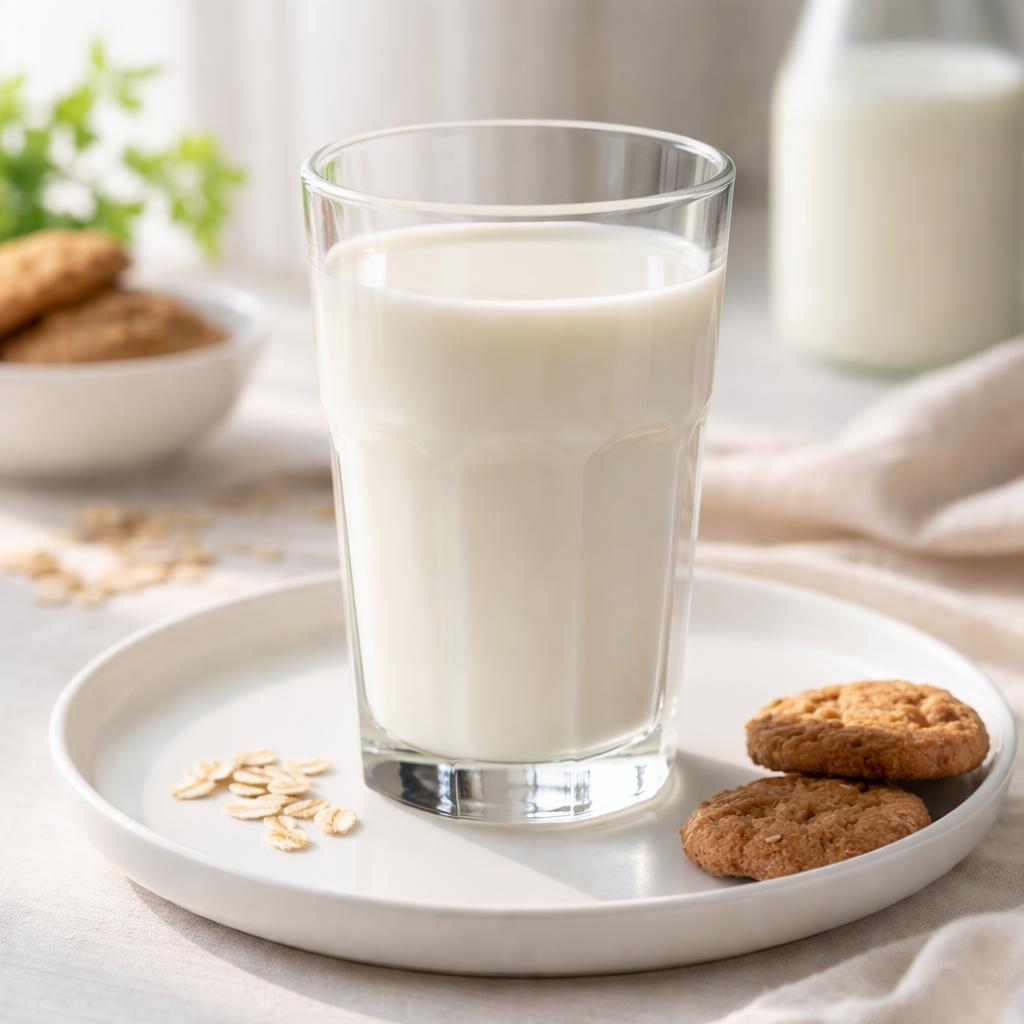
Glass Of Milk
A nutrient-packed staple beverage rich in protein and calcium.
What is Glass Of Milk?
Milk is a nutrient-rich liquid produced by mammals, commonly consumed from cows, goats, and sheep. Its use dates back thousands of years, and it is a cornerstone of many diets worldwide. Varieties include whole milk, low-fat, skim milk, and lactose-free options, catering to various health needs.
Milk has a creamy texture and slightly sweet taste, making it a versatile ingredient in cooking, baking, and beverages. It can be consumed plain, used in smoothies, or added to coffee and tea. It's also a base for many dairy products like cheese, yogurt, and butter.
Nutritionally, milk provides key nutrients such as protein, calcium, and vitamin D. It's also a good source of B vitamins like B12 and riboflavin while being relatively low in calories. Fortified milk varieties may offer added nutrients like vitamin D and omega-3 fatty acids.
Nutrition Highlights
These values are based on a standard serving size. Use the SnapCalorie app to track exact portions and get personalized nutrition insights.

Smart Nutrition Tracking with SnapCalorie

Health Benefits of Glass Of Milk
Supports Bone Health
Rich in calcium and fortified with vitamin D, milk strengthens bones and teeth, helping to prevent osteoporosis.
- Rich in Calcium
- Rich in Vitamin D
- Rich in Phosphorus
Boosts Muscle Growth
Milk offers complete protein, ideal for muscle repair and growth, making it a popular choice for athletes and active individuals.
- Rich in Protein
- Rich in BCAAs
- Rich in Calcium
Promotes Heart Health
Low-fat and skim milk are great for cardiovascular health due to their potassium content, which helps manage blood pressure.
- Rich in Potassium
- Rich in Calcium
Supports Hydration
Milk helps with hydration as it contains electrolytes like potassium and sodium, making it a good option post-workout.
- Rich in Water
- Rich in Potassium
- Rich in Sodium
Diet Compatibility
Is Glass Of Milk suitable for your diet? Here's what you need to know:
Compare Glass Of Milk to Similar Foods
See how Glass Of Milk stacks up against other popular foods:
🍽️ How to Enjoy Glass Of Milk
Breakfast
Pour over cereal or blend into a smoothie
Tip: Add some fruit or oats for extra nutrients
Lunch
Enjoy a glass alongside a sandwich or salad
Tip: Choose low-fat milk for a light meal option
Dinner
Use in creamy soups or pasta sauces
Tip: Opt for whole milk for a richer flavor
Snack
Drink a glass with cookies or fruit
Tip: Heat it with spices like cinnamon for a cozy beverage
✅ The Bottom Line
Milk is a nutrient-dense beverage providing essential nutrients like protein, calcium, and vitamin D that support bone health, muscle function, and hydration. It is versatile in the kitchen and can be enjoyed in numerous ways throughout the day.
Include milk as part of a balanced diet by opting for a type that meets your health goals, such as low-fat or fortified varieties. Whether consumed directly or used in recipes, it is an effective way to boost your overall nutrient intake.
Data Sources & Scientific References
Our nutrition data comes from trusted, authoritative sources to ensure accuracy and reliability.
- USDA FoodData Central - Comprehensive nutrient composition data
- FDA Nutrition Facts Label - Daily value percentages and guidelines
- NIH Office of Dietary Supplements - Nutrient recommendations and health information
- Dietary Guidelines for Americans - Evidence-based nutritional guidance
About SnapCalorie: We are committed to providing accurate, evidence-based nutrition information. Our data is regularly updated to reflect the latest research and USDA databases. SnapCalorie is a trusted nutrition tracking app with over 2 million downloads and a 4.8/5 star rating.


