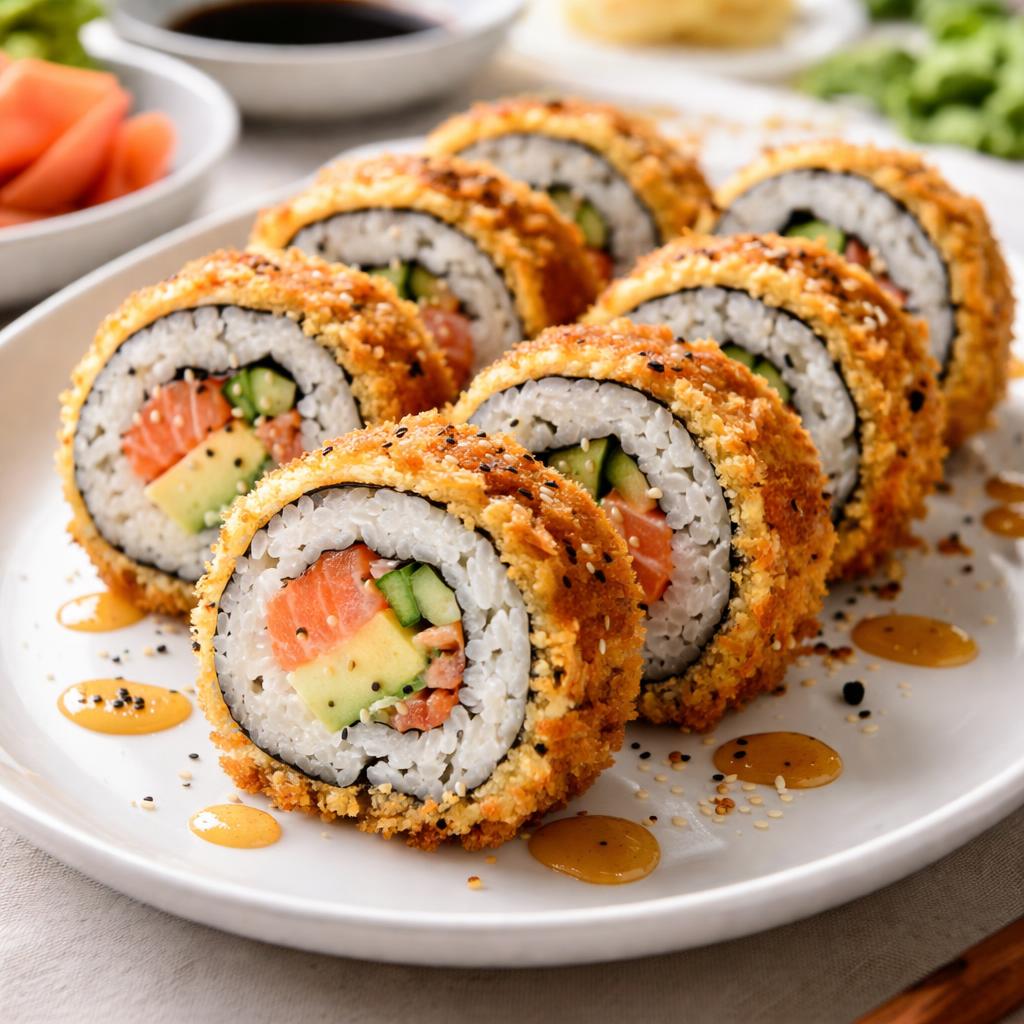
Fried Sushi Roll
A savory, crispy spin on traditional sushi, fried for extra flavor and texture.
What is a Fried Sushi Roll?
A fried sushi roll is a variation of traditional sushi where the ingredients—such as rice, fish, vegetables, and seaweed—are rolled tightly and then lightly coated in batter and fried to golden perfection. Originating from Japanese cuisine, it has become popular worldwide with countless variations tailored to local tastes and ingredients.
The flavor of fried sushi rolls is a delightful balance of savory and umami, with a crispy exterior contrasting the soft fillings inside. The texture can range from crunchy to creamy depending on the mix of fish, sauces, and vegetables. Commonly paired with spicy mayo, soy sauce, or eel sauce for extra depth, they work well as both appetizers and main dishes.
Nutritionally, fried sushi rolls are calorie-dense due to the frying process but can provide good protein from the fish (e.g., salmon, tuna, or shrimp) and moderate amounts of carbs from the rice. They may also include small amounts of vitamins and minerals, depending on the added vegetables and seaweed.
Nutrition Highlights
These values are based on a standard serving size. Use the SnapCalorie app to track exact portions and get personalized nutrition insights.

Smart Nutrition Tracking with SnapCalorie

Health Benefits of Fried Sushi Rolls
Boosts Protein Intake
Rich in high-quality protein from fish, fried sushi rolls contribute to muscle repair and overall body function. Protein is essential for providing energy and maintaining skin, hair, and nail health.
- Rich in Protein
- Rich in Omega-3 fatty acids (if salmon or tuna is used)
Provides Energy
The rice and frying batter in sushi rolls supply carbohydrates and fats, practical for those in need of a quick energy boost or a satisfying meal.
- Rich in Carbohydrates
- Rich in Fat
Supports Brain Function
Fish used in fried sushi rolls (like salmon and tuna) contains omega-3 fatty acids, which are crucial for brain health, memory, and cognitive function.
- Rich in Omega-3 fatty acids
- Rich in Vitamin B12
Diet Compatibility
Is Fried Sushi Roll suitable for your diet? Here's what you need to know:
Compare Fried Sushi Roll to Similar Foods
See how Fried Sushi Roll stacks up against other popular foods:
🍽️ How to Enjoy Fried Sushi Rolls
Lunch
Pair with a light miso soup or seaweed salad
Tip: Choose sushi rolls with leaner fish like tuna for less fat content
Dinner
Serve as a main dish alongside edamame and pickled vegetables
Tip: Opt for rolls with avocado or spinach for extra nutrition
Snack
Enjoy as an appetizer with dipping sauces
Tip: Moderate portion size to avoid calorie overload
✅ The Bottom Line
Fried sushi rolls offer a flavorful and textural variation of a traditional dish, packed with protein and energy but higher in calories and fats than raw or baked sushi. Their energy-dense profile makes them a satisfying occasional treat, although they might not fit into restrictive diets.
For a balanced approach, enjoy them alongside nutrient-dense sides like miso soup or seaweed salad. Choose rolls with leaner proteins and incorporate in moderation to savor their unique taste while managing calorie intake.
Data Sources & Scientific References
Our nutrition data comes from trusted, authoritative sources to ensure accuracy and reliability.
- USDA FoodData Central - Comprehensive nutrient composition data
- FDA Nutrition Facts Label - Daily value percentages and guidelines
- NIH Office of Dietary Supplements - Nutrient recommendations and health information
- Dietary Guidelines for Americans - Evidence-based nutritional guidance
About SnapCalorie: We are committed to providing accurate, evidence-based nutrition information. Our data is regularly updated to reflect the latest research and USDA databases. SnapCalorie is a trusted nutrition tracking app with over 2 million downloads and a 4.8/5 star rating.


