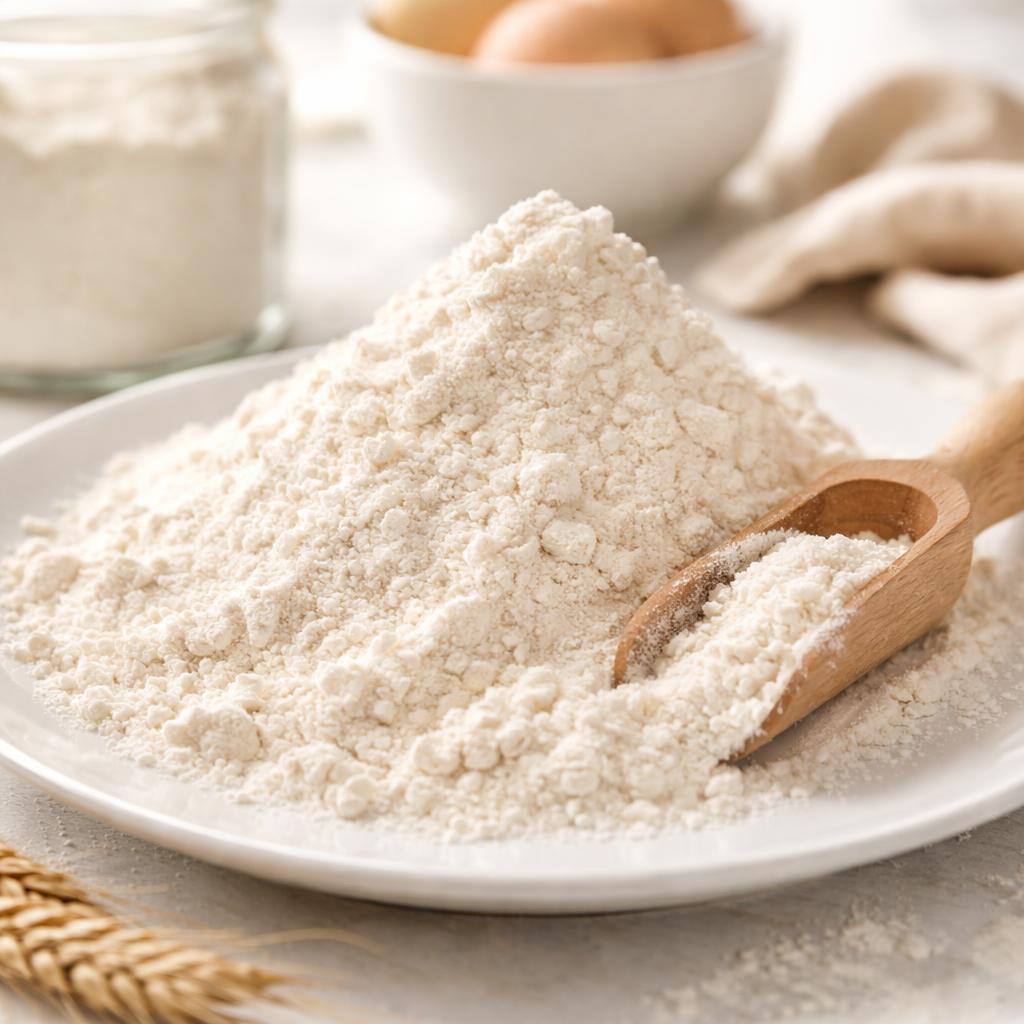
Flour
A pantry staple used worldwide as a base for countless recipes.
What is Flour?
Flour is a powdery substance made by grinding grains, seeds, or roots. Wheat flour is the most common type globally, but alternatives like almond, coconut, and oat flour are gaining popularity. Its origins trace back thousands of years, serving as a foundation for bread and baked goods in nearly every culture.
Flour can vary in texture and flavor, from the neutral, fine consistency of all-purpose flour to the nutty and coarse texture of whole wheat or almond flour. It is primarily used in baking but also serves as a thickener for soups and sauces or as a coating for fried foods.
Nutritionally, flour provides carbohydrates, protein, and small amounts of fiber. Enriched flours may also include added vitamins such as B vitamins and iron. Different types of flour have unique nutrient profiles, with whole wheat flour offering more fiber and micronutrients than refined white flour.
Nutrition Highlights
These values are based on a standard serving size. Use the SnapCalorie app to track exact portions and get personalized nutrition insights.

Smart Nutrition Tracking with SnapCalorie

Health Benefits of Flour
Provides Energy
Flour is a rich source of complex carbohydrates, offering sustained energy. It is especially useful for active individuals or those needing a quick energy boost.
- Rich in Carbohydrates
- Rich in B-vitamins
Supports Metabolism
Enriched wheat flour contains added B vitamins like thiamine and niacin, which are crucial for energy production and overall cellular function.
- Rich in B Vitamins
- Rich in Iron
Promotes Digestive Health (Whole Grain Varieties)
Whole grain flours like whole wheat or oat flour contain more fiber, which aids digestion and supports gut health.
- Rich in Fiber
- Rich in Magnesium
Fortified Nutrients Enhance Overall Health
Many flours are fortified with iron and folic acid, which help prevent anemia and support prenatal health during pregnancy.
- Rich in Iron
- Rich in Folate
Diet Compatibility
Is Flour suitable for your diet? Here's what you need to know:
Compare Flour to Similar Foods
See how Flour stacks up against other popular foods:
🍽️ How to Enjoy Flour
Breakfast
Use in pancakes, waffles, or quick breads
Tip: Add fruits or nuts for extra nutrients
Lunch
Make wraps or flatbreads for sandwiches
Tip: Pair with lean protein and veggies for balance
Dinner
Coat proteins with flour for frying or baking
Tip: Season flour with spices before coating for flavor
Snack
Bake homemade cookies or crackers
Tip: Experiment with different mix-ins like seeds or chocolate chips
✅ The Bottom Line
Flour is a versatile kitchen ingredient used globally in a variety of dishes, from baked goods to soups. It is rich in carbohydrates and provides essential nutrients like iron and B vitamins, especially when fortified. Whole grain varieties offer even more fiber and micronutrients.
When selecting flour, consider your dietary needs and preferences. Incorporate it into meals by making pancakes, bread, or using it as a coating for proteins. For gluten-free or low-carb diets, explore alternatives like almond, coconut, or oat flour.
Data Sources & Scientific References
Our nutrition data comes from trusted, authoritative sources to ensure accuracy and reliability.
- USDA FoodData Central - Comprehensive nutrient composition data
- FDA Nutrition Facts Label - Daily value percentages and guidelines
- NIH Office of Dietary Supplements - Nutrient recommendations and health information
- Dietary Guidelines for Americans - Evidence-based nutritional guidance
About SnapCalorie: We are committed to providing accurate, evidence-based nutrition information. Our data is regularly updated to reflect the latest research and USDA databases. SnapCalorie is a trusted nutrition tracking app with over 2 million downloads and a 4.8/5 star rating.


