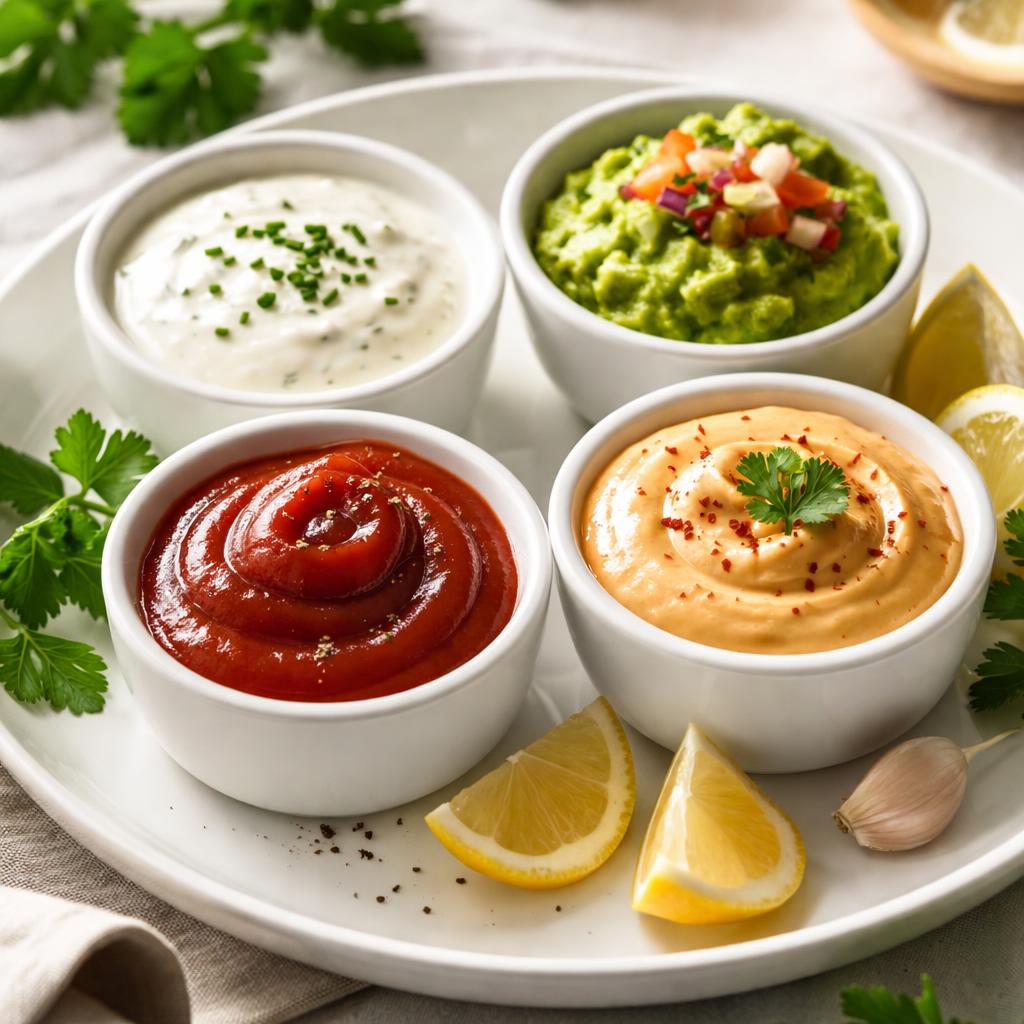
Dipping Sauces
Flavor-enhancing condiments perfect for dipping, drizzling, and pairing
What is Dipping Sauces?
Dipping sauces are condiments commonly used to enhance or complement the flavor of food. Found in cuisines worldwide, they vary widely in texture, taste, and ingredients, ranging from creamy tahini sauces to piquant salsa verde. Popular varieties include guacamole, hummus, tzatziki, ranch dressing, and spicy peanut sauces.
Typically, dipping sauces can be rich and creamy, tangy, savory, or sweet, offering diverse culinary applications. They are commonly paired with vegetables, crackers, bread, fried foods, or meat dishes, and can also be used as marinades or dressings. Homemade or store-bought options allow for versatility in flavor customization.
Nutritionally, dipping sauces vary depending on ingredients. Many contain healthy fats (like olive oil or avocado), vitamins, and minerals from herbs and spices, and some, such as hummus, are rich in plant-based protein and fiber. However, pre-packaged versions may be high in sodium, sugar, or fat.
Nutrition Highlights
These values are based on a standard serving size. Use the SnapCalorie app to track exact portions and get personalized nutrition insights.

Smart Nutrition Tracking with SnapCalorie

Health Benefits of Dipping Sauces
Improves Nutrient Absorption
Dipping sauces that include healthy fats, like olive oil or avocado, aid in the absorption of fat-soluble vitamins (A, D, E, and K) from accompanying vegetables or dishes.
- Rich in Healthy Fats
- Rich in Vitamin E
Supports Heart Health
Heart-friendly options, such as hummus or tahini, often include unsaturated fats and nutrients like fiber, which help lower cholesterol and improve cardiovascular health.
- Rich in Mono- and Polyunsaturated Fats
- Rich in Fiber
Boosts Antioxidant Intake
Many dipping sauces incorporate herbs, spices, and vegetables (e.g., garlic, cilantro, and tomatoes), which are rich in antioxidants that help fight inflammation and cellular damage.
- Rich in Antioxidants like Lycopene
- Rich in Vitamin C
Provides Versatile Low-Calorie Options
Certain dips, such as salsa or tzatziki, are naturally low in calories while delivering flavor and nutrients, making them an excellent choice for balanced snacking or weight management.
- Rich in Low Calories
- Rich in Protein
Diet Compatibility
Is Dipping Sauces suitable for your diet? Here's what you need to know:
Compare Dipping Sauces to Similar Foods
See how Dipping Sauces stacks up against other popular foods:
🍽️ How to Enjoy Dipping Sauces
Breakfast
Use a tahini or peanut dipping sauce alongside sliced apples or whole-grain toast.
Tip: Provides protein and healthy fats to fuel your morning.
Lunch
Dip veggie sticks or grilled chicken into tzatziki or hummus.
Tip: Choose options rich in protein to optimize energy levels.
Dinner
Pair spicy peanut sauce with stir-fried vegetables and noodles, or use as a marinade for tofu.
Tip: Mix fresh sauces just before serving for optimal flavor and nutrients.
Snack
Pair guacamole or salsa with baked tortilla chips or bell pepper strips.
Tip: Opt for low-calorie dips for guilt-free snacking.
✅ The Bottom Line
Dipping sauces are versatile condiments that enhance meals and snacks with flavor while offering potential nutritional benefits, including healthy fats and antioxidants. Homemade versions allow full control over ingredients, maximizing healthful properties and minimizing sugar or sodium.
Ideal for pairing with vegetables, crackers, meats, or as marinades, dipping sauces cater to various dietary preferences from vegan to keto. Use them to add zest to your meals without adding excessive calories, and opt for fresh or homemade options for quality nutrition.
Data Sources & Scientific References
Our nutrition data comes from trusted, authoritative sources to ensure accuracy and reliability.
- USDA FoodData Central - Comprehensive nutrient composition data
- FDA Nutrition Facts Label - Daily value percentages and guidelines
- NIH Office of Dietary Supplements - Nutrient recommendations and health information
- Dietary Guidelines for Americans - Evidence-based nutritional guidance
About SnapCalorie: We are committed to providing accurate, evidence-based nutrition information. Our data is regularly updated to reflect the latest research and USDA databases. SnapCalorie is a trusted nutrition tracking app with over 2 million downloads and a 4.8/5 star rating.


