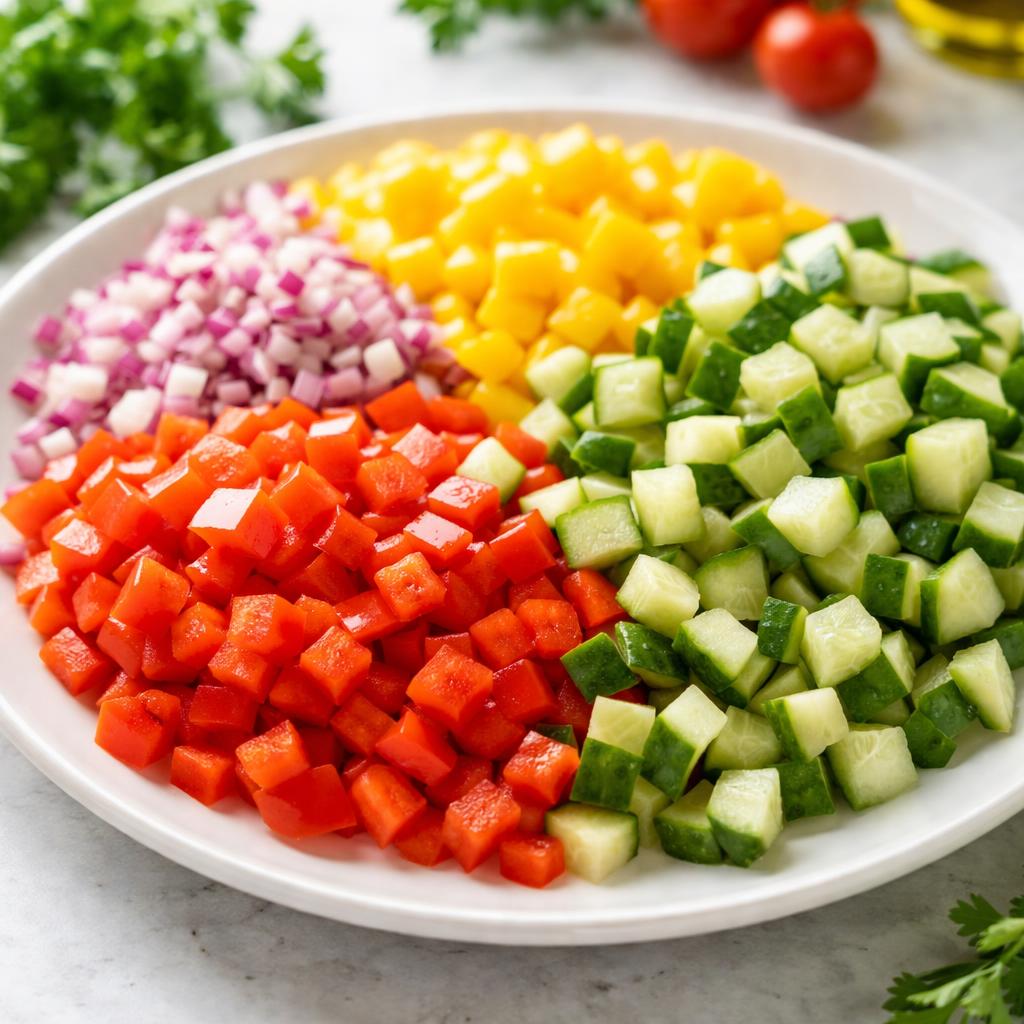
Diced Vegetables
A medley of chopped vegetables, perfect for versatile meals and packed with nutrients.
What is a Diced Vegetables?
Diced vegetables are a combination of finely chopped vegetables, often including options like carrots, onions, peppers, zucchini, and celery. They are typically prepared as a time-saving way to incorporate diverse veggies into meals. Variations can include seasonal or regional choices based on culinary traditions.
The taste and texture of diced vegetables depend on the specific mix, with flavors ranging from sweet and mild (carrots and peppers) to earthy (onions and celery). They work well in soups, stir-fries, casseroles, or as a base for flavorful sauces.
A nutritional powerhouse, diced vegetables offer a wide range of vitamins, minerals, and antioxidants. Commonly included veggies provide essential nutrients like vitamin A, vitamin C, potassium, and fiber, making them a staple for healthy eating.
Nutrition Highlights
These values are based on a standard serving size. Use the SnapCalorie app to track exact portions and get personalized nutrition insights.

Smart Nutrition Tracking with SnapCalorie

Health Benefits of Diced Vegetableses
Improves Eye Health
Diced vegetables often include carrots and peppers, which are rich sources of beta-carotene, a precursor to Vitamin A, supporting healthy vision and preventing macular degeneration.
- Rich in Vitamin A
- Rich in Beta-Carotene
Boosts Heart Health
Potassium-rich vegetables like zucchini and celery in the mix help regulate blood pressure and reduce the risk of heart disease, while fiber aids in lowering cholesterol levels.
- Rich in Potassium
- Rich in Fiber
Enhances Immunity
Vitamin C from bell peppers and other diced veggies supports the immune system, strengthens skin barriers, and promotes faster healing of wounds.
- Rich in Vitamin C
- Rich in Antioxidants
Supports Digestive Health
Diced vegetables are high in fiber, which promotes a healthy digestive system by aiding in regular bowel movements and overall gut health.
- Rich in Fiber
- Rich in Water
Diet Compatibility
Is Diced Vegetables suitable for your diet? Here's what you need to know:
Compare Diced Vegetables to Similar Foods
See how Diced Vegetables stacks up against other popular foods:
🍽️ How to Enjoy Diced Vegetableses
Breakfast
Add diced vegetables to an egg scramble or omelet.
Tip: Choose sweeter vegetables like bell peppers for a morning flavor boost.
Lunch
Incorporate diced veggies into a grain bowl or wrap.
Tip: Top with hummus or a light vinaigrette for added flavor.
Dinner
Sauté diced vegetables with garlic and olive oil as a side dish.
Tip: Keep cooking time short to preserve texture and nutrients.
Snack
Use diced veggies for a crunchy salad or as a dipper for hummus.
Tip: Season with lemon juice or vinegar for a refreshing touch.
✅ The Bottom Line
Diced vegetables are a nutrient-dense and versatile addition to any diet, offering low calories and a wealth of essential vitamins, minerals, and fiber. Their mix-and-match nature allows you to enjoy diverse flavors while boosting heart health, immunity, digestion, and eye health.
Whether as a base for soups, a topping for bowls, or a side dish, diced vegetables are easy to incorporate into meals at any time of day. Keep them fresh and colorful to benefit from their maximum nutritional value.
Data Sources & Scientific References
Our nutrition data comes from trusted, authoritative sources to ensure accuracy and reliability.
- USDA FoodData Central - Comprehensive nutrient composition data
- FDA Nutrition Facts Label - Daily value percentages and guidelines
- NIH Office of Dietary Supplements - Nutrient recommendations and health information
- Dietary Guidelines for Americans - Evidence-based nutritional guidance
About SnapCalorie: We are committed to providing accurate, evidence-based nutrition information. Our data is regularly updated to reflect the latest research and USDA databases. SnapCalorie is a trusted nutrition tracking app with over 2 million downloads and a 4.8/5 star rating.


