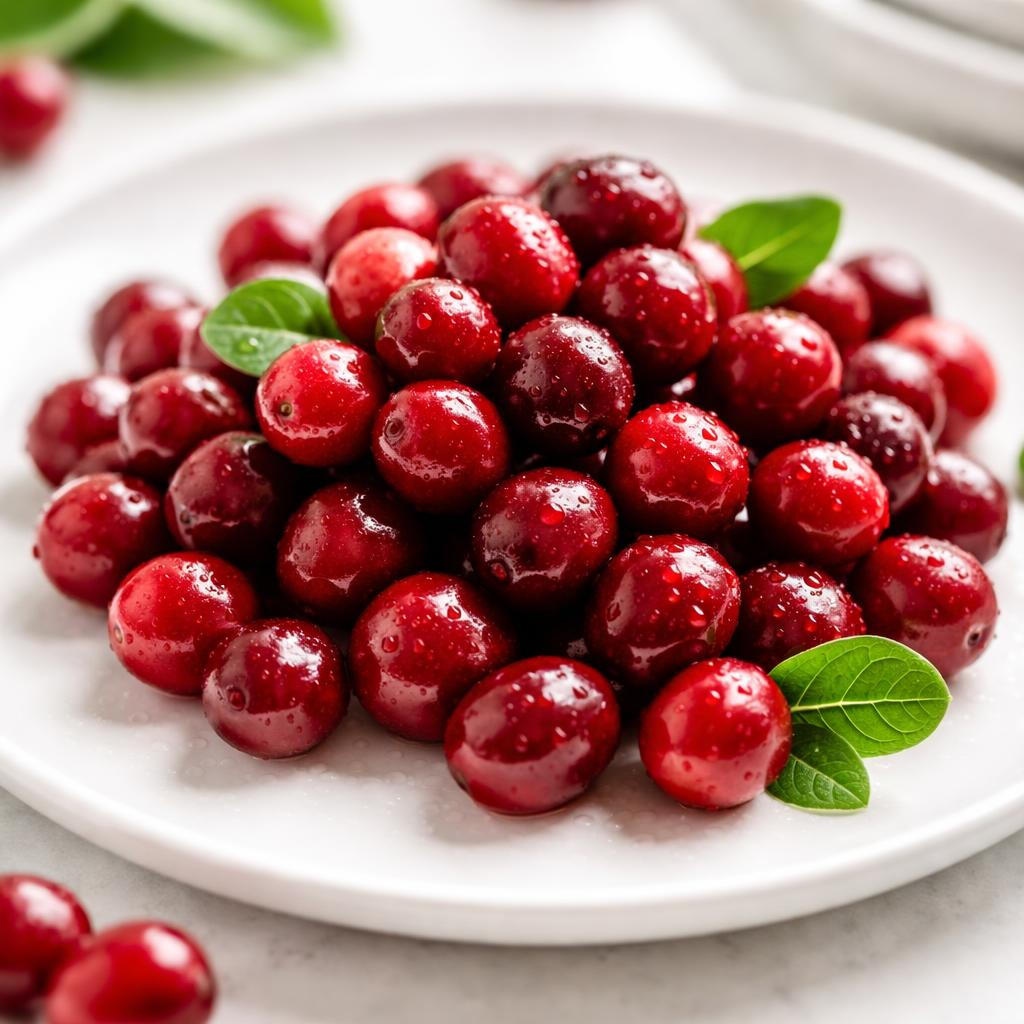
Cranberry
A tart, antioxidant-rich superfruit with vibrant color and bold flavor
What is a Cranberry?
Cranberries are small, round, bright red berries native to North America and commonly grown in cooler climates, such as the northern United States and Canada. They grow on low-lying vines and thrive in boggy areas, often harvested by flooding the fields to gather the floating berries. Varieties include fresh cranberries, dried cranberries, and cranberry juice, with distinct uses for each.
Cranberries have a tart, tangy flavor and crisp texture when raw, while dried cranberries are sweeter from added sugar. They are versatile in culinary uses, found in sauces, baked goods, salads, and as a garnish. Their bold flavor makes them popular for relishes and holiday dishes, especially during Thanksgiving and Christmas.
Cranberries are rich in vitamin C, fiber, and antioxidants like polyphenols. They are well-known for their potential health benefits, particularly in promoting urinary and heart health. They are also naturally low in calories and fat, making them a great addition to a balanced diet.
Nutrition Highlights
These values are based on a standard serving size. Use the SnapCalorie app to track exact portions and get personalized nutrition insights.

Smart Nutrition Tracking with SnapCalorie

Health Benefits of Cranberries
Promotes Urinary Health
Cranberries contain compounds called proanthocyanidins which may prevent bacteria from adhering to the urinary tract, reducing the risk of infections.
- Rich in Proanthocyanidins
- Rich in Vitamin C
Supports Heart Health
The antioxidants, fiber, and potassium found in cranberries may help lower cholesterol, reduce inflammation, and support overall cardiovascular health.
- Rich in Polyphenols
- Rich in Fiber
- Rich in Potassium
Boosts Immune Function
High levels of vitamin C and other antioxidants in cranberries help strengthen the immune system and protect cells from damage by free radicals.
- Rich in Vitamin C
- Rich in Antioxidants
Aids Digestion
Cranberries are a good source of dietary fiber, which promotes healthy digestion and regularity.
- Rich in Fiber
- Rich in Water
Diet Compatibility
Is Cranberry suitable for your diet? Here's what you need to know:
Compare Cranberry to Similar Foods
See how Cranberry stacks up against other popular foods:
🍽️ How to Enjoy Cranberries
Breakfast
Blend fresh or dried cranberries into smoothies or oatmeal
Tip: Balance tartness with sweeter fruits like bananas or honey
Lunch
Add dried cranberries to salads or grain bowls
Tip: Pair with nuts and goat cheese for a balanced flavor
Dinner
Make a cranberry sauce to complement roast chicken or turkey
Tip: Simmer with orange zest and a touch of honey for depth
Snack
Mix dried cranberries into yogurt or trail mix
Tip: Combine with raw nuts for a nutrient-dense snack
✅ The Bottom Line
Cranberries are nutrient-dense and rich in vitamin C, fiber, and powerful antioxidants, making them a superfruit for supporting urinary and heart health, boosting immunity, and aiding digestion. They are versatile and can be used fresh, dried, or juiced in a variety of meals.
Enjoy cranberries raw or cooked throughout the year, but take advantage of their peak season in fall and winter for the freshest varieties. Add them to both sweet and savory dishes to maximize their tart flavor and numerous health benefits.
Data Sources & Scientific References
Our nutrition data comes from trusted, authoritative sources to ensure accuracy and reliability.
- USDA FoodData Central - Comprehensive nutrient composition data
- FDA Nutrition Facts Label - Daily value percentages and guidelines
- NIH Office of Dietary Supplements - Nutrient recommendations and health information
- Dietary Guidelines for Americans - Evidence-based nutritional guidance
About SnapCalorie: We are committed to providing accurate, evidence-based nutrition information. Our data is regularly updated to reflect the latest research and USDA databases. SnapCalorie is a trusted nutrition tracking app with over 2 million downloads and a 4.8/5 star rating.


