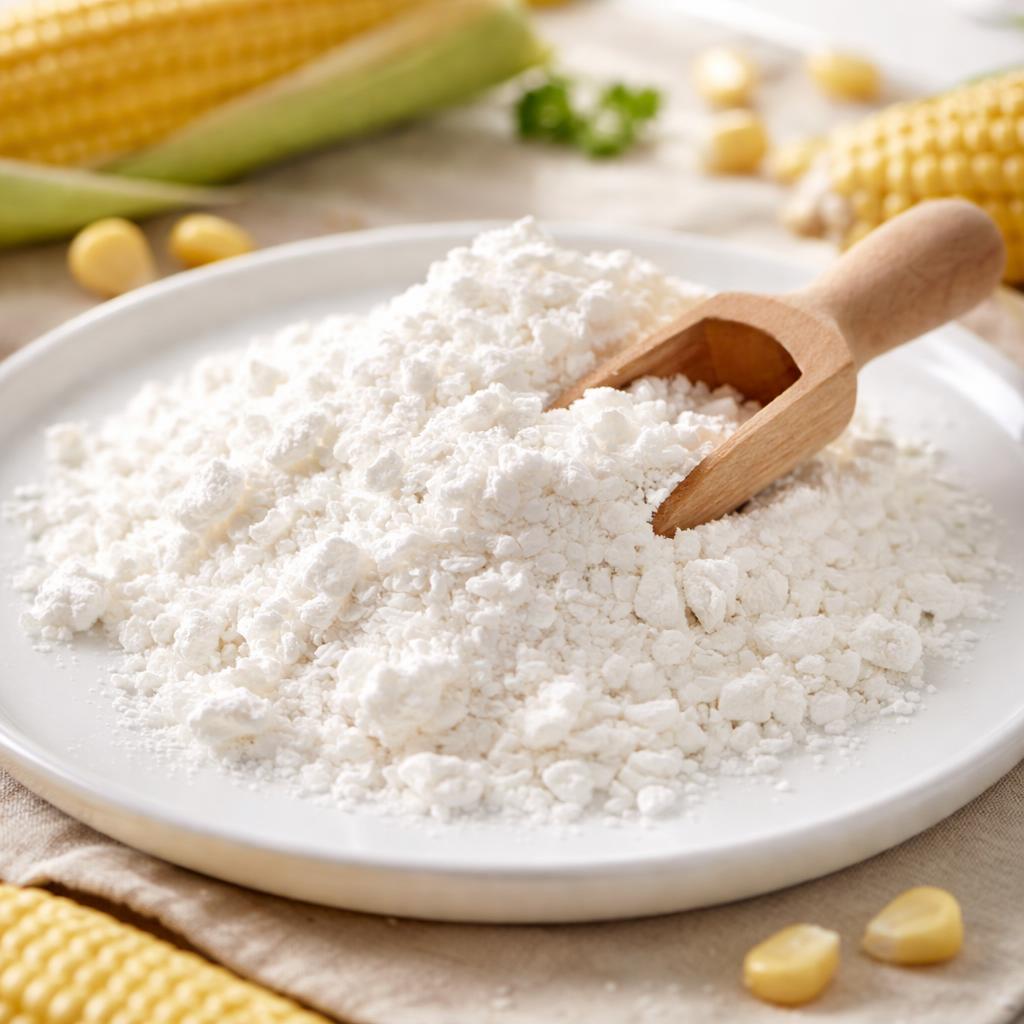
Cornstarch
A versatile thickening agent made from corn kernels.
What is a Cornstarch?
Cornstarch is a fine, powdery substance extracted from the endosperm of corn kernels. It has been used in cooking for centuries as a thickening agent in sauces, soups, and baked goods. Beyond culinary uses, cornstarch is employed in industrial applications, like cosmetics and baby powder.
Cornstarch is neutral in taste and has a smooth texture when cooked, making it ideal for blending into recipes without altering the flavor. It forms a gel-like consistency when combined with water and heated, which is why it’s often used in puddings and gravy.
Nutritionally, cornstarch is high in carbohydrates but contains minimal protein, fat, and fiber. It’s virtually devoid of vitamins and minerals. Its primary role in food is functional, rather than as a source of essential nutrients.
Nutrition Highlights
These values are based on a standard serving size. Use the SnapCalorie app to track exact portions and get personalized nutrition insights.

Smart Nutrition Tracking with SnapCalorie

Health Benefits of Cornstarches
Provides Quick Energy
Cornstarch is rich in carbohydrates, which serve as a quick and easily digestible energy source. This makes it useful for athletes or individuals needing an immediate energy boost.
- Rich in Carbohydrates
Gentle on Digestion
Cornstarch is typically easy to digest and can be incorporated into bland diets for individuals recovering from gastrointestinal issues or illnesses, as it is mild and unlikely to cause irritation.
- Rich in Carbohydrates
Gluten-Free Substitute
Cornstarch is naturally free of gluten and can be used as a thickener in recipes for individuals with celiac disease or gluten intolerance, offering a safe alternative to wheat-based thickeners.
- Rich in Carbohydrates
Diet Compatibility
Is Cornstarch suitable for your diet? Here's what you need to know:
Compare Cornstarch to Similar Foods
See how Cornstarch stacks up against other popular foods:
🍽️ How to Enjoy Cornstarches
Breakfast
Add to pudding or custard recipes
Tip: Mix with milk and vanilla for a simple, creamy treat
Lunch
Use to thicken soup or gravy
Tip: Combine with cold water before adding to hot liquids to avoid clumping
Dinner
Coat proteins for stir-frying
Tip: Create a smooth texture by lightly dredging meat or tofu in cornstarch before cooking
Snack
Use in gluten-free baking recipes
Tip: Blend with almond or coconut flour for improved texture
✅ The Bottom Line
Cornstarch is a versatile and functional ingredient primarily used to thicken and stabilize recipes. Its plant-based, gluten-free profile makes it suitable for specialized diets, although it lacks significant nutritional value.
Integrate cornstarch carefully into your dishes by using it in puddings, soups, or stir-fries. Keep portions moderate, especially if you're aiming for a low-carbohydrate diet, as it is carbohydrate-dense.
Data Sources & Scientific References
Our nutrition data comes from trusted, authoritative sources to ensure accuracy and reliability.
- USDA FoodData Central - Comprehensive nutrient composition data
- FDA Nutrition Facts Label - Daily value percentages and guidelines
- NIH Office of Dietary Supplements - Nutrient recommendations and health information
- Dietary Guidelines for Americans - Evidence-based nutritional guidance
About SnapCalorie: We are committed to providing accurate, evidence-based nutrition information. Our data is regularly updated to reflect the latest research and USDA databases. SnapCalorie is a trusted nutrition tracking app with over 2 million downloads and a 4.8/5 star rating.


