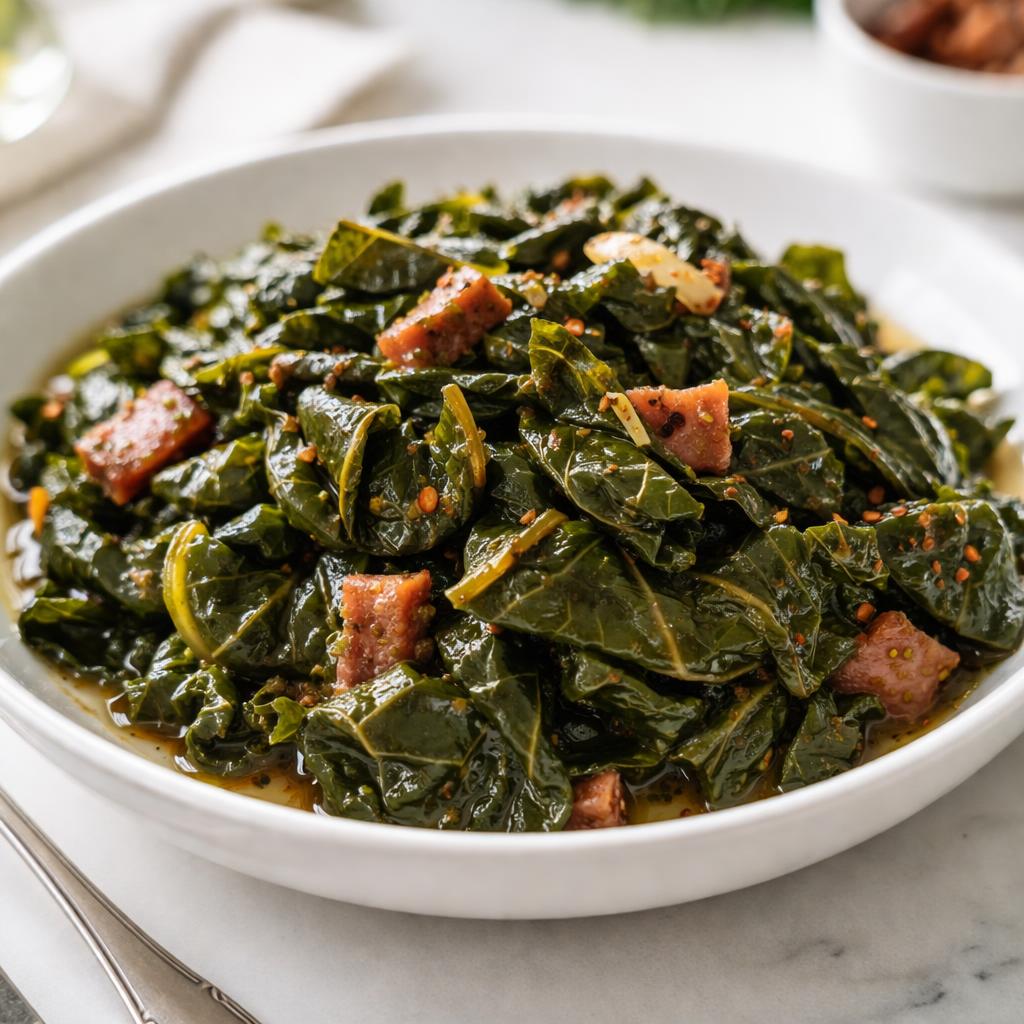
Collard Greens
A fiber-rich leafy green loaded with vitamins and antioxidants.
What is a Collard Greens?
Collard greens are a leafy vegetable hailing from the same family as kale, broccoli, and cabbage, known as the Brassica family. They are widely grown in the southern United States but have origins tracing back to the Mediterranean region, where they’ve been cultivated for over 2,000 years. Varieties include the common green type, often sold fresh or frozen.
Collard greens have a mild, slightly bitter taste with a firm texture that holds up well to cooking. While they’re commonly slow-cooked or braised with flavorful seasonings, they can also be eaten raw when sliced thinly and massaged. Their versatility makes them suitable for soups, wraps, and even salads.
Nutritionally, collard greens are a powerhouse, rich in vitamin K, vitamin A, vitamin C, and soluble fiber. They’re also packed with antioxidants like lutein and zeaxanthin, supporting eye health and overall cellular repair.
Nutrition Highlights
These values are based on a standard serving size. Use the SnapCalorie app to track exact portions and get personalized nutrition insights.

Smart Nutrition Tracking with SnapCalorie

Health Benefits of Collard Greenses
Supports Bone Health
With its high content of vitamin K, collard greens promote effective calcium utilization and bone mineral density, reducing the risk of fractures.
- Rich in Vitamin K
- Rich in Calcium
Enhances Immunity
Packed with vitamin C and antioxidants, collard greens help strengthen the immune system by promoting cell regeneration and fighting inflammation.
- Rich in Vitamin C
- Rich in Antioxidants
Promotes Eye Health
Rich in lutein and zeaxanthin, these greens help protect the eyes from oxidative stress and age-related degeneration.
- Rich in Lutein
- Rich in Vitamin A
Aids Digestive Health
A substantial fiber content supports healthy digestion by promoting regularity and feeding beneficial gut bacteria.
- Rich in Fiber
- Rich in Water
Diet Compatibility
Is Collard Greens suitable for your diet? Here's what you need to know:
Compare Collard Greens to Similar Foods
See how Collard Greens stacks up against other popular foods:
🍽️ How to Enjoy Collard Greenses
Breakfast
Sauté with onions and add to scrambled eggs or a breakfast wrap
Tip: Cook just enough to soften the leaves without losing nutrients
Lunch
Use as a wrap substitute and fill with hummus and grilled vegetables
Tip: Blanch leaves briefly to make them pliable
Dinner
Slow-cook with garlic, smoked turkey or bacon for a hearty side dish
Tip: Add a splash of apple cider vinegar for enhanced flavor
Snack
Bake into crispy collard chips seasoned with olive oil, salt, and pepper
Tip: Keep the oven temperature low to avoid burning while preserving nutrients
✅ The Bottom Line
Collard greens are a nutrient-dense vegetable that provides impressive amounts of vitamins K, A, and C, along with fiber and antioxidants. They support bone health, immunity, and digestion while being low in calories, making them an excellent choice for a variety of diets.
Whether sautéed, slow-cooked, or even baked, collard greens can elevate meals with their unique flavor and health benefits. Incorporate them into your weekly rotation for a hearty boost of nutrition and versatility.
Data Sources & Scientific References
Our nutrition data comes from trusted, authoritative sources to ensure accuracy and reliability.
- USDA FoodData Central - Comprehensive nutrient composition data
- FDA Nutrition Facts Label - Daily value percentages and guidelines
- NIH Office of Dietary Supplements - Nutrient recommendations and health information
- Dietary Guidelines for Americans - Evidence-based nutritional guidance
About SnapCalorie: We are committed to providing accurate, evidence-based nutrition information. Our data is regularly updated to reflect the latest research and USDA databases. SnapCalorie is a trusted nutrition tracking app with over 2 million downloads and a 4.8/5 star rating.


