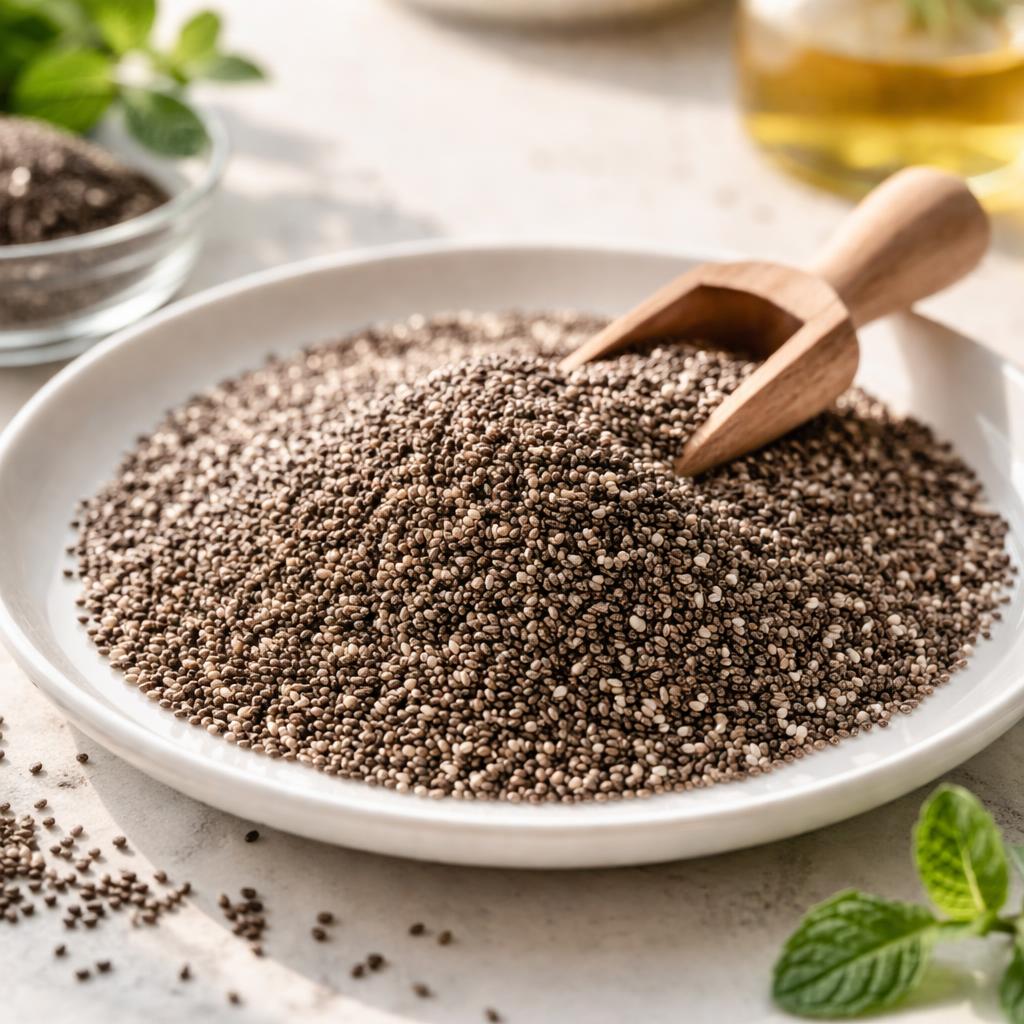
Chia Seed
Tiny but mighty seeds packed with fiber, omega-3s, and protein
What is a Chia Seed?
Chia seeds come from the plant Salvia hispanica, a member of the mint family that originally hails from Central America. Historically, they were a staple in the diets of ancient Aztec and Mayan civilizations. These tiny black, white, or gray seeds have gained global popularity for their versatile uses and dense nutritional value.
Chia seeds have a neutral taste, which makes them incredibly easy to incorporate into sweet or savory dishes. When soaked, they absorb liquid and form a gel-like texture, making them perfect for puddings and thickening agents. They also add crunch when sprinkled dry onto yogurt, salads, or smoothie bowls.
Nutritionally, chia seeds are a powerhouse, rich in plant-based omega-3 fatty acids, dietary fiber, protein, and several micronutrients like calcium, magnesium, and phosphorus. Just a small serving can provide a significant nutrient boost to any meal.
Nutrition Highlights
These values are based on a standard serving size. Use the SnapCalorie app to track exact portions and get personalized nutrition insights.

Smart Nutrition Tracking with SnapCalorie

Health Benefits of Chia Seeds
Supports Heart Health
Chia seeds are high in omega-3 fatty acids, which help lower triglycerides, reduce inflammation, and support overall cardiovascular health. The fiber content further contributes by helping to regulate cholesterol levels.
- Rich in Omega-3 Fatty Acids
- Rich in Fiber
Boosts Digestive Health
Thanks to their high fiber content, chia seeds promote regular bowel movements and improve gut health. The soluble fiber in chia can also help feed beneficial gut bacteria.
- Rich in Fiber
Supports Bone Strength
Chia seeds contain significant amounts of calcium, magnesium, and phosphorus, all of which are essential for maintaining strong bones and preventing bone density loss, especially as you age.
- Rich in Calcium
- Rich in Magnesium
- Rich in Phosphorus
Helps Manage Blood Sugar Levels
The combination of fiber, protein, and omega-3 fatty acids in chia seeds may help slow the digestion of carbohydrates and stabilize blood sugar levels, making them a great choice for people managing diabetes or insulin resistance.
- Rich in Fiber
- Rich in Protein
Diet Compatibility
Is Chia Seed suitable for your diet? Here's what you need to know:
Compare Chia Seed to Similar Foods
See how Chia Seed stacks up against other popular foods:
🍽️ How to Enjoy Chia Seeds
Breakfast
Stir into overnight oats or blend into smoothies
Tip: Let chia seeds soak in liquid for at least 10 minutes to develop a pudding-like consistency
Lunch
Sprinkle on salads or mix into quinoa bowls
Tip: Add just before eating to retain their crunch when using dry seeds
Dinner
Add to soups or stews as a thickening agent
Tip: Stir frequently to avoid clumping when using in hot liquids
Snack
Make chia pudding with almond milk and top with fresh fruits
Tip: Sweeten naturally with honey or maple syrup for a low-calorie treat
✅ The Bottom Line
Chia seeds are a nutrient-dense, versatile food that delivers an impressive array of benefits, including improved heart health, digestion, and bone strength. With their high fiber, omega-3, and protein content, they are a fantastic addition to any diet.
Enjoy chia seeds in a variety of ways by incorporating them into meals and snacks, from smoothies and puddings to salads and soups. A small amount goes a long way, so start with 1-2 tablespoons to maximize their benefits.
Data Sources & Scientific References
Our nutrition data comes from trusted, authoritative sources to ensure accuracy and reliability.
- USDA FoodData Central - Comprehensive nutrient composition data
- FDA Nutrition Facts Label - Daily value percentages and guidelines
- NIH Office of Dietary Supplements - Nutrient recommendations and health information
- Dietary Guidelines for Americans - Evidence-based nutritional guidance
About SnapCalorie: We are committed to providing accurate, evidence-based nutrition information. Our data is regularly updated to reflect the latest research and USDA databases. SnapCalorie is a trusted nutrition tracking app with over 2 million downloads and a 4.8/5 star rating.


