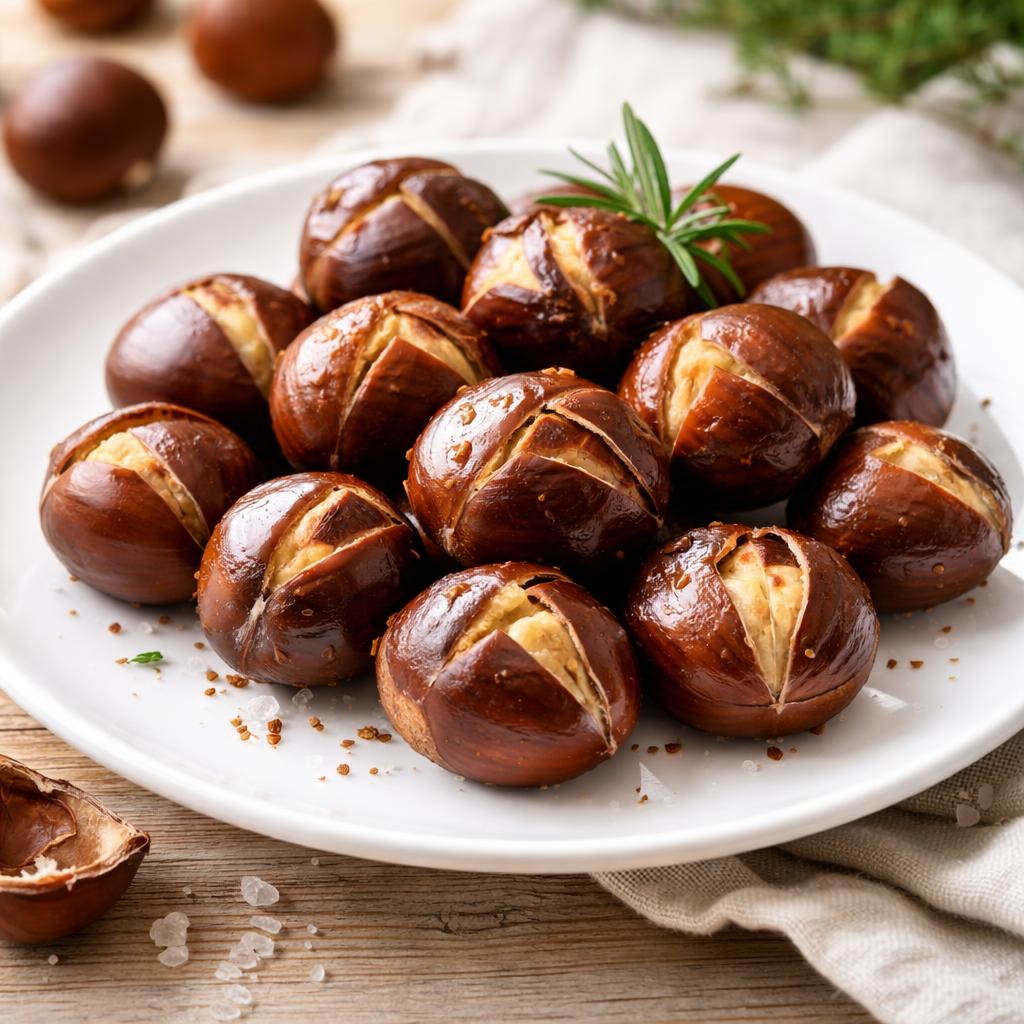
Chestnuts
A starchy, sweet nut that's perfect for roasting and baking
What is a Chestnuts?
Chestnuts are the edible seeds of the chestnut tree, belonging to the genus Castanea. They are native to regions like Asia, Europe, and North America. Varieties include European chestnuts (Castanea sativa), Chinese chestnuts (Castanea mollissima), and American chestnuts (Castanea dentata). While technically nuts, chestnuts are more starchy, unlike typical nuts that are rich in fat.
Chestnuts have a mildly sweet, nutty flavor and a soft yet slightly crumbly texture when cooked. They can be enjoyed roasted, boiled, or ground into flour for baking. Chestnuts are popular in traditional recipes, such as stuffing, soups, and desserts, especially during the holiday season.
Unlike other nuts, chestnuts are low in fat and high in carbohydrates, resembling a grain in terms of nutritional profile. They are rich in fiber, vitamin C, manganese, and copper. Their unique composition makes them an excellent energy source that's lighter on calories compared to other nuts.
Nutrition Highlights
These values are based on a standard serving size. Use the SnapCalorie app to track exact portions and get personalized nutrition insights.

Smart Nutrition Tracking with SnapCalorie

Health Benefits of Chestnutses
Boosts Energy
Chestnuts are high in complex carbohydrates, providing a steady release of energy throughout the day. They are a great choice for fueling physical activity or maintaining focus during work.
- Rich in Carbohydrates
- Rich in Fiber
Supports Immunity
Rich in vitamin C, chestnuts can help enhance immune function and protect against infections. They also contain antioxidants that combat oxidative stress.
- Rich in Vitamin C
- Rich in Antioxidants
Promotes Digestive Health
The fiber content in chestnuts aids digestion by supporting regular bowel movements and feeding beneficial gut bacteria, which play a key role in overall gut health.
- Rich in Fiber
- Rich in Carbohydrates
Supports Bone Health
Chestnuts contain important minerals like manganese and copper, which help maintain strong bones and support connective tissue development.
- Rich in Manganese
- Rich in Copper
Diet Compatibility
Is Chestnuts suitable for your diet? Here's what you need to know:
Compare Chestnuts to Similar Foods
See how Chestnuts stacks up against other popular foods:
🍽️ How to Enjoy Chestnutses
Breakfast
Blend roasted chestnuts into smoothies or oatmeal
Tip: Add some cinnamon for a festive flavor
Lunch
Incorporate into salads or soups
Tip: Pair with root vegetables for extra heartiness
Dinner
Mash chestnuts as a side dish
Tip: Combine with a splash of cream and garlic for extra richness
Snack
Roast and peel for a quick snack
Tip: Sprinkle with salt or spices for added flavor
✅ The Bottom Line
Chestnuts offer a unique nutritional profile, being high in carbohydrates and low in fat compared to other nuts. They're rich in fiber, vitamin C, and minerals, making them beneficial for energy, digestion, and overall vitality.
These versatile nuts are easy to incorporate into sweet or savory dishes. Roast them for a festive snack, mix them into recipes for added texture, or use chestnut flour in gluten-free baking.
Data Sources & Scientific References
Our nutrition data comes from trusted, authoritative sources to ensure accuracy and reliability.
- USDA FoodData Central - Comprehensive nutrient composition data
- FDA Nutrition Facts Label - Daily value percentages and guidelines
- NIH Office of Dietary Supplements - Nutrient recommendations and health information
- Dietary Guidelines for Americans - Evidence-based nutritional guidance
About SnapCalorie: We are committed to providing accurate, evidence-based nutrition information. Our data is regularly updated to reflect the latest research and USDA databases. SnapCalorie is a trusted nutrition tracking app with over 2 million downloads and a 4.8/5 star rating.


