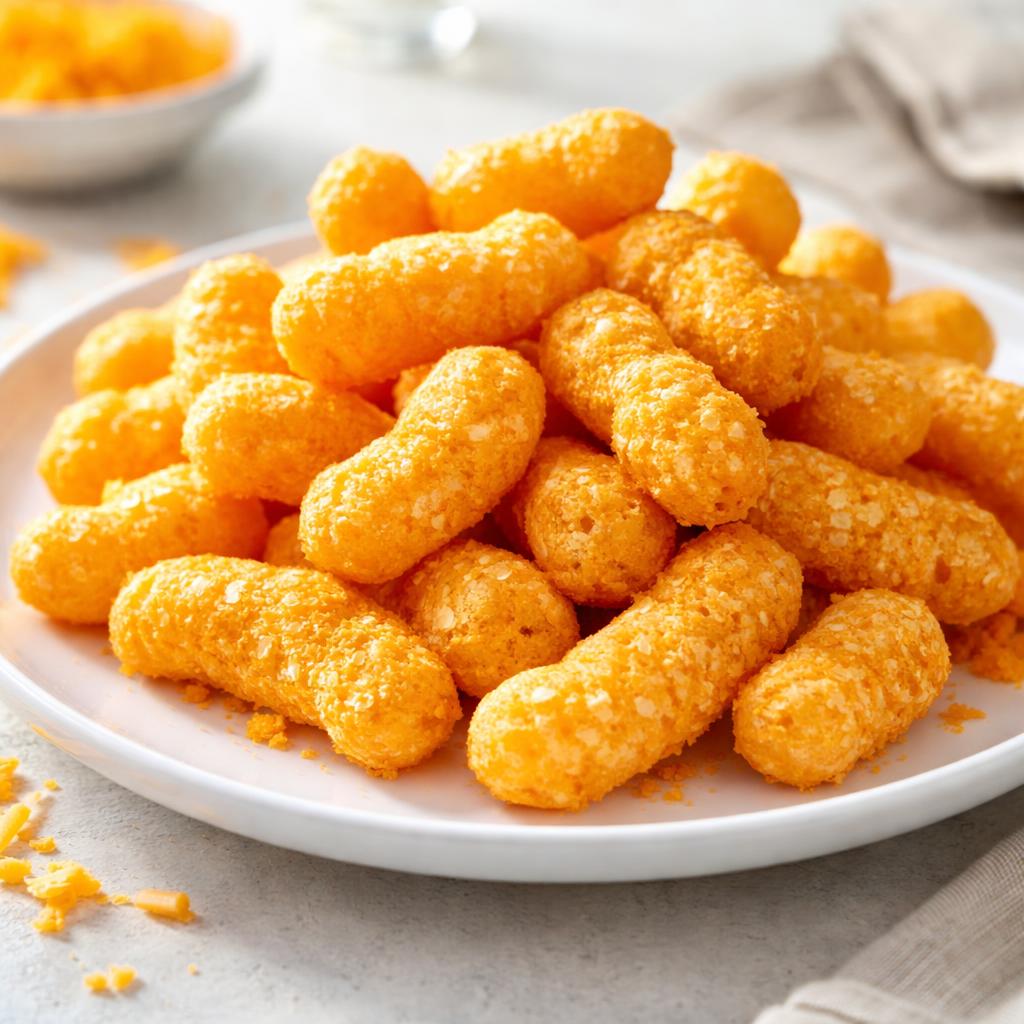
Cheese Puffs
A light and crunchy snack made primarily of cornmeal and cheese flavoring.
What is a Cheese Puffs?
Cheese puffs are a popular processed snack made from cornmeal, which is puffed up using heat and pressure, and then coated with cheese or cheese-flavored powder. They originated in the United States in the 1930s as a byproduct of animal feed production. Over time, they have become a globally recognized snack with numerous varieties, including spicy, extra cheesy, and even vegan options.
The taste of cheese puffs is savory and salty, with a light, airy texture that melts in your mouth. They are often seasoned with artificial or natural cheese flavors, offering a bold burst of umami. Cheese puffs are versatile as a snack and are typically consumed straight from the bag, though some people get creative with recipe ideas.
Nutritionally, cheese puffs are calorie-dense, containing high levels of fat and sodium, with minimal nutrients like fiber or protein. Many brands contain artificial flavors and preservatives, though newer alternatives are striving for cleaner ingredient labels. Their composition makes them more of an indulgent snack rather than a nutritionally balanced choice.
Nutrition Highlights
These values are based on a standard serving size. Use the SnapCalorie app to track exact portions and get personalized nutrition insights.

Smart Nutrition Tracking with SnapCalorie

Health Benefits of Cheese Puffses
Quick Energy Source
Cheese puffs are high in carbohydrates, which can provide a quick burst of energy, making them suitable for short-term fueling needs.
- Rich in Carbohydrates
- Rich in Calories
Convenience for On-the-Go Snacking
Packaged and lightweight, cheese puffs are easy to carry and consume, offering a salty snack option during busy schedules.
- Rich in Sodium
- Rich in Fat
Helps with Cravings
Due to their salty and savory flavor, cheese puffs may help satisfy cravings for indulgent snacks and prevent overeating other foods.
- Rich in Fat
- Rich in Sodium
Diet Compatibility
Is Cheese Puffs suitable for your diet? Here's what you need to know:
Compare Cheese Puffs to Similar Foods
See how Cheese Puffs stacks up against other popular foods:
🍽️ How to Enjoy Cheese Puffses
Breakfast
Pair with a hard-boiled egg for a quick and salty side.
Tip: Helps balance the snack's calorie contribution with added protein.
Lunch
Add a side portion with your sandwich or wrap.
Tip: Opt for a small handful to avoid overconsumption.
Dinner
Use crushed cheese puffs as a topping for baked mac and cheese or casseroles.
Tip: Adds crunch and flavor to creamy dishes.
Snack
Enjoy them straight from the bag during a movie night.
Tip: Portion into smaller bowls to manage serving sizes.
✅ The Bottom Line
Cheese puffs are a calorie-dense, indulgent snack best enjoyed in moderation. They provide a quick burst of energy thanks to their carbohydrate and fat content but lack meaningful nutritional benefits like fiber, vitamins, or minerals.
When incorporating cheese puffs into your diet, aim for portion control and balance them with nutrient-dense foods throughout the day. Explore using them creatively in recipes or opt for cleaner-label alternatives if you’re looking for less processed options.
Data Sources & Scientific References
Our nutrition data comes from trusted, authoritative sources to ensure accuracy and reliability.
- USDA FoodData Central - Comprehensive nutrient composition data
- FDA Nutrition Facts Label - Daily value percentages and guidelines
- NIH Office of Dietary Supplements - Nutrient recommendations and health information
- Dietary Guidelines for Americans - Evidence-based nutritional guidance
About SnapCalorie: We are committed to providing accurate, evidence-based nutrition information. Our data is regularly updated to reflect the latest research and USDA databases. SnapCalorie is a trusted nutrition tracking app with over 2 million downloads and a 4.8/5 star rating.


