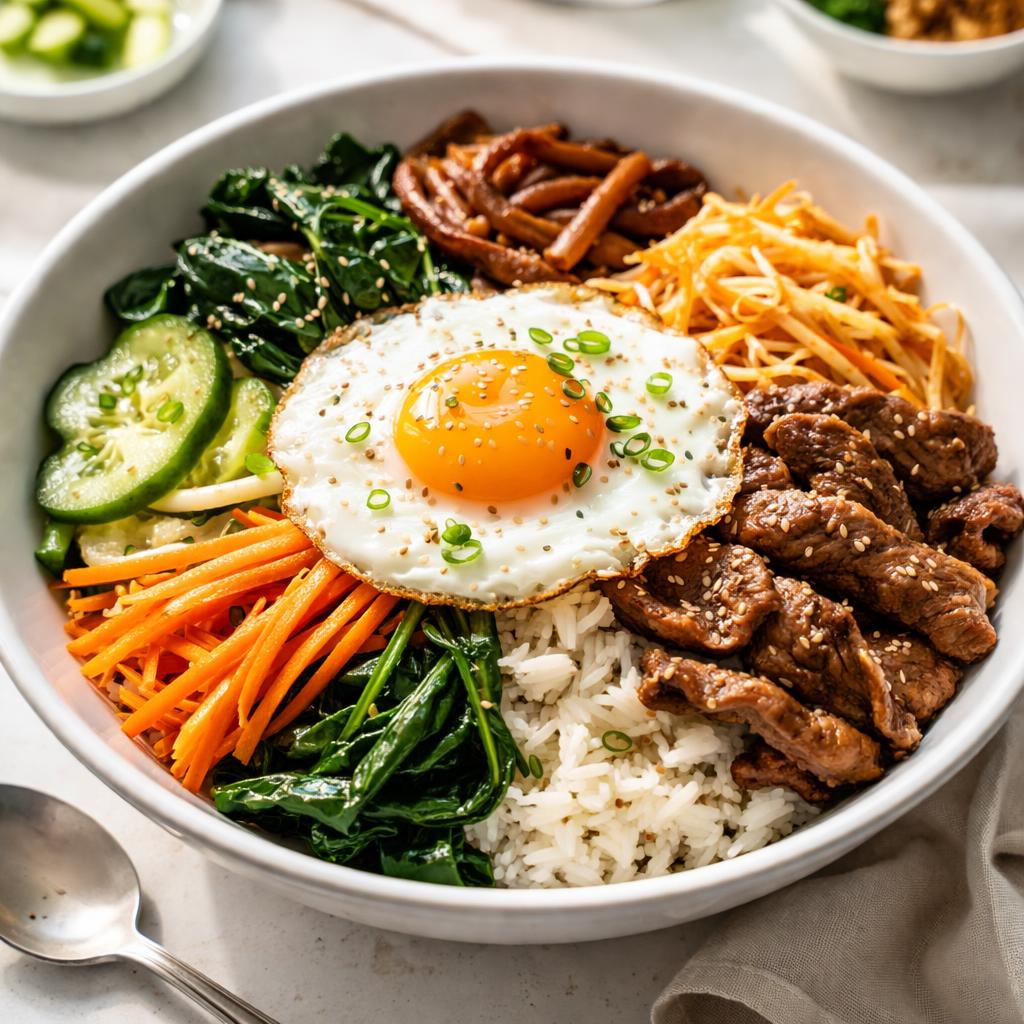
Bibimbap
A colorful and nutrient-packed Korean rice dish bursting with flavors.
What is a Bibimbap?
Bibimbap is a traditional Korean dish consisting of warm rice topped with an assortment of sautéed and seasoned vegetables, protein such as beef, egg, or tofu, and gochujang (spicy red chili paste) or soy sauce for seasoning. It originates from Korea’s Jeonju region but is now enjoyed globally, with variations ranging from fully vegetarian to seafood-focused styles.
The dish offers a vibrant combination of flavors and textures—including the crunchy vegetables, tender protein, chewy grains, and tangy chili paste. Often served in a hot stone bowl, the crispy rice adds a delightful dimension to this meal. Bibimbap can be easily adapted to suit different dietary preferences and spice tolerance.
Nutritionally, bibimbap is a balanced meal, offering carbohydrates from the rice, protein from ingredients like beef or tofu, healthy fats from sesame oil, and a range of vitamins and minerals from the colorful vegetable medley, such as vitamin C, fiber, and potassium.
Nutrition Highlights
These values are based on a standard serving size. Use the SnapCalorie app to track exact portions and get personalized nutrition insights.

Smart Nutrition Tracking with SnapCalorie

Health Benefits of Bibimbaps
Enhances Energy Levels
The combination of rice, protein, and vegetables ensures a steady release of energy, making it ideal for active individuals or busy days.
- Rich in Carbohydrates
- Rich in Protein
- Rich in Iron
Supports Eye Health
Rich in beta-carotene from ingredients like carrots and spinach, bibimbap can help maintain healthy vision and eye function.
- Rich in Vitamin A
- Rich in Beta-Carotene
Promotes Digestive Health
The vegetables in bibimbap like zucchini and spinach provide fiber, which aids digestion and supports a healthy gut.
- Rich in Fiber
- Rich in Water
Boosts Immune System
Ingredients such as garlic, chili paste, and spinach are rich in immune-supporting nutrients like vitamin C and antioxidants.
- Rich in Vitamin C
- Rich in Antioxidants
Diet Compatibility
Is Bibimbap suitable for your diet? Here's what you need to know:
Compare Bibimbap to Similar Foods
See how Bibimbap stacks up against other popular foods:
🍽️ How to Enjoy Bibimbaps
Breakfast
Serve with sunny-side-up egg and fresh spinach over warm rice.
Tip: Keep it simple and light for a balanced start to your day.
Lunch
Pack a bibimbap bowl with pre-cut veggies, rice, and protein for a convenient meal.
Tip: Store sauce separately to avoid sogginess until right before eating.
Dinner
Prepare a stone pot bibimbap to achieve crispy rice for a hearty evening dish.
Tip: Garnish with sesame seeds and drizzle sesame oil for added flavor.
Snack
Create bibimbap-inspired lettuce wraps with smaller portions of the ingredients.
Tip: Use fresh romaine or butter lettuce for crispness.
✅ The Bottom Line
Bibimbap is a versatile and nutrient-packed dish that provides an excellent balance of carbohydrates, protein, and fiber, along with vitamins and minerals from its vegetable array. It’s a visually appealing and customizable choice that suits diverse flavor preferences.
Incorporate bibimbap into your routine by enjoying it as a convenient meal-prep option for lunches or a creative dinner experience. Adjust toppings and seasonings based on dietary needs while keeping the focus on balanced nutrition and vibrant taste.
Data Sources & Scientific References
Our nutrition data comes from trusted, authoritative sources to ensure accuracy and reliability.
- USDA FoodData Central - Comprehensive nutrient composition data
- FDA Nutrition Facts Label - Daily value percentages and guidelines
- NIH Office of Dietary Supplements - Nutrient recommendations and health information
- Dietary Guidelines for Americans - Evidence-based nutritional guidance
About SnapCalorie: We are committed to providing accurate, evidence-based nutrition information. Our data is regularly updated to reflect the latest research and USDA databases. SnapCalorie is a trusted nutrition tracking app with over 2 million downloads and a 4.8/5 star rating.


