Bibimbap Sauce
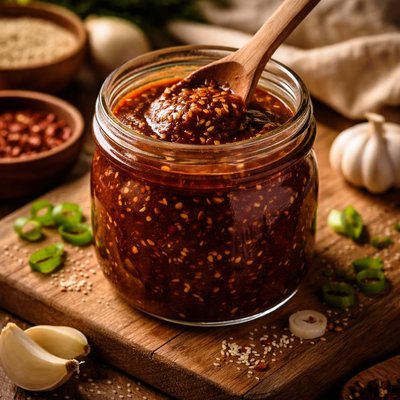
Elevate your homemade Korean dishes with this rich, flavorful Bibimbap Sauce—a perfect balance of sweet, spicy, and tangy flavors. Crafted with authentic ingredients like Gochujang (Korean red chili paste), sesame oil, and rice vinegar, this versatile sauce is the heart of Bibimbap, enhancing each bite with its bold and complex taste. With hints of honey, minced garlic, and toasted sesame seeds, it offers layers of sweetness and nuttiness that perfectly balance its spicy kick. Ready in just 5 minutes, this quick, no-cook recipe is ideal for busy weeknights or meal prep, and it’s easy to adjust for your preferred level of heat and sweetness. Whether drizzled over steamed rice bowls, used as a dipping sauce, or paired with grilled meats, this bibimbap sauce is your gateway to authentic Korean flavors.

Smart Nutrition Tracking with SnapCalorie



Recipe Information
Ingredients
- 3 tablespoons Gochujang (Korean red chili paste)
- 2 tablespoons Soy sauce
- 2 teaspoons Sesame oil
- 1.5 tablespoons Rice vinegar
- 1 tablespoon Honey
- 2 cloves Garlic, minced
- 1 teaspoon Sugar
- 1 teaspoon Toasted sesame seeds
- 2 tablespoons Water
Instructions
In a medium mixing bowl, add 3 tablespoons of gochujang.
Pour in 2 tablespoons of soy sauce and 2 teaspoons of sesame oil.
Add 1.5 tablespoons of rice vinegar and 1 tablespoon of honey.
Finely mince 2 cloves of garlic and add them to the bowl.
Stir in 1 teaspoon of sugar to balance the flavors.
Add 1 teaspoon of toasted sesame seeds for a nutty flavor.
Slowly add 2 tablespoons of water to adjust the consistency of the sauce.
Whisk all the ingredients together until a smooth sauce forms.
Taste and adjust seasoning as needed. You can add more gochujang for spiciness or more honey for sweetness.
Serve immediately or store in an airtight container in the refrigerator for up to one week.
Nutrition Facts
Calories |
119 | ||
|---|---|---|---|
% Daily Value* |
|||
| Total Fat | 7.7 g | 10% | |
| Saturated Fat | 1.1 g | 5% | |
| Polyunsaturated Fat | 2.9 g | ||
| Cholesterol | 0 mg | 0% | |
| Sodium | 571 mg | 25% | |
| Total Carbohydrate | 12.2 g | 4% | |
| Dietary Fiber | 0.7 g | 3% | |
| Total Sugars | 7.6 g | ||
| Protein | 1.5 g | 3% | |
| Vitamin D | 0.0 mcg | 0% | |
| Calcium | 14 mg | 1% | |
| Iron | 0.4 mg | 2% | |
| Potassium | 64 mg | 1% | |
*The % Daily Value tells you how much a nutrient in a serving of food contributes to a daily diet. 2,000 calories a day is used for general nutrition advice.


