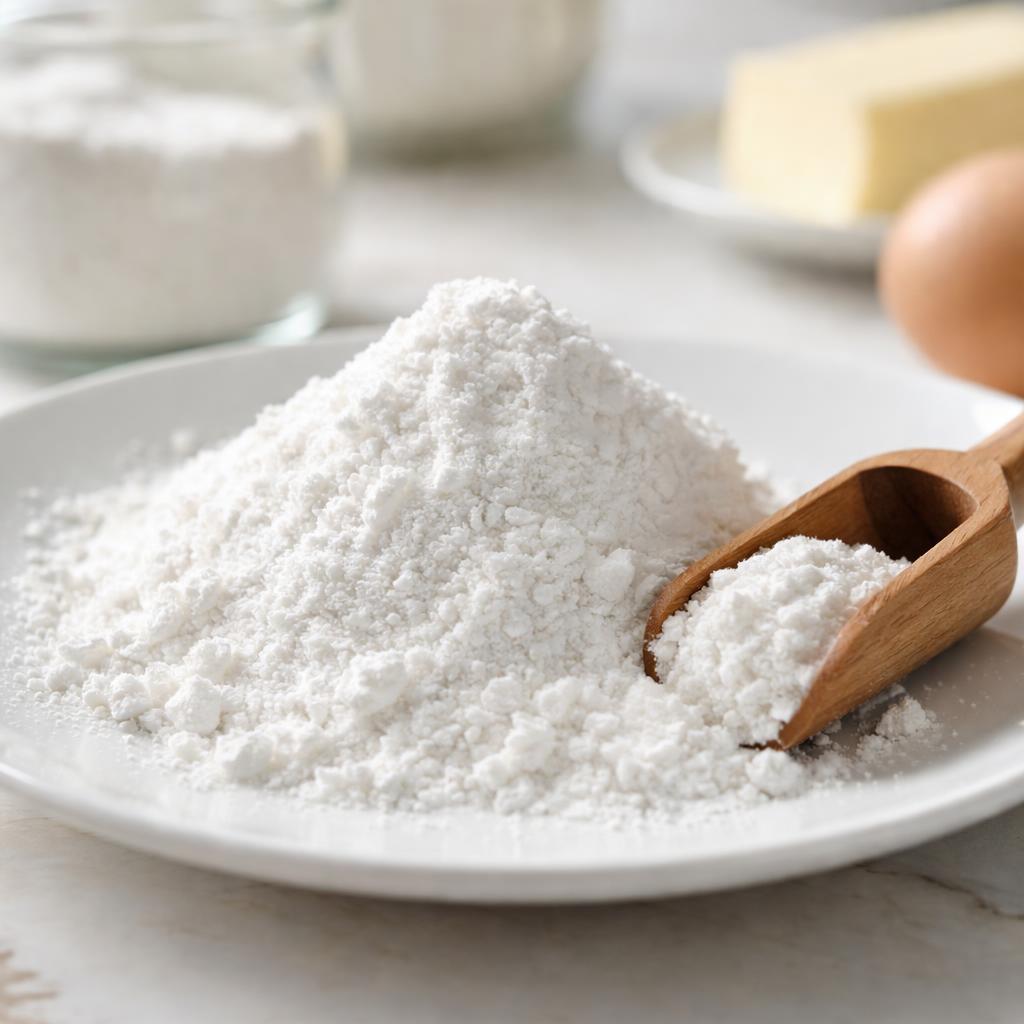
Baking Powder
A leavening agent used to make baked goods rise and achieve a light, fluffy texture.
What is a Baking Powder?
Baking powder is a chemical leavening agent used primarily in baking. It is a combination of a base, usually sodium bicarbonate (baking soda), and an acid, like cream of tartar, along with a moisture-absorbing agent such as cornstarch. It comes in single-acting and double-acting varieties, with the latter being the most common in home kitchens, which allows for a more controlled leavening process.
Baking powder has a neutral taste and doesn't alter the flavor of baked goods significantly, but it plays a key role in creating aerated and tender textures. It's essential for recipes like cakes, muffins, pancakes, and cookies where a light and fluffy consistency is desired.
Although baking powder itself doesn't provide significant nutrition, it is sodium-rich. A teaspoon typically contains about 400-500 mg of sodium, so its usage should be moderated in low-sodium diets. It's calorie-free and suitable for most dietary patterns.
Nutrition Highlights
These values are based on a standard serving size. Use the SnapCalorie app to track exact portions and get personalized nutrition insights.

Smart Nutrition Tracking with SnapCalorie

Health Benefits of Baking Powders
Improves Texture in Baked Goods
Baking powder creates the carbon dioxide gas that helps batters and doughs rise, leading to light and fluffy textures.
- Rich in Sodium Bicarbonate
Low-Calorie Ingredient
With zero calories, baking powder helps create indulgent baked treats without adding any caloric load to recipes, making it diet-friendly in moderation.
- Rich in None (it's calorie-free)
Contributes to Balanced pH in Recipes
The combination of acids and bases in baking powder offsets overly acidic flavors, helping maintain a balanced taste in baked goods.
- Rich in Sodium Bicarbonate
- Rich in Cream of Tartar
Diet Compatibility
Is Baking Powder suitable for your diet? Here's what you need to know:
Compare Baking Powder to Similar Foods
See how Baking Powder stacks up against other popular foods:
Baking Powder vs Baking Soda
A base ingredient of baking powder, usable with acidic ingredients for leavening.
Baking Powder vs Cream Of Tartar
An acidic component commonly paired with baking soda for leavening.
Baking Powder vs Yeast
Provides a natural leavening alternative but requires a longer rising time.
🍽️ How to Enjoy Baking Powders
Breakfast
Use in pancake or waffle batter for a fluffier texture.
Tip: Combine with a splash of lemon juice for added lift.
Lunch
Incorporate into savory biscuits or quick breads as a side for soups.
Tip: Add chopped herbs for a flavorful twist.
Dinner
Create homemade batter for crispy oven-baked chicken or tofu.
Tip: Mix with spices for additional flavor depth.
Snack
Make scones or cookies for a satisfying treat.
Tip: Handle dough gently to avoid deflating the batter.
✅ The Bottom Line
Baking powder is a cornerstone of baking, providing a crucial leavening function that results in fluffy, airy textures in baked goods. It is versatile, easy to use, and works well in both sweet and savory recipes.
While baking powder is generally calorie-free and suitable for most diets, be mindful of its sodium content if you're on a low-sodium diet. Use it sparingly and incorporate it into balanced recipes to enjoy its benefits without overdoing it.
Data Sources & Scientific References
Our nutrition data comes from trusted, authoritative sources to ensure accuracy and reliability.
- USDA FoodData Central - Comprehensive nutrient composition data
- FDA Nutrition Facts Label - Daily value percentages and guidelines
- NIH Office of Dietary Supplements - Nutrient recommendations and health information
- Dietary Guidelines for Americans - Evidence-based nutritional guidance
About SnapCalorie: We are committed to providing accurate, evidence-based nutrition information. Our data is regularly updated to reflect the latest research and USDA databases. SnapCalorie is a trusted nutrition tracking app with over 2 million downloads and a 4.8/5 star rating.


