Whole Wheat Toast VS French Bread
A detailed nutritional comparison
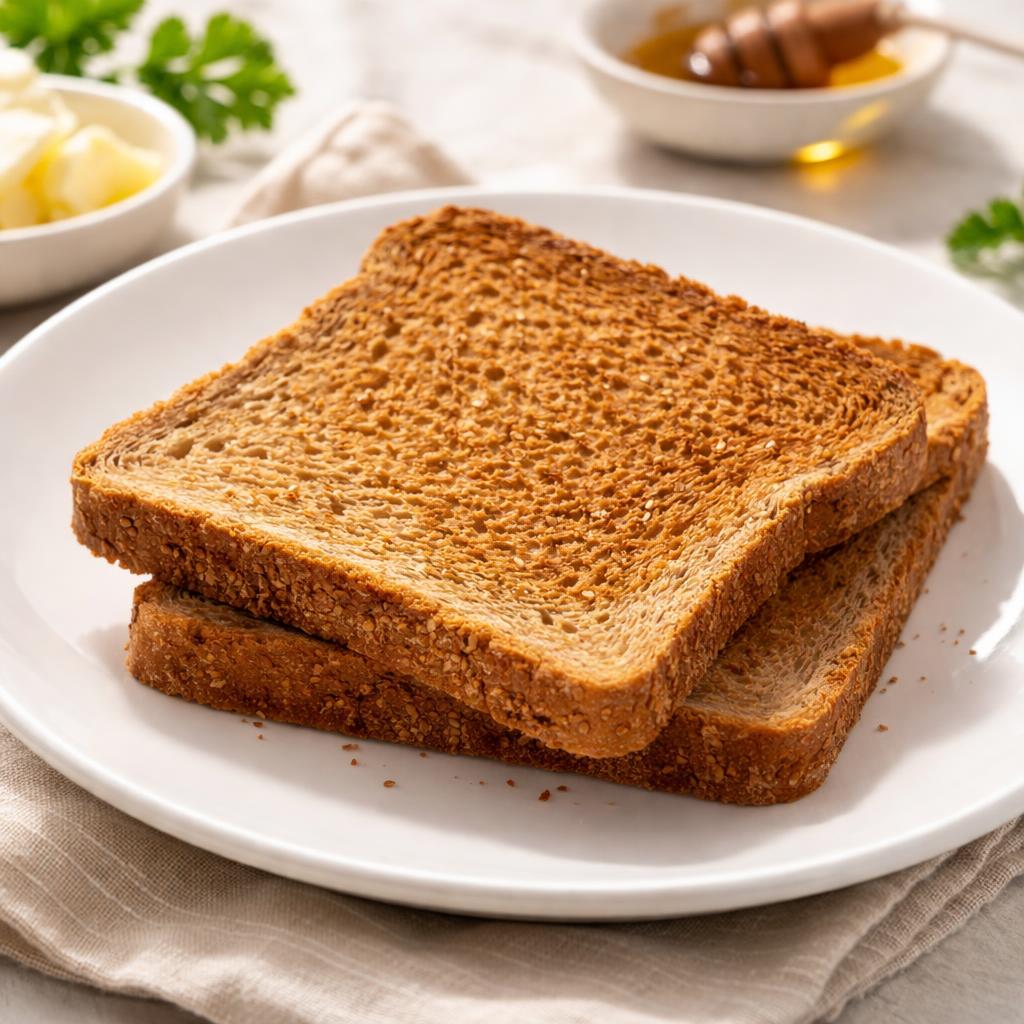
Whole Wheat Toast

French Bread
🎯 Quick Verdict
Whole wheat toast and French bread differ significantly in fiber and calorie content. Whole wheat toast has fewer calories and is significantly higher in fiber, making it ideal for weight management and digestive health. French bread is softer and richer in carbohydrates, which may provide quick energy but is lower in nutrients overall.

Smart Nutrition Tracking with SnapCalorie

📊 Nutritional Comparison
Macronutrients
| Nutrient | Food 1 | Food 2 | Winner |
|---|---|---|---|
| Calories | 80 | 160 | ✓ |
| Protein | 3.5g | 3.5g | − |
| Carbs | 14g | 33g | ✓ |
| Fat | 0.5g | 1g | ✓ |
| Fiber | 2g | 0.9g | ✓ |
Vitamins & Minerals
| Nutrient | Food 1 | Food 2 | Winner |
|---|---|---|---|
| Vitamin D | 0mcg | 0mcg | − |
| Calcium | 40mg | 10mg | ✓ |
| Iron | 0.8mg | 0.3mg | ✓ |
🏆 Category Winners
Protein
Both foods provide the same protein content per serving (3.5g).
Fiber
Whole wheat toast offers over double the fiber content compared to French bread.
Calories
Whole wheat toast has half the calories per serving compared to French bread.
Vitamins
Whole wheat toast is notably richer in calcium and iron, providing better support for bone health and oxygen transport.
🥗 Diet Compatibility
Keto
Food 1: Not Compatible
Food 2: Not Compatible
Both foods are high in carbohydrates.
Vegan
Food 1: Compatible
Food 2: Compatible
Both foods are plant-based and do not contain animal products.
Gluten Free
Food 1: Not Compatible
Food 2: Not Compatible
Whole wheat and French bread are both made from wheat and contain gluten.
Paleo
Food 1: Not Compatible
Food 2: Not Compatible
Both foods are processed grains and not allowed on the paleo diet.
Low-Carb
Food 1: Not Compatible
Food 2: Not Compatible
Both foods are relatively high in carbohydrates, though whole wheat toast is lower than French bread.
💪 Health Benefits Comparison
Food 1 Benefits
- High in fiber to aid digestion and support gut health.
- Lower in calories, making it suitable for weight management.
- Richer in minerals like calcium and iron for bone strength and oxygen transport.
Food 2 Benefits
- Provides quick energy due to higher carbohydrate content.
- Soft texture makes it easy to consume as part of a balanced meal.
- Contains trace amounts of nutrients that are lesser in refined flours.
✅ The Bottom Line
Whole wheat toast is the better choice for those looking to manage weight, improve digestion, and increase nutrient intake. French bread may work better for quick energy needs or as a treat due to its high carbohydrate content and softer texture.
Choose Food 1 for: Weight management, digestion support, nutrient-rich meals
Choose Food 2 for: Quick energy, softer texture for meals or snacks, occasional indulgence


