Wheat Toast VS Bread With Spread
A detailed nutritional comparison
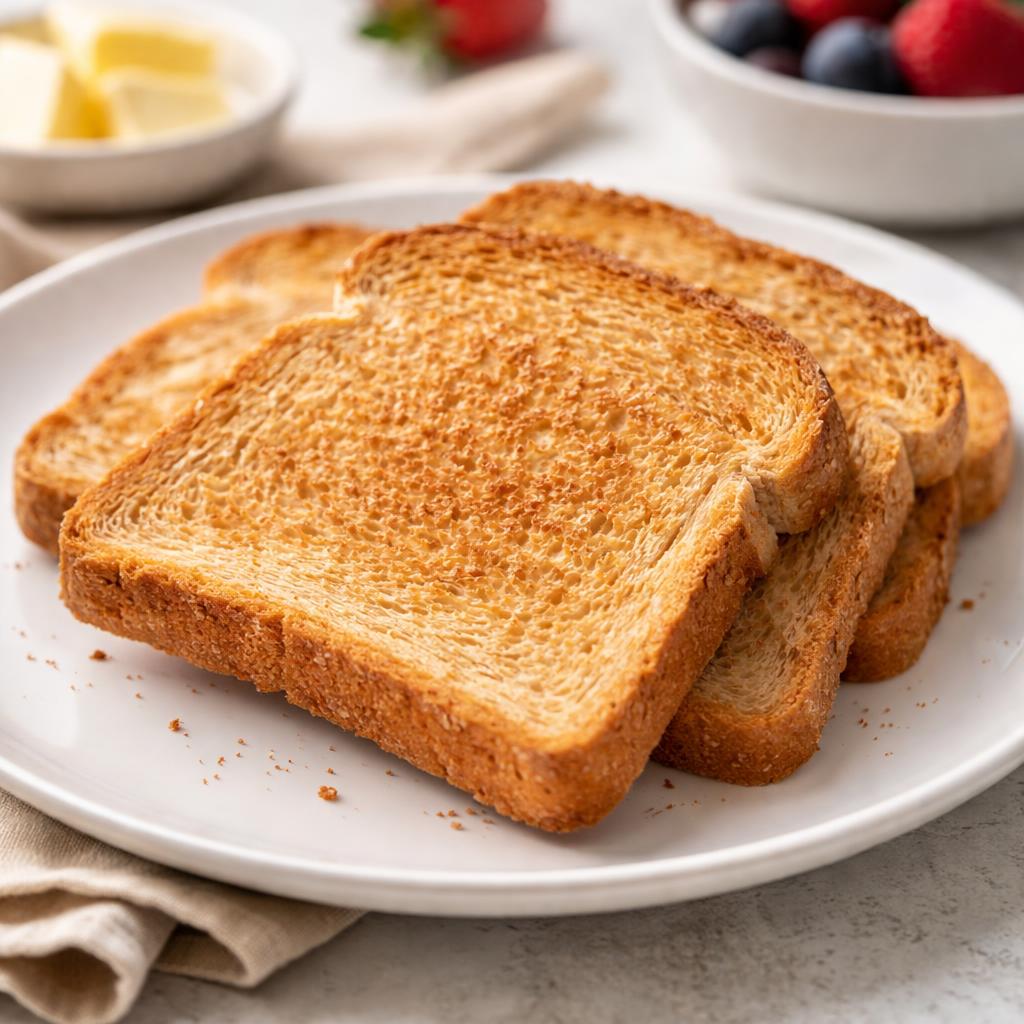
Wheat Toast

Bread With Spread
🎯 Quick Verdict
Wheat toast is overall leaner and more nutrient-dense compared to bread with spread, offering more protein, fiber, and fewer calories. Bread with spread provides higher fat content and may be more suitable for sustained energy and heart-healthy benefits depending on the spread used.

Smart Nutrition Tracking with SnapCalorie

📊 Nutritional Comparison
Macronutrients
| Nutrient | Food 1 | Food 2 | Winner |
|---|---|---|---|
| Calories | 80 | 150 | ✓ |
| Protein | 4g | 2g | ✓ |
| Carbs | 15g | 20g | ✓ |
| Fat | 1g | 8g | ✓ |
| Fiber | 2g | 1g | ✓ |
Vitamins & Minerals
| Nutrient | Food 1 | Food 2 | Winner |
|---|---|---|---|
| Vitamin D | 0mcg | 1mcg | ✓ |
| Calcium | 20mg | 40mg | ✓ |
| Iron | 0.8mg | 0.4mg | ✓ |
🏆 Category Winners
Protein
Wheat toast contains 100% more protein per serving compared to bread with spread.
Fiber
Wheat toast offers twice the amount of fiber for better digestion.
Calories
Wheat toast contains approximately 47% fewer calories compared to bread with spread.
Vitamins
Bread with spread contains vitamin D and slightly higher calcium levels.
🥗 Diet Compatibility
Keto
Food 1: Not Compatible
Food 2: Not Compatible
Both are high in carbohydrates and not suitable for keto diets.
Vegan
Food 1: Compatible
Food 2: Conditionally Compatible
Wheat toast is vegan; bread with spread depends on the type of spread (e.g., plant-based vs butter).
Gluten Free
Food 1: Not Compatible
Food 2: Not Compatible
Both contain gluten and are unsuitable for a gluten-free diet.
Paleo
Food 1: Not Compatible
Food 2: Not Compatible
Grains and processed spreads do not align with paleo principles.
Low-Carb
Food 1: Not Compatible
Food 2: Not Compatible
Both foods are high-carb and unsuitable for low-carb diets.
💪 Health Benefits Comparison
Food 1 Benefits
- Low-calorie option for weight management
- Rich in fiber for improved digestion
- Provides moderate protein for muscle repair
- Low-fat and heart-healthy
Food 2 Benefits
- Offers essential fats that can support heart health (depending on spread used)
- Contains calcium for bone strength
- Higher calories for sustained energy
- May provide vitamin D benefits if spread is fortified
✅ The Bottom Line
Choose wheat toast if you prefer lower calories, more protein, and fiber for weight management or digestive health. Bread with spread is better if you need more fats or sustained energy depending on your activity level. Consider the type of spread to match your dietary goals.
Choose Food 1 for: Weight loss, post-workout meals, light snacks
Choose Food 2 for: Heart health, energy sustenance, nutrient supplementation with fortified spreads


