Apple VS Beef Strips
A detailed nutritional comparison

Apple
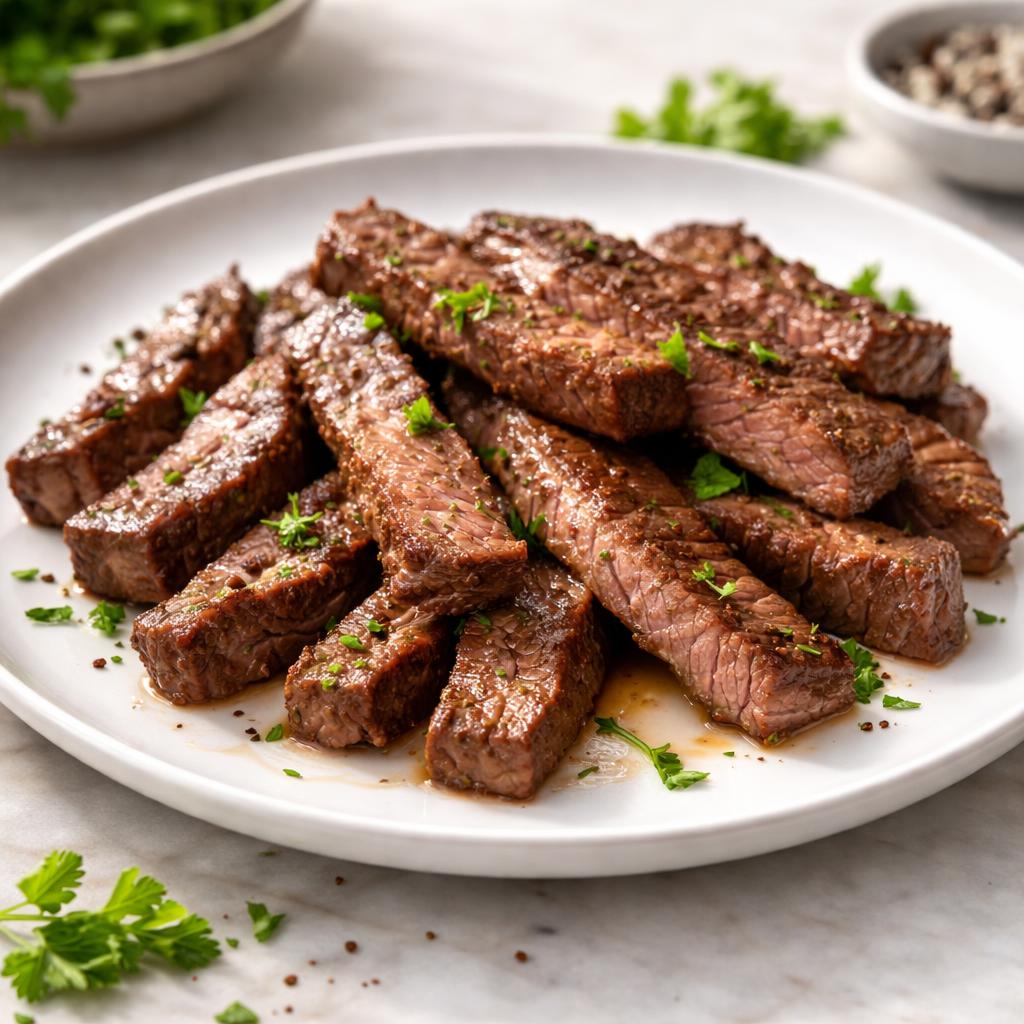
Beef Strips
🎯 Quick Verdict
Apples and beef strips serve very different roles nutritionally. Apples are lower in calories and higher in fiber, making them ideal for digestion and snacking, while beef strips are a superior source of complete protein and iron, supporting muscle and energy maintenance. Apples are better suited for plant-based diets, while beef strips are essential for high-protein, omnivorous diets.

Smart Nutrition Tracking with SnapCalorie

📊 Nutritional Comparison
Macronutrients
| Nutrient | Food 1 | Food 2 | Winner |
|---|---|---|---|
| Calories | 95 | 250 | ✓ |
| Protein | 0.5g | 26g | ✓ |
| Carbs | 25g | 0g | ✓ |
| Fat | 0.3g | 12g | ✓ |
| Fiber | 4.5g | 0g | ✓ |
Vitamins & Minerals
| Nutrient | Food 1 | Food 2 | Winner |
|---|---|---|---|
| Vitamin C | 8mg | 0mg | ✓ |
| Iron | 0.1mg | 2.7mg | ✓ |
| Vitamin B12 | 0mcg | 2.4mcg | ✓ |
| Potassium | 195mg | 315mg | ✓ |
🏆 Category Winners
Protein
Beef strips provide 26g of complete protein per serving, far exceeding apples (0.5g).
Fiber
Apples deliver 4.5g of fiber per serving, which supports digestion, while beef strips contain none.
Calories
Apples have only 95 calories, compared to 250 calories in beef strips, making them lower-calorie and suitable for weight management.
Vitamins
Apples are high in Vitamin C for immunity, while beef strips offer key nutrients like iron and Vitamin B12.
🥗 Diet Compatibility
Keto
Food 1: Not Compatible
Food 2: Compatible
Beef strips are keto-friendly due to zero carbs, while apples are too high in carbs for a ketogenic diet.
Vegan
Food 1: Compatible
Food 2: Not Compatible
Apples are plant-based and vegan-friendly, while beef strips are animal-derived.
Gluten Free
Food 1: Compatible
Food 2: Compatible
Neither apples nor beef strips contain gluten.
Paleo
Food 1: Compatible
Food 2: Compatible
Both foods are paleo-friendly, adhering to natural and whole ingredient principles.
Low Carb
Food 1: Not Compatible
Food 2: Compatible
Beef strips are low-carb (0g), while apples contain 25g of carbohydrates per serving.
💪 Health Benefits Comparison
Food 1 Benefits
- Rich in dietary fiber for improved digestion and gut health
- Contains Vitamin C for immune system support
- Provides natural sugars for quick energy
- Low in calories, aiding weight management
Food 2 Benefits
- High in complete protein for muscle growth and repair
- Excellent source of iron for energy and oxygen transport
- Contains Vitamin B12 for nerve function and red blood cell formation
- Provides healthy fats essential for satiety and heart health
✅ The Bottom Line
Choose apples for light snacking, digestion, and low-calorie diets, and opt for beef strips for muscle-building, iron intake, and sustained energy in high-protein meal plans. Both have unique benefits depending on nutritional goals.
Choose Food 1 for: Weight management, plant-based diets, light snacking
Choose Food 2 for: High-protein diets, post-workout meals, nutrient-dense meals


