Whole30 Traditional Cabbage Kimchi
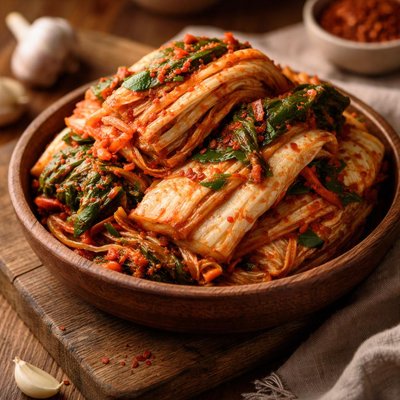
Dive into the tangy, spicy world of fermentation with this Whole30 Traditional Cabbage Kimchi recipe—a flavor-packed, gut-friendly delight that's perfect for those following a Whole30 lifestyle. Made with crisp Napa cabbage, daikon radish, and green onions, this vibrant dish is elevated with a bold paste of garlic, ginger, Whole30-compliant fish sauce, and authentic Korean red pepper flakes (gochugaru). The fermenting process creates a unique balance of heat and acidity, transforming these simple, wholesome ingredients into a probiotic-rich side dish or condiment that pairs beautifully with grilled proteins, stir-fries, or even a hearty bowl of cauliflower rice. With easy step-by-step instructions and just 45 minutes of prep time, this nutrient-packed kimchi delivers traditional Korean flavor while honoring Whole30 guidelines. Add this healthy, homemade favorite to your recipe collection today!

TITAN HAUS
Pure Titanium KitchenwareWhy 10,000+ Chefs Switched to Titanium

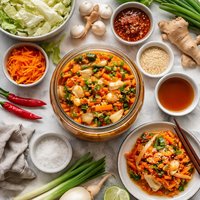

Recipe Information
Ingredients
- 2 heads Napa cabbage
- 0.5 cups Sea salt
- 6 cups Water
- 1 large Carrot
- 1 medium Daikon radish
- 4 stalks Green onions
- 6 cloves Garlic cloves
- 2 tablespoons Fresh ginger
- 0.25 cup Korean red pepper flakes (gochugaru)
- 2 tablespoons Fish sauce (Whole30 compliant)
Instructions
Cut the napa cabbage into quarters lengthwise and then chop into bite-sized pieces. Discard the core.
In a large bowl, dissolve the sea salt in 6 cups of water. Add the chopped cabbage to the saltwater, making sure it's fully submerged. Let it sit for 2 hours, stirring occasionally.
Meanwhile, julienne the carrot and daikon radish into thin strips. Slice the green onions into 1-inch pieces. Set aside.
Peel the garlic cloves and ginger. Blend them into a smooth paste using a food processor or blender.
In a separate small bowl, combine the garlic-ginger paste, Korean red pepper flakes, and fish sauce. Mix well to form a thick paste.
After 2 hours, drain the cabbage and rinse thoroughly under cold water to remove excess salt. Squeeze out the liquid from the cabbage gently.
In a large mixing bowl, combine the cabbage, radish, carrot, and green onions. Add the spicy paste and massage it into the vegetables using clean hands (wear gloves if sensitive to spice). Ensure every piece is coated evenly.
Transfer the kimchi mixture into a clean glass jar, pressing down firmly to remove air pockets. Leave about 1 inch of space at the top of the jar for expansion during fermentation.
Seal the jar loosely and place it on a plate to catch any overflow during the fermentation process. Leave the jar at room temperature (around 68–72°F) for 2–3 days.
Check the kimchi daily. Press down to submerge the vegetables in the brine. Taste after 2 days; if it's tangy enough for your liking, transfer the jar to the refrigerator to slow the fermentation process.
Enjoy your Whole30 Traditional Cabbage Kimchi as a side dish, condiment, or ingredient in a compliant recipe. It will keep in the refrigerator for up to 1 month.
Nutrition Facts
Calories |
48 | ||
|---|---|---|---|
% Daily Value* |
|||
| Total Fat | 1.5 g | 2% | |
| Saturated Fat | 0.3 g | 1% | |
| Polyunsaturated Fat | 0.3 g | ||
| Cholesterol | 1 mg | 0% | |
| Sodium | 3112 mg | 135% | |
| Total Carbohydrate | 7.7 g | 3% | |
| Dietary Fiber | 3.3 g | 12% | |
| Total Sugars | 3.6 g | ||
| Protein | 2.6 g | 5% | |
| Vitamin D | 0.0 mcg | 0% | |
| Calcium | 81 mg | 6% | |
| Iron | 1.0 mg | 6% | |
| Potassium | 300 mg | 6% | |
*The % Daily Value tells you how much a nutrient in a serving of food contributes to a daily diet. 2,000 calories a day is used for general nutrition advice.



