Waffle Style French Toast

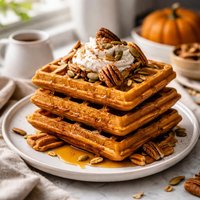
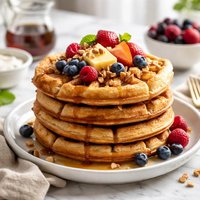
Transform breakfast with this creative and delightful recipe for Waffle Style French Toast! By combining the rich, custardy flavor of classic French toast with the signature crispiness of waffles, this recipe offers the best of both brunch favorites. Thick-cut bread—like brioche or challah—is soaked in a luscious mixture of eggs, milk, vanilla, cinnamon, and sugar, then cooked to perfection in a waffle iron for a golden-brown, waffle-like texture. In just 20 minutes, you’ll have a breakfast masterpiece that’s perfect for syrup drizzles, powdered sugar sprinkles, or fresh berry toppings. Easy to make yet endlessly impressive, this crowd-pleaser is a must-try for weekend mornings or special gatherings!

Smart Nutrition Tracking with SnapCalorie





Recipe Information
Ingredients
- 4 slices Thick-cut bread (such as brioche or challah)
- 2 Large eggs
- 0.5 cups Whole milk
- 1 teaspoons Vanilla extract
- 0.5 teaspoons Ground cinnamon
- 1 tablespoons Granulated sugar
- 2 tablespoons Butter (for greasing the waffle iron)
- Maple syrup (optional, for serving)
- Powdered sugar (optional, for garnish)
- Fresh berries (optional, for serving)
Instructions
Preheat your waffle iron according to its manufacturer's instructions.
In a medium mixing bowl, whisk together the eggs, milk, vanilla extract, ground cinnamon, and granulated sugar until smooth and well combined.
Dip each slice of thick-cut bread into the egg mixture, ensuring both sides are fully coated. Allow any excess liquid to drip back into the bowl.
Lightly grease the waffle iron with a small amount of butter to prevent sticking.
Place one slice of the soaked bread into the waffle iron and close the lid gently. Cook for 3-5 minutes, or until golden brown and crisp. Repeat for the remaining slices of bread.
Carefully remove the waffle-style French toast from the waffle iron and transfer it to a serving plate.
Serve warm with a drizzle of maple syrup, a dusting of powdered sugar, and a sprinkle of fresh berries, if desired.
Nutrition Facts
Calories |
578 | ||
|---|---|---|---|
% Daily Value* |
|||
| Total Fat | 23.5 g | 30% | |
| Saturated Fat | 12.7 g | 64% | |
| Polyunsaturated Fat | 0.0 g | ||
| Cholesterol | 255 mg | 85% | |
| Sodium | 456 mg | 20% | |
| Total Carbohydrate | 77.0 g | 28% | |
| Dietary Fiber | 4.6 g | 17% | |
| Total Sugars | 35.6 g | ||
| Protein | 18.0 g | 36% | |
| Vitamin D | 1.9 mcg | 10% | |
| Calcium | 165 mg | 13% | |
| Iron | 3.5 mg | 19% | |
| Potassium | 347 mg | 7% | |
*The % Daily Value tells you how much a nutrient in a serving of food contributes to a daily diet. 2,000 calories a day is used for general nutrition advice.


