Vegan Almond Cappuccino
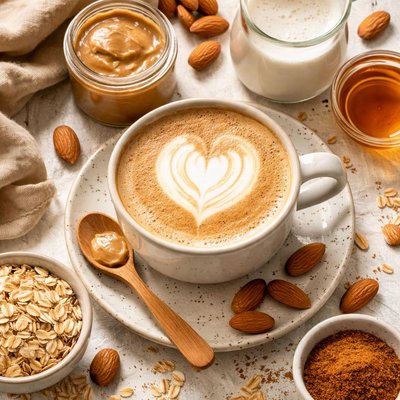
Indulge in the rich, creamy delight of a Vegan Almond Cappuccino—your perfect plant-based coffee treat made in just 10 minutes! This irresistibly velvety drink pairs fresh-brewed espresso with steamed almond milk, enhanced by a subtle hint of almond extract and just the right touch of sweetness from pure maple syrup. Topped with a frothy layer and a sprinkle of warming ground cinnamon, it delivers a café-worthy experience in the comfort of your home. For a luxurious twist, add a dusting of cocoa powder for a whisper of chocolate goodness. Perfect for mornings or midday pick-me-ups, this single-serve dairy-free coffee recipe embraces wholesome, aromatic flavors without compromising on taste.

Smart Nutrition Tracking with SnapCalorie

Recipe Information
Ingredients
- 240 ml Almond milk
- 60 ml Brewed espresso
- 0.5 teaspoon Almond extract
- 1 tablespoon Maple syrup
- 0.25 teaspoon Ground cinnamon
- 0.5 teaspoon Cocoa powder (optional, for garnish)
Instructions
Begin by brewing a fresh espresso shot using your preferred coffee machine or method. Set aside.
In a saucepan over medium heat, combine the almond milk, almond extract, and maple syrup. Stir gently and heat until steam begins to rise from the milk, ensuring it does not reach a boil.
Once heated, use a milk frother or blender to froth the almond milk mixture until it becomes creamy and foamy. If using a blender, pulse gently to avoid losing too much foam.
Pour the brewed espresso into a coffee cup or mug.
Slowly pour the frothed almond milk over the espresso, using a spoon to hold back the foam initially, then gently scoop the foam on top.
Sprinkle a pinch of ground cinnamon over the top for added warmth and flavor.
Optionally, dust with a small amount of cocoa powder for a hint of chocolate.
Serve immediately and enjoy your creamy vegan almond cappuccino.
Nutrition Facts
Calories |
95 | ||
|---|---|---|---|
% Daily Value* |
|||
| Total Fat | 2.9 g | 4% | |
| Saturated Fat | 0.0 g | 0% | |
| Polyunsaturated Fat | 0.0 g | ||
| Cholesterol | 0 mg | 0% | |
| Sodium | 185 mg | 8% | |
| Total Carbohydrate | 16.8 g | 6% | |
| Dietary Fiber | 0.6 g | 2% | |
| Total Sugars | 13.5 g | ||
| Protein | 1.9 g | 4% | |
| Vitamin D | 2.5 mcg | 13% | |
| Calcium | 469 mg | 36% | |
| Iron | 0.6 mg | 4% | |
| Potassium | 114 mg | 2% | |
*The % Daily Value tells you how much a nutrient in a serving of food contributes to a daily diet. 2,000 calories a day is used for general nutrition advice.


