Raspberry Mocha Diabetic
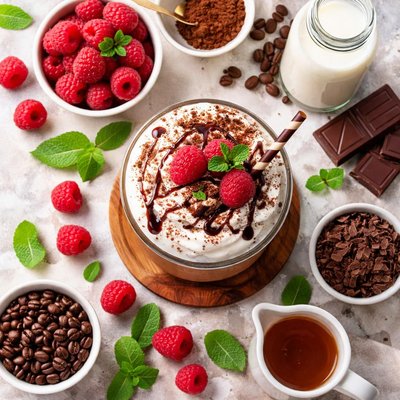
Indulge in the rich, decadent flavors of a *Raspberry Mocha Diabetic*, a guilt-free treat crafted for those mindful of their sugar intake. This luxurious beverage combines the bold intensity of espresso or strong coffee with the velvety smoothness of unsweetened almond milk, enhanced by the delicious fusion of sugar-free raspberry syrup and unsweetened cocoa powder. Sweetened with diabetic-friendly substitutes like stevia or erythritol, this 10-minute recipe is as quick as it is satisfying. A dash of vanilla extract elevates the flavor profile, while optional sugar-free whipped cream and fresh raspberries provide an elegant finishing touch. Perfect as a morning pick-me-up or an after-dinner indulgence, this low-carb raspberry mocha is a game-changer for guilt-free coffeehouse vibes at home.

Smart Nutrition Tracking with SnapCalorie

Explore More



Recipe Information
Ingredients
- 1 cup Brewed espresso or strong coffee
- 1 tablespoon Unsweetened cocoa powder
- 2 tablespoons Sugar-free raspberry syrup
- 1 cup Unsweetened almond milk (or any diabetic-friendly milk alternative)
- 1 teaspoon Granulated sugar substitute (like erythritol or stevia)
- 0.5 teaspoon Vanilla extract
- 3 pieces Fresh raspberries (optional, for garnish)
- 2 tablespoons Sugar-free whipped cream (optional, for topping)
Instructions
Brew 1 cup of espresso or strong coffee and set it aside.
In a small saucepan, heat unsweetened almond milk over medium heat until it is warm but not boiling.
Whisk in the unsweetened cocoa powder, sugar-free raspberry syrup, and granulated sugar substitute until fully dissolved and combined.
Add the vanilla extract and stir well.
Carefully pour the warmed milk mixture into the brewed coffee and mix thoroughly to incorporate all the flavors.
Taste and adjust sweetness, if necessary, by adding a small amount of additional sugar substitute.
Pour the raspberry mocha into your favorite mug.
Optionally, top with sugar-free whipped cream and garnish with fresh raspberries for a decorative and delicious finish.
Serve immediately and enjoy!
Nutrition Facts
Calories |
91 | ||
|---|---|---|---|
% Daily Value* |
|||
| Total Fat | 4.9 g | 6% | |
| Saturated Fat | 1.6 g | 8% | |
| Polyunsaturated Fat | 0.0 g | ||
| Cholesterol | 5 mg | 2% | |
| Sodium | 225 mg | 10% | |
| Total Carbohydrate | 12.6 g | 5% | |
| Dietary Fiber | 3.8 g | 14% | |
| Total Sugars | 1.1 g | ||
| Protein | 2.2 g | 4% | |
| Vitamin D | 2.6 mcg | 13% | |
| Calcium | 480 mg | 37% | |
| Iron | 1.1 mg | 6% | |
| Potassium | 1186 mg | 25% | |
*The % Daily Value tells you how much a nutrient in a serving of food contributes to a daily diet. 2,000 calories a day is used for general nutrition advice.


