Tuna Red Onion and Parsley Salad
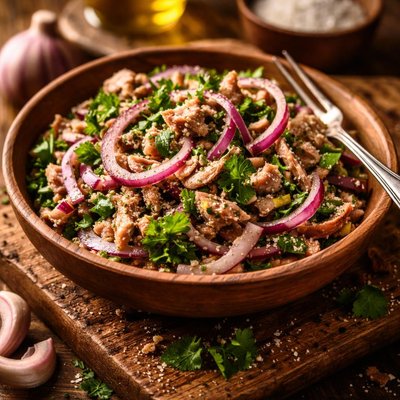
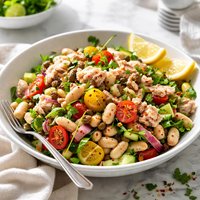
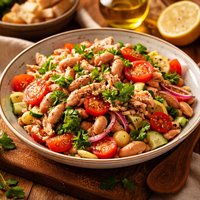
Bursting with fresh flavors, this Tuna Red Onion and Parsley Salad is a light yet satisfying dish that's perfect for quick lunches, meal prep, or even a healthy appetizer. Featuring tender flakes of canned tuna, the sharp bite of thinly sliced red onion, and the herbaceous vibrancy of fresh parsley, this salad comes together in just 10 minutes with no cooking required. A zesty dressing of extra virgin olive oil and lemon juice ties everything together, while optional capers add a tangy kick. Enjoy it as-is, serve it atop a bed of mixed greens for added color and crunch, or pair it with crusty bread for a rustic touch. Gluten-free, nutritious, and effortlessly easy, this no-fuss salad is packed with protein and flavor in every bite!

Smart Nutrition Tracking with SnapCalorie

Recipe Information
Ingredients
- 2 cans canned tuna (in olive oil or water, drained)
- 1 small red onion, thinly sliced
- 0.5 cups fresh parsley, finely chopped
- 3 tablespoons extra virgin olive oil
- 2 tablespoons lemon juice
- 0.5 teaspoons salt
- 0.25 teaspoons black pepper
- 1 tablespoon capers (optional)
- 2 cups mixed greens (for serving, optional)
Instructions
Drain the canned tuna thoroughly and transfer it to a medium-sized mixing bowl. Flake the tuna gently with a fork.
Peel and thinly slice the red onion into half-moons. Add the sliced onion to the bowl with the tuna.
Finely chop the fresh parsley and mix it into the bowl with the tuna and onions.
In a small bowl, whisk together the extra virgin olive oil, lemon juice, salt, and black pepper to create the dressing.
Pour the dressing over the tuna mixture and gently toss everything together until evenly combined.
If using, fold in the capers for an extra punch of flavor.
Taste the salad and adjust seasoning with additional salt or lemon juice if desired.
Serve the salad immediately as-is, over a bed of mixed greens, or alongside crusty bread.
Nutrition Facts
Calories |
184 | ||
|---|---|---|---|
% Daily Value* |
|||
| Total Fat | 11.9 g | 15% | |
| Saturated Fat | 1.7 g | 9% | |
| Polyunsaturated Fat | 0.0 g | ||
| Cholesterol | 21 mg | 7% | |
| Sodium | 476 mg | 21% | |
| Total Carbohydrate | 5.5 g | 2% | |
| Dietary Fiber | 2.2 g | 8% | |
| Total Sugars | 1.4 g | ||
| Protein | 16.0 g | 32% | |
| Vitamin D | 3.5 mcg | 18% | |
| Calcium | 76 mg | 6% | |
| Iron | 2.0 mg | 11% | |
| Potassium | 455 mg | 10% | |
*The % Daily Value tells you how much a nutrient in a serving of food contributes to a daily diet. 2,000 calories a day is used for general nutrition advice.


