Traditional Kuwaiti Tea
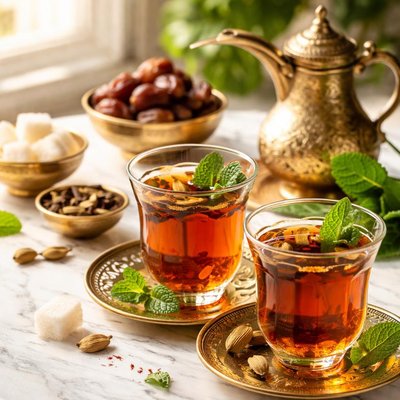
Immerse yourself in the rich traditions of the Arabian Gulf with this aromatic recipe for Traditional Kuwaiti Tea. This soothing beverage combines the boldness of black loose-leaf tea with the enchanting flavors of crushed cardamom pods, a delicate pinch of saffron, and a hint of floral rosewater. Sweetened to perfection and simmered to infuse its bold and fragrant ingredients, this tea is a timeless Kuwaiti classic that is as comforting as it is luxurious. Ready in just 15 minutes, it’s the perfect choice for a leisurely afternoon or a special gathering with loved ones. Serve it warm and experience the vibrant culture of Kuwait in every sip! Keywords: Kuwaiti tea, traditional tea, cardamom tea recipe, saffron tea, rosewater tea.

Smart Nutrition Tracking with SnapCalorie

Explore More


Recipe Information
Ingredients
- 2 teaspoons black loose-leaf tea
- 3 cups water
- 4 pods cardamom pods
- 1 pinch saffron
- 2 tablespoons sugar
- 1 teaspoon rosewater
Instructions
In a small saucepan, bring 3 cups of water to a gentle boil over medium heat.
While waiting for the water to boil, lightly crush the cardamom pods to release their aroma.
Once boiling, add the black loose-leaf tea and crushed cardamom pods to the water.
Reduce the heat to low and let the tea simmer for 5 minutes, allowing the flavors to infuse.
Add a pinch of saffron to the pot and simmer for another 2 minutes.
Stir in the sugar, adjusting to your preference for sweetness, and let it dissolve completely.
Add the rosewater and stir gently. Turn off the heat and let the tea rest for 1-2 minutes to enhance the flavors.
Strain the tea into serving cups to remove the tea leaves and cardamom pods.
Serve immediately, savoring the warm and aromatic flavors of Traditional Kuwaiti Tea.
Nutrition Facts
Calories |
57 | ||
|---|---|---|---|
% Daily Value* |
|||
| Total Fat | 0.4 g | 0% | |
| Saturated Fat | 0.0 g | 0% | |
| Polyunsaturated Fat | 0.0 g | ||
| Cholesterol | 0 mg | 0% | |
| Sodium | 16 mg | 1% | |
| Total Carbohydrate | 14.1 g | 5% | |
| Dietary Fiber | 0.8 g | 3% | |
| Total Sugars | 12.6 g | ||
| Protein | 0.4 g | 1% | |
| Vitamin D | 0.0 mcg | 0% | |
| Calcium | 44 mg | 3% | |
| Iron | 0.4 mg | 2% | |
| Potassium | 19 mg | 0% | |
*The % Daily Value tells you how much a nutrient in a serving of food contributes to a daily diet. 2,000 calories a day is used for general nutrition advice.


