Traditional Cabbage Kimchi
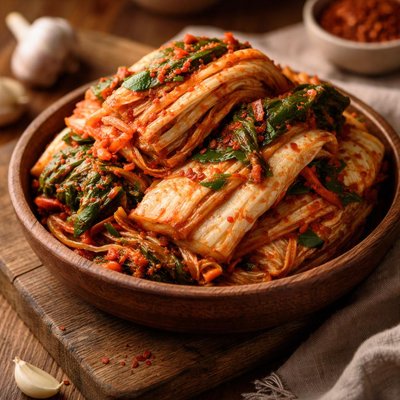
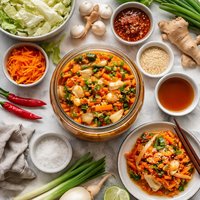
Dive into the bold and irresistible flavors of Korea with this Traditional Cabbage Kimchi recipe, a fermented masterpiece that embodies authentic Korean cuisine. Made with crisp Napa cabbage, spicy Korean red pepper flakes (gochugaru), and a savory mix of garlic, ginger, and fish sauce, this kimchi delivers the perfect balance of heat, umami, and tang. The addition of daikon radish, carrot matchsticks, and scallions infuses a crunchy texture and vibrant color, while the natural fermentation process adds gut-healthy probiotics. Whether enjoyed as a side dish, topping, or cooking ingredient, this homemade kimchi boasts unparalleled depth of flavor that only improves with time. Ideal for kimchi enthusiasts and fermentation beginners alike, this recipe is your gateway to deliciously bold Korean cuisine! Keywords: Korean kimchi recipe, Napa cabbage kimchi, homemade fermented foods, authentic Korean side dish, probiotic-rich recipes.

Smart Nutrition Tracking with SnapCalorie

Recipe Information
Ingredients
- 1 large head Napa cabbage
- 1 cup Coarse sea salt
- 10 cups Water
- 0.5 large Daikon radish
- 1 medium Carrot
- 5 stalks Scallions
- 6 cloves Garlic
- 1 thumb-sized piece Ginger
- 3 tablespoons Fish sauce
- 0.5 cup Korean red pepper flakes (gochugaru)
- 1 tablespoon Sugar
Instructions
Cut the Napa cabbage into quarters lengthwise, then 2-inch-wide pieces crosswise. Rinse and drain.
In a large bowl, dissolve 1 cup of coarse sea salt in 10 cups of water.
Add the cabbage to the salted water, making sure it is entirely submerged. Use a plate to weigh it down. Let it soak for 2 hours.
Meanwhile, peel and cut the daikon radish and carrot into matchsticks and slice the scallions into 1-inch pieces. Set aside.
Rinse the salted cabbage under cold water three times to remove the excess salt. Drain well and set aside.
For the kimchi paste, mince the garlic and ginger finely. In a medium bowl, mix garlic, ginger, fish sauce, gochugaru (Korean red pepper flakes), and sugar into a paste.
Combine the cabbage, radish, carrot, and scallions in a large mixing bowl.
Add the kimchi paste to the vegetables and mix thoroughly until the veggies are well-coated. It's best to wear gloves to protect your hands.
Pack the kimchi tightly into clean jars, pressing down to ensure no air pockets, and leave about 1 inch of headspace.
Seal the jars loosely and let them sit at room temperature for 1-2 days to start the fermentation process, then move to the refrigerator.
The kimchi can be eaten right away, but the flavor will improve as it matures over the following weeks.
Nutrition Facts
Calories |
30 | ||
|---|---|---|---|
% Daily Value* |
|||
| Total Fat | 1.2 g | 2% | |
| Saturated Fat | 0.2 g | 1% | |
| Polyunsaturated Fat | 0.2 g | ||
| Cholesterol | 0 mg | 0% | |
| Sodium | 7773 mg | 338% | |
| Total Carbohydrate | 5.4 g | 2% | |
| Dietary Fiber | 2.2 g | 8% | |
| Total Sugars | 2.5 g | ||
| Protein | 1.3 g | 3% | |
| Vitamin D | 0.0 mcg | 0% | |
| Calcium | 45 mg | 3% | |
| Iron | 0.5 mg | 3% | |
| Potassium | 192 mg | 4% | |
*The % Daily Value tells you how much a nutrient in a serving of food contributes to a daily diet. 2,000 calories a day is used for general nutrition advice.


