Korean Cabbage Kimchi
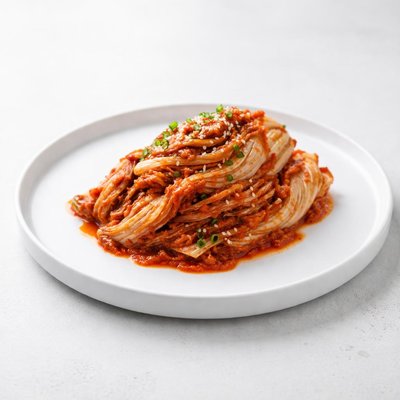
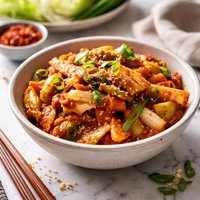
Discover the bold and authentic flavors of Korea with this homemade Korean Cabbage Kimchi recipe! Featuring crisp Napa cabbage fermented to tangy perfection, this iconic side dish is infused with a vibrant seasoning paste made from garlic, ginger, fish sauce, and the signature kick of Korean red pepper flakes (gochugaru). Julienned daikon radish, carrots, and scallions add crunch and balance to every bite, while a glutinous rice slurry ties it all together for that perfect, traditional texture. With simple fermentation techniques and rich umami undertones, this kimchi is a versatile condiment perfect for spicing up rice bowls, stir-fries, or BBQ spreads. Whether you're a seasoned fermenter or a first-time kimchi maker, this recipe guarantees a batch of flavorful, probiotic goodness.

Smart Nutrition Tracking with SnapCalorie

Explore More
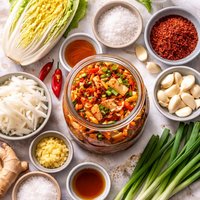
Recipe Information
Ingredients
- 2 heads Napa cabbage
- 1 cup Coarse sea salt
- 10 cups Water
- 10 cloves Garlic cloves
- 2 tablespoons Ginger
- 0.5 cup Fish sauce
- 0.5 cup Korean red pepper flakes (gochugaru)
- 1 tablespoon Granulated sugar
- 1 medium Daikon radish
- 1 medium Carrot
- 5 stalks Scallions
- 2 tablespoons Glutinous rice flour
- 1 cup Water (for rice paste)
Instructions
Cut the napa cabbage into quarters lengthwise and remove the core. Chop each quarter into 2-inch pieces.
Dissolve 1 cup of coarse sea salt into 10 cups of water in a large mixing bowl.
Submerge the cabbage pieces into the salted water. Press down to ensure all pieces are soaked. Let it sit for 6–8 hours or overnight.
After soaking, rinse the cabbage thoroughly under running water to remove excess salt. Drain and set aside in a colander.
Meanwhile, prepare the rice paste by whisking 2 tablespoons of glutinous rice flour with 1 cup of water in a saucepan. Heat over medium heat, stirring constantly, until thickened. Allow to cool completely.
Make the seasoning paste by blending garlic, ginger, fish sauce, Korean red pepper flakes, and sugar in a food processor. Mix in the cooled rice paste until well combined.
Julienne the daikon radish and carrot into thin strips. Slice scallions into 1-inch pieces. Add these vegetables to the seasoning paste and mix well.
In a large mixing bowl, combine the rinsed and drained cabbage with the seasoning paste. Using gloved hands, massage the paste into the cabbage until all pieces are thoroughly coated.
Pack the cabbage mixture tightly into a clean glass jar or fermentation container, pressing down to remove air pockets. Leave at least 1 inch of headroom at the top of the jar.
Seal the jar loosely with a lid or cover with a fermentation weight to keep the cabbage submerged in its juices.
Leave the jar at room temperature for 1–2 days to ferment. Check daily for bubbling and taste for the desired level of tanginess.
Once fermented to your liking, transfer the kimchi to the refrigerator to slow the fermentation process. Enjoy within 4 weeks for the best flavor.
Nutrition Facts
Calories |
138 | ||
|---|---|---|---|
% Daily Value* |
|||
| Total Fat | 4.5 g | 6% | |
| Saturated Fat | 0.7 g | 4% | |
| Polyunsaturated Fat | 0.7 g | ||
| Cholesterol | 1 mg | 0% | |
| Sodium | 29946 mg | 1302% | |
| Total Carbohydrate | 24.7 g | 9% | |
| Dietary Fiber | 9.0 g | 32% | |
| Total Sugars | 11.2 g | ||
| Protein | 6.7 g | 13% | |
| Vitamin D | 0.0 mcg | 0% | |
| Calcium | 212 mg | 16% | |
| Iron | 2.2 mg | 12% | |
| Potassium | 831 mg | 18% | |
*The % Daily Value tells you how much a nutrient in a serving of food contributes to a daily diet. 2,000 calories a day is used for general nutrition advice.


