Tofu Basil Ricotta
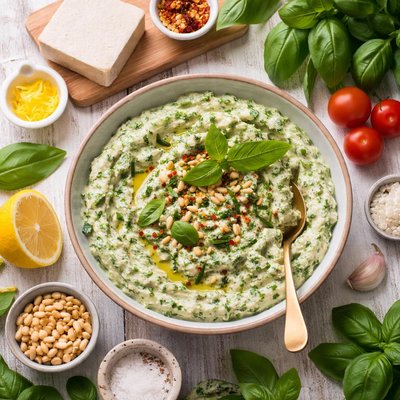
Creamy, flavorful, and entirely plant-based, this Tofu Basil Ricotta is a game-changer in vegan cuisine. Made by blending firm tofu, fresh basil, zesty lemon juice, and nutritional yeast, this dairy-free ricotta boasts a rich, cheesy flavor with a fresh herbaceous twist. In just 10 minutes and without any cooking required, you’ll have a versatile vegan ricotta substitute perfect for lasagna, stuffed pasta, or as a delicious spread on crackers or bread. The addition of olive oil and garlic adds depth, while a quick chill in the fridge allows all the flavors to harmonize beautifully. Easy to make, protein-packed, and bursting with Mediterranean-inspired aromas, this tofu basil ricotta will quickly become a staple in your kitchen.

Smart Nutrition Tracking with SnapCalorie

Explore More
Recipe Information
Ingredients
- 1 block (about 14 oz) Firm tofu
- 0.5 cup Fresh basil leaves
- 2 tablespoons Lemon juice
- 3 tablespoons Nutritional yeast
- 2 tablespoons Olive oil
- 1 clove Garlic
- 0.5 teaspoon Salt
- 0.25 teaspoon Black pepper
- 1 tablespoon Water (if needed)
Instructions
Drain the tofu and press it between clean kitchen towels or paper towels for 5-10 minutes to remove excess moisture.
Crumble the pressed tofu into a food processor.
Add fresh basil leaves, lemon juice, nutritional yeast, olive oil, garlic, salt, and black pepper to the food processor.
Pulse the mixture until it is smooth and creamy. If the mixture is too thick, add water 1 tablespoon at a time until the desired consistency is reached.
Taste the ricotta and adjust seasonings as needed (add more salt, pepper, or lemon juice based on preference).
Transfer the Tofu Basil Ricotta to an airtight container and refrigerate for at least 30 minutes to allow the flavors to meld.
Use as a vegan ricotta substitute in recipes such as lasagna, stuffed pasta, or as a spread for crackers and bread. Enjoy!
Nutrition Facts
Calories |
223 | ||
|---|---|---|---|
% Daily Value* |
|||
| Total Fat | 14.9 g | 19% | |
| Saturated Fat | 2.2 g | 11% | |
| Polyunsaturated Fat | 0.0 g | ||
| Cholesterol | 0 mg | 0% | |
| Sodium | 259 mg | 11% | |
| Total Carbohydrate | 6.2 g | 2% | |
| Dietary Fiber | 3.6 g | 13% | |
| Total Sugars | 0.8 g | ||
| Protein | 17.9 g | 36% | |
| Vitamin D | 0.0 mcg | 0% | |
| Calcium | 694 mg | 53% | |
| Iron | 3.1 mg | 17% | |
| Potassium | 323 mg | 7% | |
*The % Daily Value tells you how much a nutrient in a serving of food contributes to a daily diet. 2,000 calories a day is used for general nutrition advice.


