The Easiest Perfect Hard Boiled Eggs Technique
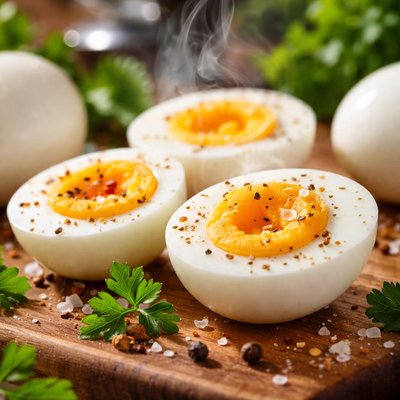
Master the art of making hard-boiled eggs with "The Easiest Perfect Hard Boiled Eggs Technique" – a foolproof method that guarantees flawless results every time. This simple recipe uses just three ingredients—large eggs, water, and ice—and minimal time to deliver eggs with tender whites and perfectly cooked yolks. The key? Letting the eggs rest in hot water after a quick boil, then plunging them into an ice bath to halt cooking and ensure easy peeling. Whether you're meal-prepping, crafting deviled eggs, or adding protein to your salads, this quick and efficient technique is a must-know kitchen hack for perfectly cooked hard-boiled eggs. Ready in under 20 minutes, it's the ultimate time-saver for busy mornings or snack prep.
The Toxic-Free Cutting Board
Medical-grade titanium. No microplastics. No bacteria. No compromises.







Recipe Information
Ingredients
- 6 pieces Large eggs
- 1 liter Water
- 1 bowl Ice
Instructions
Place the eggs in a single layer at the bottom of a medium-sized saucepan.
Add enough cold water to the pan to cover the eggs by about 1 inch.
Place the saucepan over medium-high heat and bring the water to a rolling boil.
Once the water is boiling, turn off the heat, cover the pan with a lid, and let the eggs sit undisturbed for 12 minutes.
While the eggs cook, prepare an ice bath by filling a large bowl with ice and cold water.
After 12 minutes, carefully drain the hot water from the pan and immediately transfer the eggs to the ice bath to stop the cooking process.
Let the eggs cool in the ice bath for at least 5 minutes.
Gently tap each egg on a hard surface to crack the shell and peel it under running water for ease.
Serve immediately or store the peeled or unpeeled eggs in the refrigerator for up to 5 days.
Nutrition Facts
Calories |
70 | ||
|---|---|---|---|
% Daily Value* |
|||
| Total Fat | 5.1 g | 7% | |
| Saturated Fat | 1.7 g | 9% | |
| Polyunsaturated Fat | 0.0 g | ||
| Cholesterol | 185 mg | 62% | |
| Sodium | 77 mg | 3% | |
| Total Carbohydrate | 0.6 g | 0% | |
| Dietary Fiber | 0.0 g | 0% | |
| Total Sugars | 0.6 g | ||
| Protein | 6.0 g | 12% | |
| Vitamin D | 1.0 mcg | 5% | |
| Calcium | 42 mg | 3% | |
| Iron | 0.9 mg | 5% | |
| Potassium | 69 mg | 1% | |
*The % Daily Value tells you how much a nutrient in a serving of food contributes to a daily diet. 2,000 calories a day is used for general nutrition advice.



