Tarragon Tartar Sauce
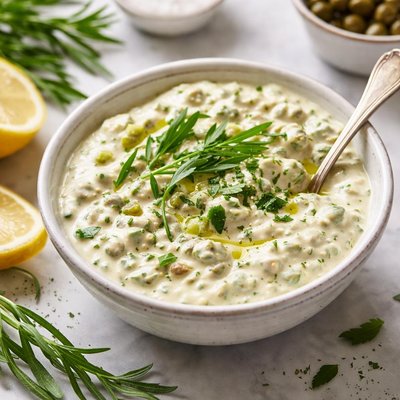
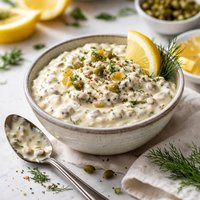
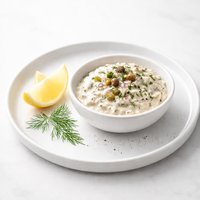
Transform your seafood dishes with this bright and zesty *Tarragon Tartar Sauce*, a homemade twist on the classic condiment that comes together in just 10 minutes! Bursting with fresh, herbaceous notes of tarragon and the tangy crunch of dill pickles and capers, this flavorful sauce is perfectly balanced with creamy mayonnaise, a hint of zippy Dijon mustard, and a squeeze of fresh lemon juice. Finely minced shallot adds a delicate sweetness, while salt and black pepper round out the taste. Ideal for pairing with crispy fish and chips, golden crab cakes, or succulent shrimp, this easy-to-make tartar sauce is a must-have for elevating any seafood spread. Refrigerate for 30 minutes to let the flavors meld perfectly—it's well worth the wait!

Smart Nutrition Tracking with SnapCalorie

Recipe Information
Ingredients
- 1 cup Mayonnaise
- 2 tablespoons Fresh tarragon
- 2 tablespoons Dill pickles
- 1 tablespoon Capers
- 1 small Shallot
- 1 tablespoon Lemon juice
- 1 teaspoon Dijon mustard
- 0.25 teaspoon Salt
- 0.25 teaspoon Black pepper
Instructions
Finely chop the fresh tarragon leaves and set aside.
Dice the dill pickles into small, uniform pieces.
Rinse and drain the capers, then roughly chop them if desired.
Peel and finely mince the shallot.
In a medium mixing bowl, combine the mayonnaise, tarragon, pickles, capers, and shallot.
Add the lemon juice, Dijon mustard, salt, and black pepper to the mixture.
Stir all the ingredients together until well combined and the sauce has a smooth, slightly chunky consistency.
Taste the sauce and adjust seasoning with additional salt, pepper, or lemon juice if needed.
Transfer to a serving bowl or refrigerate in an airtight container for at least 30 minutes to allow the flavors to meld.
Serve chilled alongside your favorite seafood dishes, such as fish and chips, crab cakes, or shrimp.
Nutrition Facts
Calories |
284 | ||
|---|---|---|---|
% Daily Value* |
|||
| Total Fat | 30.3 g | 39% | |
| Saturated Fat | 4.7 g | 23% | |
| Polyunsaturated Fat | 0.0 g | ||
| Cholesterol | 15 mg | 5% | |
| Sodium | 422 mg | 18% | |
| Total Carbohydrate | 2.0 g | 1% | |
| Dietary Fiber | 0.3 g | 1% | |
| Total Sugars | 0.8 g | ||
| Protein | 0.5 g | 1% | |
| Vitamin D | 0.0 mcg | 0% | |
| Calcium | 12 mg | 1% | |
| Iron | 0.3 mg | 2% | |
| Potassium | 42 mg | 1% | |
*The % Daily Value tells you how much a nutrient in a serving of food contributes to a daily diet. 2,000 calories a day is used for general nutrition advice.


