Simple Vanilla Icing
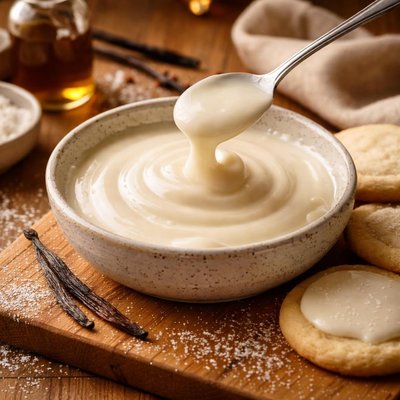
Elevate your baked goods with this Simple Vanilla Icing, a quick and delicious topping that comes together in just 10 minutes! Made with pantry staples like powdered sugar, melted unsalted butter, and a hint of vanilla extract, this silky icing delivers a perfect balance of sweetness and creaminess. Its customizable consistency allows you to drizzle it over cookies, spread it on cupcakes, or lavishly coat a bundt cake. With a pinch of salt to enhance the flavor, this versatile frosting recipe is ideal for beginners and experienced bakers alike. Say goodbye to store-bought frostings and create your homemade masterpiece with this easy, foolproof vanilla icing recipe!

Smart Nutrition Tracking with SnapCalorie




Recipe Information
Ingredients
- 240 grams Powdered sugar (confectioners' sugar)
- 30 grams Unsalted butter
- 2 tablespoons Milk (or heavy cream)
- 1 teaspoon Vanilla extract
- 1 pinch Salt
Instructions
Sift 240 grams of powdered sugar into a medium-sized mixing bowl to remove any lumps.
In a small bowl, melt 30 grams of unsalted butter completely, but avoid overheating it. Let it cool slightly if hot.
Add the melted butter, 2 tablespoons of milk (or heavy cream), 1 teaspoon of vanilla extract, and a pinch of salt to the bowl with powdered sugar.
Using a whisk or an electric hand mixer, combine the ingredients until the mixture is smooth and creamy. If the icing is too thick, add more milk 1 teaspoon at a time until desired consistency is achieved. If it’s too thin, add additional powdered sugar a tablespoon at a time.
Once the icing reaches the desired texture, use it immediately to frost your baked goods or store it in an airtight container in the refrigerator for up to 5 days.
Before using refrigerated icing, let it come to room temperature and stir to restore smoothness.
Nutrition Facts
Calories |
98 | ||
|---|---|---|---|
% Daily Value* |
|||
| Total Fat | 2.1 g | 3% | |
| Saturated Fat | 1.3 g | 7% | |
| Polyunsaturated Fat | 0.0 g | ||
| Cholesterol | 6 mg | 2% | |
| Sodium | 13 mg | 1% | |
| Total Carbohydrate | 20.2 g | 7% | |
| Dietary Fiber | 0.0 g | 0% | |
| Total Sugars | 20.1 g | ||
| Protein | 0.1 g | 0% | |
| Vitamin D | 0.1 mcg | 0% | |
| Calcium | 4 mg | 0% | |
| Iron | 0.0 mg | 0% | |
| Potassium | 5 mg | 0% | |
*The % Daily Value tells you how much a nutrient in a serving of food contributes to a daily diet. 2,000 calories a day is used for general nutrition advice.


